
Tame sugar cravings fast with science-backed foods. Discover the best picks, why they work, and simple swaps that help today without feeling deprived.
The 4 pm sugar crash is real. In the United States, adults take in about 17 teaspoons of added sugar per day according to CDC data from 2017–2018, which fuels spikes, crashes, then more cravings. The World Health Organization advises keeping free sugars below 10 percent of daily energy, and says going under 5 percent brings extra benefits (WHO, 2015). That gap between habit and target is exactly where the right foods step in.
Protein, viscous fiber, low glycemic carbs, a touch of healthy fat, and even a little acidity can steady appetite signals. The result : fewer jitters for sweets and steadier energy. Below, clear reasons these foods work, then a practical list and quick ways to use them in real life.
Why sugar cravings strike : biology, habit, and the glycemic swing
Cravings often follow a rapid rise in blood glucose after refined carbs, then a drop that leaves the brain calling for quick sugar. Low glycemic index foods – GI under 55 – digest slower and blunt that swing (Harvard Health Publishing, 2023). High GI choices – GI 70 and above – do the opposite.
Hunger hormones matter too. Protein tends to boost satiety signals like peptide YY and GLP-1, while fiber adds volume and slows digestion. Together they stretch out fullness, so the sweet tooth quiets down without white-knuckle willpower.
What science says about foods that curb sugar cravings
Fiber targets the root. The Institute of Medicine set daily fiber at about 25 g for women and 38 g for men, which most people miss by a lot. Harvard T. H. Chan School of Public Health notes that fiber slows carbohydrate absorption and evens out glucose rises, a key move for controlling cravings.
Protein plays the steadying role. A snack with meaningful protein lowers between-meal hunger compared with lower protein snacks, including in randomized trials on yogurt snacks published in Appetite in 2013. The mechanism is satiety, not restriction.
Acidity helps too. A study in the European Journal of Clinical Nutrition in 2005 found that vinegar taken with a high carbohydrate meal reduced the post-meal glucose response and increased feelings of fullness in healthy adults.
Whole foods bring measurable amounts. USDA FoodData Central lists 1 cup cooked lentils at roughly 18 g protein and 15 g fiber, a double hit. A 28 g serving of almonds provides about 6 g protein and 3.5 g fiber. A medium apple with skin delivers around 4.4 g fiber. Typical 170 g Greek yogurt lands near 17 g protein. Numbers that move the needle.
Foods that curb sugar cravings : a practical list
Here are smart picks that calm sweet urges and why they work.
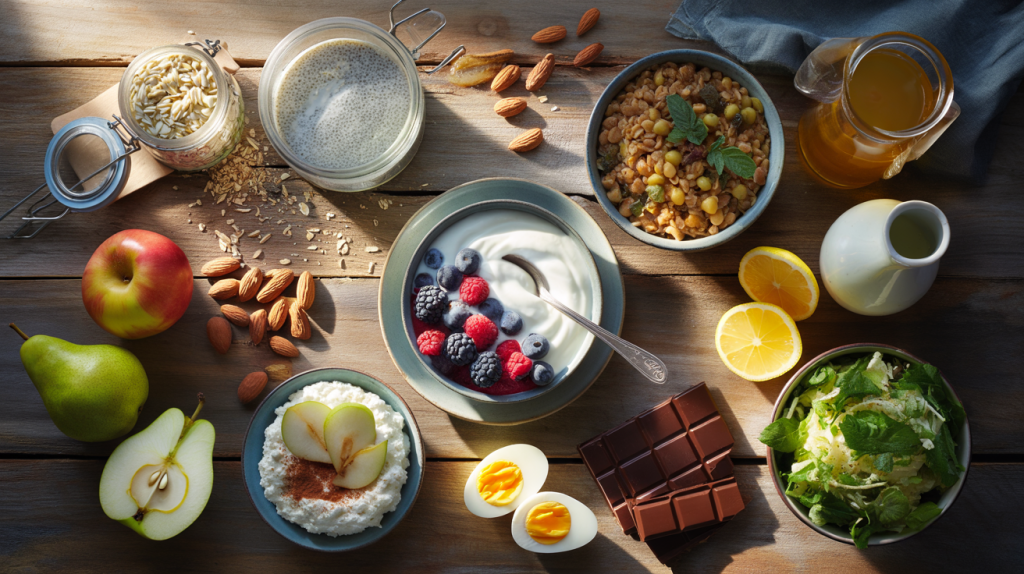
- Greek yogurt, plain : High protein steadies appetite. Add berries for natural sweetness. About 17 g protein per 170 g (USDA).
- Lentils or chickpeas : Protein plus fiber slow digestion. One cup cooked lentils offers ~18 g protein and 15 g fiber (USDA).
- Oats : Low GI base with beta-glucan fiber. Half a cup dry rolled oats gives roughly 4 g fiber.
- Chia seeds : Thickens meals, adds viscous fiber that tames glucose. Two tablespoons provide around 10 g fiber (USDA).
- Almonds or walnuts : Protein, fiber, et healthy fats for lasting fullness. A 28 g handful of almonds delivers ~6 g protein and 3.5 g fiber (USDA).
- Apples or pears with skin : Crunch, water, et fiber curb the urge for candy. A medium apple has ~4.4 g fiber (USDA).
- Cottage cheese or skyr : Dense protein to bridge the afternoon gap. Pair with cinnamon and sliced pear.
- Eggs : Portable protein for breakfast or snacks. Two eggs supply roughly 12 g protein.
- Vinegar or lemon with meals : A splash in dressings or on grains can blunt post-meal glucose rise, aiding satiety (European Journal of Clinical Nutrition, 2005).
- Dark chocolate 70 percent cacao : Intense flavor satisfies with smaller portions. Choose low added sugar varieties.
How to use these foods today : timing, pairing, and simple swaps
Start earlier in the day. A low GI breakfast with protein – oatmeal cooked thick, stirred with chia, then topped with Greek yogurt and berries – sets a stable baseline that often prevents the mid-afternoon crash.
Think pairings. Fruit plus protein beats fruit alone : apple slices with cottage cheese, or berries folded into skyr. Legumes anchor lunch as salad toppers or in a quick lentil soup to cut post-meal sweet hunting.
Use acidity on purpose. Dress grains and greens with olive oil and vinegar, or squeeze lemon on rice bowls. The flavor pops, and research links acidity with steadier post-meal glucose in adults.
Keep portions visible. A pre-portioned 28 g bag of almonds, a single-serve yogurt, or 1 cup of chickpeas in the fridge nudges better choices when willpower feels littel. Trends fade, but these defaults hold.
Context matters. WHO’s 2015 guideline caps free sugars at under 10 percent of energy, with extra benefits under 5 percent. CDC’s 2017–2018 snapshot shows how far intake drifted. Closing that gap gets easier when each snack pulls double duty : protein or fiber plus flavor, so cravings fade without a fight.