
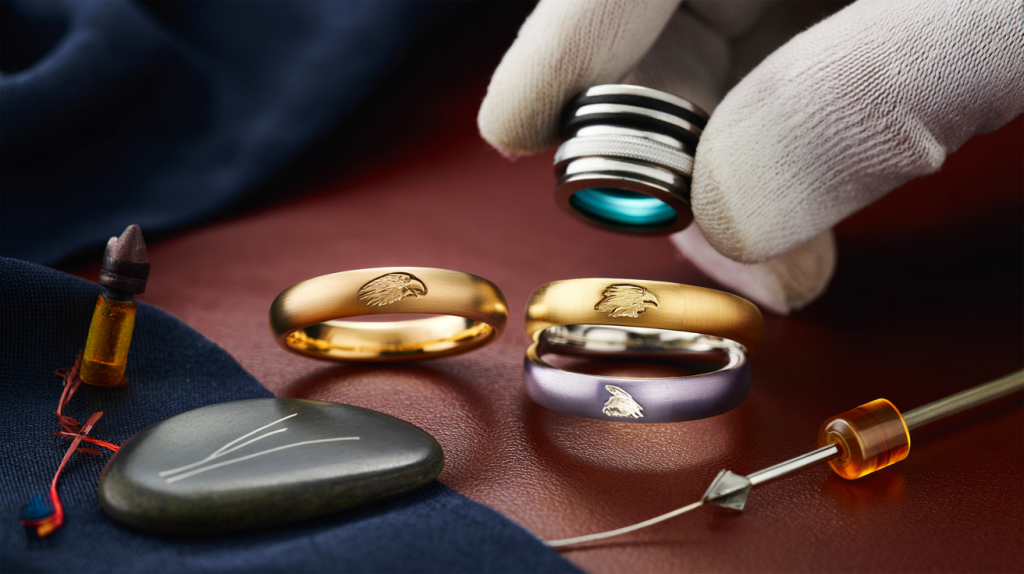
18K Gold and Platinum Hallmarks: what to look for first
Two clues decide everything in seconds: the fineness number and the national symbol. For 18 karat gold, the millesimal fineness reads “750”. For platinum jewellery, the most frequent mark in Europe is “950”. In France, a small eagle’s head has identified 18 karat gold since 1838, while a dog’s head has signalled platinum since 1912 (Monnaie de Paris, Musée du 11 Conti).
These marks are not decorative. They tell composition and legal control. In the United States, the Federal Trade Commission requires 18 karat claims to mean at least 75 percent pure gold, and “Platinum” claims to be 95 percent pure platinum unless a lower fineness is clearly disclosed (FTC Guides, last revised 2018). One glance can save a budget and calm doubts about an heirloom or a tempting deal.
Why hallmarks matter for value and trust
The idea is simple: a stamp protects buyers and supports resale. Without it, authentication takes longer, costs more, and price negotiations drag. With a clear hallmark, a jeweller can price and insure faster. That is why French state control created distinctive symbols for each precious metal and title, and why retailers keep using them on modern pieces.
There is a catch. Not all stamps say what you think. “750” means 18 karat gold, but “GP” or “HGE” indicates plating, and “GF” marks gold‑filled stock where the gold layer is typically 1/20 of the item’s weight, about 5 percent, and must be disclosed with karat fineness per FTC rules (FTC, 16 CFR Part 23). Same story for platinum: “PT950” is not the same as an alloy marked “PT585”. The difference hits both durability and price.
A short pause helps. Look again where the mark sits, how it was struck, and if wear has blurred it in high‑friction zones. Authentic marks age in a consistent way. Re‑stamps and fantasy symbols don’t.
Reading 18K and platinum like a pro
Start with numbers. “750” for 18 karat gold equals 750 parts per thousand of pure gold. “950” on platinum means 950 parts per thousand of pure platinum. These are the most common fine jewellery grades in Europe. In France, state control hallmarks add an extra layer of proof: eagle’s head for 18 karat gold since 1838 and dog’s head for platinum since 1912, both applied by an authorized office after assay (Monnaie de Paris).
Now check the maker’s mark. In France it appears in a lozenge cartouche with letters plus a small symbol. This identifies who made or imported the piece and ties back to official registers managed under the Ministry for the Economy and the hallmarking service known as the Guarantee Office. Cross‑checking the lozenge can confirm origin and period of manufacture (Ministère de l’Économie, Service de la Garantie).
Where to look matters almost as much as what to read. Hallmarks tend to hide where they stay safe from wear, which keeps them legible years later.
- Rings: inner shank near the base, sometimes close to the head
- Necklaces and bracelets: clasp tongues or adjacent links
- Pendants and charms: the bail or reverse
- Earrings: post or clip arm
- Brooches: pin stem or catch plate
One real‑world example helps. A vintage French ring showing “750” and a small eagle’s head inside the shank aligns with 18 karat gold controlled after 1838. Add a clean lozenge maker’s mark and the case strengthens. If a platinum band shows “950” and a dog’s head, the set of clues lines up with post‑1912 French control. If it only shows “PLAT” with no fineness, that aligns more with older American practice and needs extra testing under current FTC guidance.
Numbers anchor confidence. The FTC’s 2018 update reaffirmed that “Platinum” without qualification must contain at least 95 percent platinum group metals, while alloys between 85 and 95 percent need clear disclosure of the exact parts per thousand and the word “Platinum” (FTC, 2018). For gold, “18K” or “750” means 75 percent pure gold, a standard that dates to long‑standing international practice and appears across European assay offices.
A simple method to verify without guesswork
Think in layers. First the visual check with a 10x loupe. Then magnet test to rule out obvious fakes. After that, two technical steps close the loop: acid testing on an inconspicuous spot and XRF spectrometry for a non‑destructive read. Professional buyers mix these steps, since each answers a different question and speeds up pricing.
Paperwork helps more than people think. An invoice that repeats “750” or “PT950” plus the maker’s lozenge aligns with European due diligence. If the piece is French, a photo of the eagle’s head or dog’s head placed where one expects it increases trust instantly. When in doubt, local assay offices or approved jewellers can re‑strike or verify existing marks under national procedures.
One last pitfall trips up plenty of shoppers. Hallmarks can be genuine on a modified item. A resized ring or replaced clasp may carry a real stamp on a part that no longer matches the main metal. That is why the fineness must match across all components before making an offer. Better to recieve one more test result than rush a deal.
Key sources to check and keep handy : the FTC “Guides for the Jewelry, Precious Metals, and Pewter Industries” for fineness and labeling in the United States, and the French hallmark references held by the Monnaie de Paris and the Ministry for the Economy for the eagle’s head and dog’s head timeline. Direct links: FTC Guides, Ministère de l’Économie, Monnaie de Paris.