
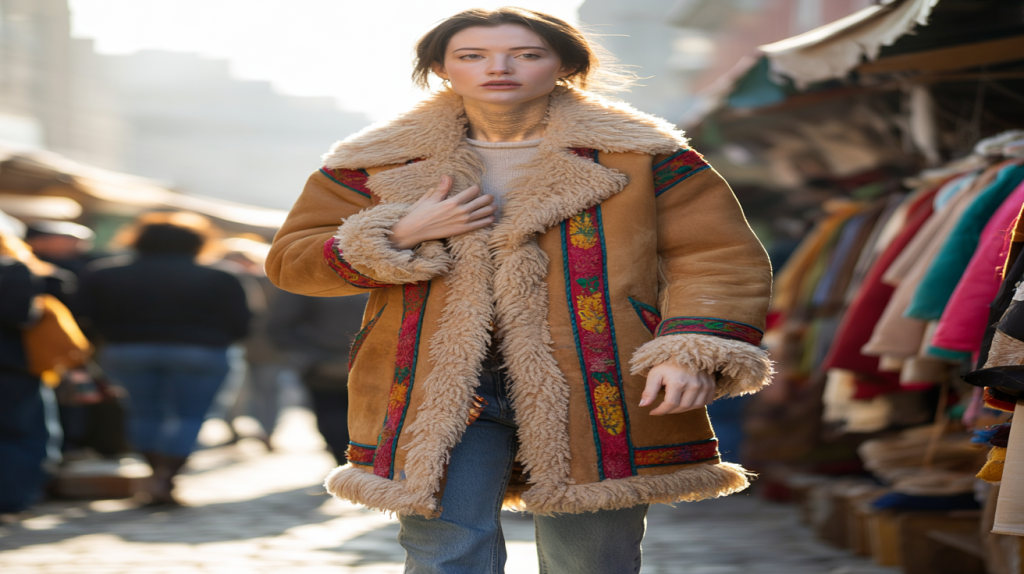
The 1970s Afghan coat is back. Learn to spot a true vintage piece, where to buy, how much to pay, and how to care for sheepskin without damage.
Searches for the 1970s Afghan coat keep climbing, and with reason. This cult sheepskin piece – suede outside, plush fleece inside, florid embroidery and shaggy trims – instantly turns a simple outfit into a story. A real one looks lived in, smells faintly of lanolin, and carries the handmade soul of Afghan craft traditions.
Resale is booming, which fuels the hunt. ThredUp’s 2024 Resale Report projects the global secondhand market to reach 350 billion dollars by 2028, with U.S. secondhand apparel alone forecast at 73 billion dollars by 2028, growing about three times faster than retail fashion. That demand puts the spotlight on the authentic “manteau afghan vintage années 70” and on how to avoid modern lookalikes.
1970s Afghan coat history: from counterculture icon to wearable heirloom
The Afghan coat crossed into Western style in the late 1960s, then exploded through the early 1970s as rock scenes in London and California embraced artisan pieces. The look signaled travel, freedom, and warmth during winters of denim, suede, and velvet.
Most originals were made from sheepskin, lined with natural fleece and detailed with hand embroidery along the seams. Many came through London’s vintage corridors and traveler markets, then spread into American boutiques as tour merch and trunk show treasures.
Half a century later, the silhouette still works. The volume balances slim denim and boots. The texture softens sharp tailoring. People wear it casually by day, then over satin seperates at night. The piece does the heavy lifting, so the rest can stay minimal.
How to spot a genuine “manteau afghan vintage années 70”
Fakes exist, and modern remakes can feel too perfect. Real 1970s coats show the hand. Small irregularities are a green flag.
- Sheepskin feel : dense fleece inside, not foam or acrylic pile.
- Suede shell : soft nap with natural variation, slight patina at cuffs and seams.
- Embroidery : uneven stitches, motifs that are similar but not identical from panel to panel.
- Weight : substantial on the shoulders, yet flexible when folded.
- Construction : seams bound with braid or whipstitch, fur trims integrated into seams rather than glued on top.
Where to buy and how much to pay for a 1970s Afghan coat
The widest choice lives on established resale platforms: Etsy, eBay, Vestiaire Collective, Depop and Vinted. Reputable vintage shops often pre-screen condition and list detailed measurements in inches and centimeters, which matters because sizes from the 1970s run smaller.
Pricing swings with size, condition, and embroidery quality. Clean fleece, intact seams, and original trims command more. Stains on the fleece, dry suede, or missing braid lower value but can be manageable if the structure is sound.
Before buying, ask for close-ups of cuffs, underarms, and the inside hem. These spots reveal thinning fleece or cracked suede first. Request a photo of the coat laid flat with a tape measure across chest, shoulder, and sleeve. Hate returns? Measure a coat you own and compare.
Care, comfort and ethics: keep sheepskin soft, shop secondhand
Sheepskin likes air. Hang the coat on a broad wooden hanger, brush the fleece gently, and let it breathe after wear. Keep it away from heaters or radiators, which dry and crack suede.
For stains, blot rather than rub. Cornstarch can lift oil from suede overnight. Deep cleaning belongs to a specialist leather and shearling cleaner, never a washing machine. Store cool and dry, with a cotton garment bag instead of plastic.
Some shoppers prefer vintage for ethical and environmental reasons. Buying secondhand extends a garment’s life and reduces demand for new materials. The same ThredUp 2024 findings show resale’s rapid expansion through 2028, which aligns with the shift toward longer-lived wardrobes and verified pre-owned quality.
If warmth is the priority but weight is not, try a mid-length version or a gilet cut. If animal-free is key, look for 1970s faux shearling coats with similar silhouettes. Either way, a quick checklist, accurate measurements, and patience usually lead to the right piece.