
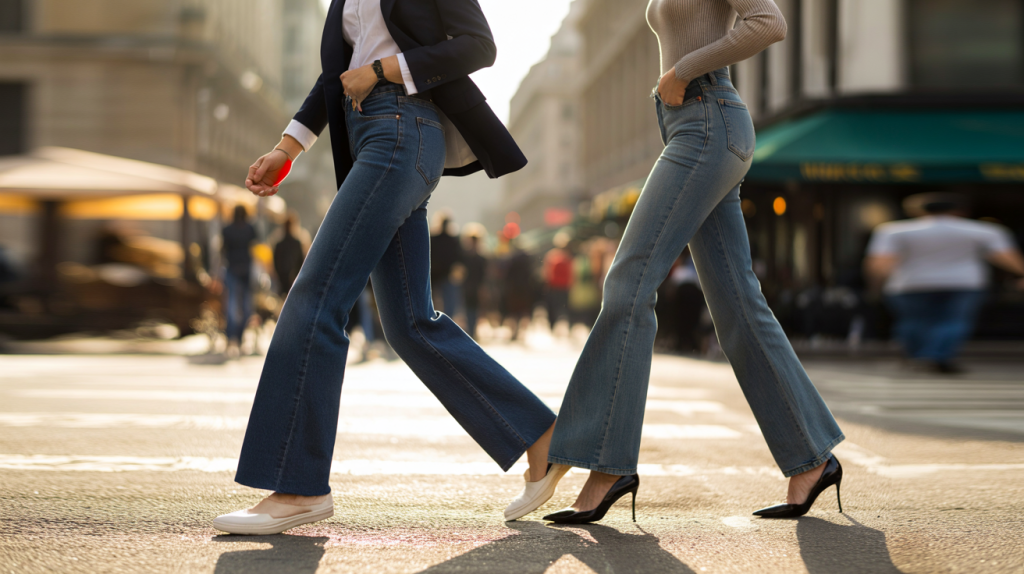
2000s bootcut jeans: the comeback everyone is noticing
Bootcut jeans from the Y2K era just walked back into daily wardrobes, from cafés to concert crowds. The shape reads familiar yet fresh, balancing sneakers or heeled boots with a leg that opens gently from the knee. Yes, the bootcut is back.
Market signals tell the same story. The NPD Group reported in February 2022 that U.S. jeans sales rose 36 percent in 2021 compared with 2020, and 9 percent compared with 2019. Denim’s staying power also shows in heritage milestones. Levi Strauss et Co. celebrated 150 years of the 501 in 2023, and the brand’s 517 bootcut dates to 1969. A long arc, returning to a 2000s favorite.
Why the 2000s bootcut works now
The main appeal is proportion. A slight flare elongates the leg and balances chunkier shoes that dominate street style today. The silhouette frames the ankle without swallowing it.
Another shift: rises changed. Early 2000s low rise made headlines. Current bootcut runs mid rise to high rise, which stabilizes the waist and supports tucked tops or cropped knits.
Color plays its part. Dark indigo cleans up an office look, while faded blue pairs with tees and leather jackets on weekends. The line feels deliberate, not costume.
Style it right: simple rules for modern bootcut jeans
Outfits land better with clean layers. Try a crisp shirt that hits the hip, then add a tailored blazer for structure. The break at the hem should skim the shoe instead of puddling.
Sneakers change the vibe fast. Low profile pairs read casual. A slim Chelsea boot adds a lift and keeps the opening sharp. For night, a pointed heel under the hem lengthens everything.
One more note on fit. A little stretch improves comfort on commutes. Look for denim with 1 to 2 percent elastane to move without losing shape after a long day.
Icons, memories, and the new wave of 2000s bootcut
Pop culture set the tone the first time around. Jennifer Lopez, Beyoncé, and Victoria Beckham etched the bootcut into early 2000s red carpet and off duty photos that still circulate.
Today the references evolve. Longer inseams and cleaner pockets feel current, while big logo belts stay in the archive. The result nods to Y2K without recreating every detail.
Retail follows that demand. Vintage racks stock late 90s to mid 2000s cuts, while new collections update rises and fabric blends. Shoppers can pick nostalgia or a refined remix.
Buy smart: lengths, fabrics, and where the good pairs hide
Length decides the vibe. If the hem kisses the top of a sneaker, the line stays crisp. With heels, aim for a hem that lands a little lower to hide the lift and extend the leg.
Fabric weight matters for drape. Midweight denim holds a neat knee line while keeping movement. Heavier twill keeps the flare from collapsing.
Sizing can vary by era and brand, especially in vintage. Try two sizes and sit down in the fitting room to test comfort through the thigh and seat.
- Fit check : mid rise for daily wear, high rise for a polished tuck
- Inseam guide : sneakers need a touch shorter, heels need a touch longer
- Stretch sweet spot : 1 to 2 percent elastane for comfort without sag
- Back pockets : centered and medium size for balance
- Where to look : vintage stores, denim specialists, brand archives online
There is also context behind the mood. After years of ultra skinny shapes, a gentle flare feels freeing. The numbers back a broader denim rebound, as The NPD Group highlighted for 2021. History rounds out the picture. Levi Strauss et Co. placing the 517 in 1969 shows the bootcut’s long run, while the 2000s made it mainstream.
One last tip solves the common worry about looking dated. Keep one element unmistakably current, like a sharp blazer or a minimalist sneaker. That detail anchors the jean in the present. Even a millenial closet can do this with pieces already on the hanger.