
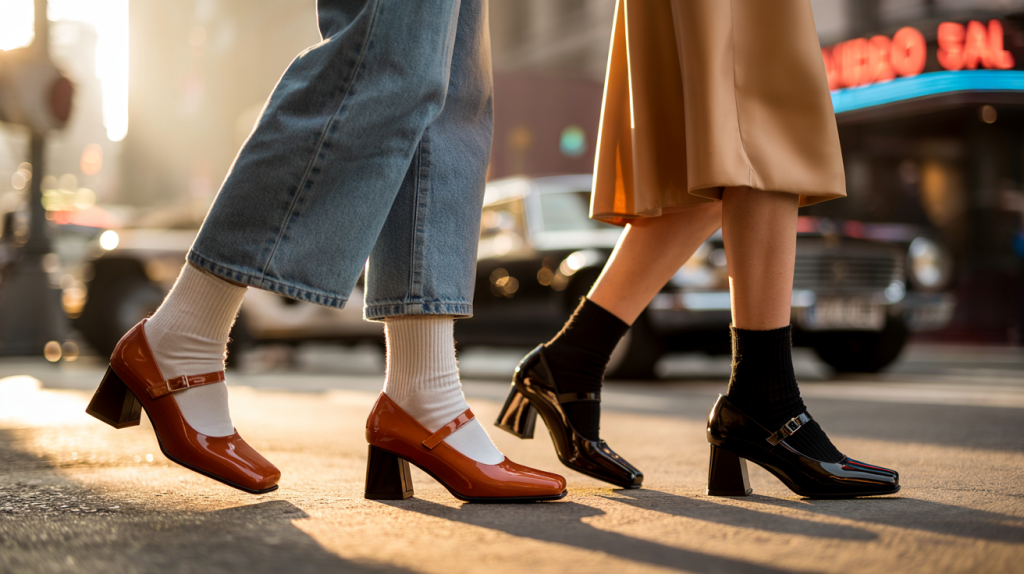
Block-heel Mary Janes – the babies à talon carré of the 70s – are suddenly everywhere again, and for good reason. The rounded toe, the single strap, the solid heel: they look vintage yet feel unfussy and walkable. That mix hits a nerve right now, when comfort and polish need to live together.
What sets them apart is simple: stability and charm. The 1970s silhouette softened sharp pumps, added a chunkier heel, and kept feet grounded on city pavements. For anyone searching that exact look, here is the context, the history that made it iconic, plus pragmatic style and shopping tips that actually help.
1970s Mary Jane Heels: What Makes Them Stand Out
The main idea lands fast. Babies à talon carré embody a sweet-meets-strong balance: a secure strap, a rounded or almond toe, and a block heel that keeps pressure evenly spread. They pair with denim, tailoring, and midi skirts without trying too hard.
Observation from the street and runways aligns: the 70s vibe returns in patent finishes, earthy colors like caramel and oxblood, and heels that read practical rather than fragile. That makes them day friendly, office ready, and night-out adaptable.
The solvable problem: plenty of shoppers love the look but fear blisters or a costume feel. Fit tweaks, leather choice, and outfit proportion fix both issues quickly.
From Buster Brown to Studio 54 : A Short History with Sources
The name Mary Jane traces to early American comics. Richard Felton Outcault introduced the Buster Brown strip in 1902, where Mary Jane wore a strapped shoe that later took her name. This origin is documented by the Bata Shoe Museum and Merriam-Webster’s usage notes.
The strapped style then evolved from children’s wear to fashion. In the 1960s, as hemlines rose, designers tied the look to modernity. The Victoria and Albert Museum archives connect Mary Quant’s 1965 London scene to low block heels that grounded the mini silhouette.
The 1970s dialed up the chunk. Museum collections at The Metropolitan Museum of Art’s Costume Institute show thicker block heels and platform soles across 1970–1979, a response to city life and new dance floors. By 1977, Studio 54 opened in New York, and disco culture pushed sturdier heels into nightly rotation, a timeline covered by Smithsonian cultural histories.
How to Style Babies à Talon Carré Today
Start simple. Let the shoes lead and keep lines clean above the ankle. A cropped straight jean or a fluid midi gives the heel room to shine without shortening the leg.
Patent reads dressy fast. Matte calf looks easy for day. Suede softens tailoring. Black anchors, brown warms, red pops on camera. Small moves, big effect.
Proportions matter. A block heel needs balance at the hem. Wide-leg trousers work if the fabric nearly kisses the vamp, not puddling over it.
One more thing. Socks can make the look current – ribbed cotton with denim, sheer black with tailoring, or a thin lurex thread for night. Not too thick, not too slouchy.
– 5 fast outfit ideas: cropped indigo jeans et white tee; camel midi skirt et black patent pair; gray suit et matte burgundy; little black dress et silver leather; denim jumpsuit et cream Mary Janes.
Buying Guide : Fit, Quality, and Care
Fit comes first. The strap should close on the middle hole without tugging. If the strap bites, the upper is likely too narrow. If the heel slips, look for an internal counter or add a slim heel grip.
Leather choice changes comfort. Full-grain calf molds with wear and tends to breathe. Patent is stiffer at first, so a slightly roomier toe box helps. Suede feels soft but dislikes heavy rain.
Construction tells the story of longevity. A stitched sole signals easier resoling down the line, while cemented pairs feel lighter on foot. Check the heel base: a wider lift brings stability and reduces wobbles on uneven pavement.
Care extends life. Rotate pairs day to day to let linings dry. Brush suede after wear, wipe patent with a damp cloth to prevent dulling, and condition calf sparingly to keep the leather’s surface healthy.
Vintage hunting adds charm. Look for clean stitching, an intact strap, and minimal outsole wear. Many 1970s pairs from makers like Charles Jourdan appear in museum records, which hints at the era’s quality. Sizing can run small accross decades, so try on late afternoon when feet are slightly warm.
Why this works now is logical. The 70s block heel distributes weight more evenly than a stiletto, reads effortless with modern clothes, and is easy to repair. Add the cultural lineage – from 1902 comics to 1977 dance floors – and the shoe becomes more than a trend, it becomes a dependable daily tool with history behind it.