
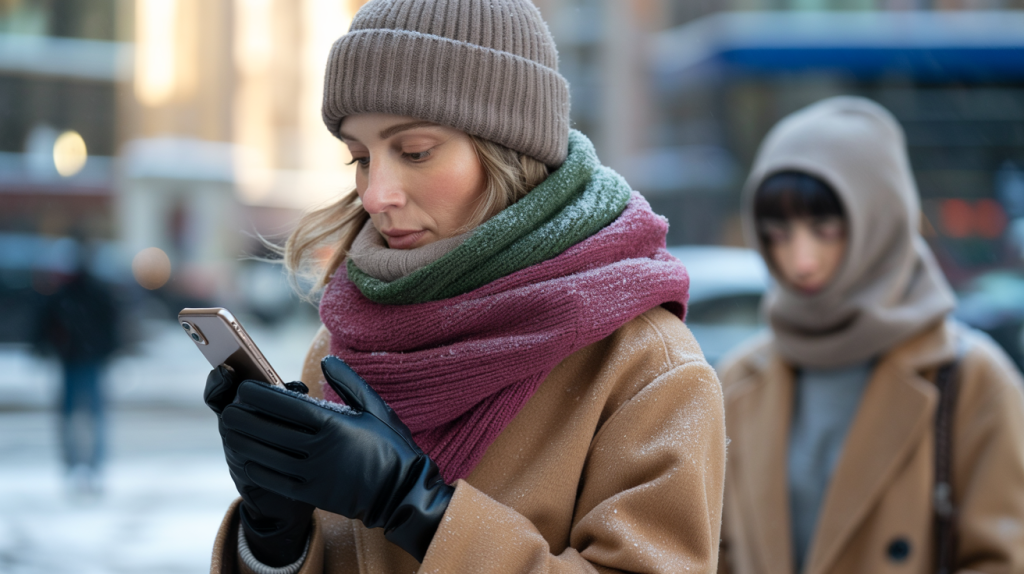
Cold air bites, phones still ping, and the commute does not wait. The right winter fashion accessories turn that daily chill into a comfortable, even stylish routine. Think warm beanies, oversized scarves, touchscreen gloves, moisture-smart socks, and a balaclava on storm days. That mix covers heat, wind, and wet – the trio that decides whether the day feels easy or miserable.
Here is the quick truth many still miss: you do not lose “most” body heat through the head. The British Medical Journal debunked that in 2008, noting heat loss is roughly proportional to surface area, often around 7 to 10 percent for the head in typical conditions (BMJ, 2008). So yes, a hat matters, but so do hands, neck, and feet. Accessories are a system, not a single hero.
Winter Fashion Accessories: Warmth First, Style Always
Start with the problem seen every December: layers look good at 8 a.m., then feel damp, itchy, or too tight by noon. Winter accessories fix that by tackling moisture and wind where the body leaks comfort first. A beanie in wool or cashmere insulates, an oversized scarf blocks drafts at the collar, and gloves keep fingers moving – literally.
The trend signal is loud. Searches for balaclavas exploded during the last big cold snaps: Lyst reported a 344 percent surge in Q4 2021 as the piece crossed from ski slope to streetwear (Lyst, 2021). That means coverage is not just technical, it is stylish currency.
Materials decide comfort. The Woolmark Company notes Merino wool can absorb up to around 30 percent of its dry weight in moisture vapor while still feeling dry to the touch – a quiet superpower when commuting from cold to warm rooms (Woolmark). For wet slush or sleet, membranes matter. W. L. Gore specifies Gore-Tex laminates with waterproof ratings typically exceeding a 28,000 mm water column, helpful in gloves when grip meets sleet (Gore).
Materials That Matter: Wool, Cashmere, Fleece and Tech
Wool regulates and resists odor, making beanies and socks work across long days. Cashmere brings softness at lower bulk, ideal for scarves that sit against skin. Recycled fleece traps air, dries fast, and pairs well with a wind-blocking outer layer. Leather gloves offer wind resistance and durability, and modern versions come with touchscreen fingertips that do not flake after a week.
Safety adds a nudge. The National Weather Service wind chill chart shows frostbite risk can begin around 30 minutes at a wind chill near -28 °C, dropping to about 5 minutes at -48 °C. That is where a balaclava, proper gloves, and insulated socks stop being optional. Not dramatic – just practical.
Fit still rules. A beanie that rides up leaks heat. Gloves too tight reduce circulation and make fingers feel colder. Scarves that are too short leave gaps at the collar. Little things, big payoff.
Trends 2025: Balaclavas, Chunky Scarves, Touchscreen Gloves
The look right now reads grounded: ribbed beanies, chunky scarves with texture, leather or knit touchscreen gloves, and yes, the balaclava on true deep-freeze mornings. Streetwear pairs them with oversized coats; office looks lean on tonal scarves in camel, charcoal, or cream. The point is not maximalism. It is a clean silhouette with smart texture.
Small detail, big warmth: a scarf tucked inside the coat collar blocks crosswinds better than one left outside. On the worst days, a thin Merino neck gaiter under a regular scarf feels invisible but changes how the whole outfit performs.
For wet cities, hybrid gloves shine. A soft liner glove under a water-resistant shell keeps dexterity while shedding drizzle. When the forecast skews dry and icy, insulated leather gloves bring grip and wind protection without bulk.
Winter accessories checklist, fast and truely useful :
- Wool or cashmere beanie : snug but not tight, covers ears without riding up.
- Oversized scarf : 200 cm length or more for easy wrapping and zero neck gaps.
- Touchscreen gloves : leather or knit with conductive fingertips, lined for your climate.
- Merino socks : midweight for daily wear, heavyweight for sub-freezing days.
- Balaclava or neck gaiter : deploy on wind-chill days; stash when milder.
- Ear warmers or headband : for runners or hair-up days when a beanie feels too much.
Shopping Smarter: Care, Sustainability, and Real-World Use
Care extends life. Hand-wash cashmere or use a wool cycle with a mesh bag, then dry flat. Leather gloves prefer a light conditioner after wet commutes. Fleece dries quickly on a rack; high heat can crush loft.
On sustainability, pick fewer, better pieces. Merino and cashmere can last for years with pilling combs and gentle wash routines. Recycled polyester fleece cuts virgin plastic where a wind-blocking midlayer is all that is needed. When in doubt, start with neutral colors that slot into any coat rotation.
The missing link in many wardrobes is a simple system. One warm hat, one everyday scarf, one storm-level face covering, two pairs of gloves – one dressy leather, one weatherproof technical – and three pairs of Merino socks. Rotate by forecast, not by habit. Then add a single pop color scarf when the sky turns grey, because mood matters too.
If temperatures plunge, science brings the last nudge. A hat and scarf reduce convective heat loss; insulated, breathable gloves keep blood flowing; wool socks manage sweat before it chills. Those choices align with the BMJ myth-busting from 2008 and with hard weather data from the National Weather Service. Couple that with trend signals like Lyst’s balaclava spike in late 2021, and the path is clear: buy for function first, then lock the look with texture and proportion.