
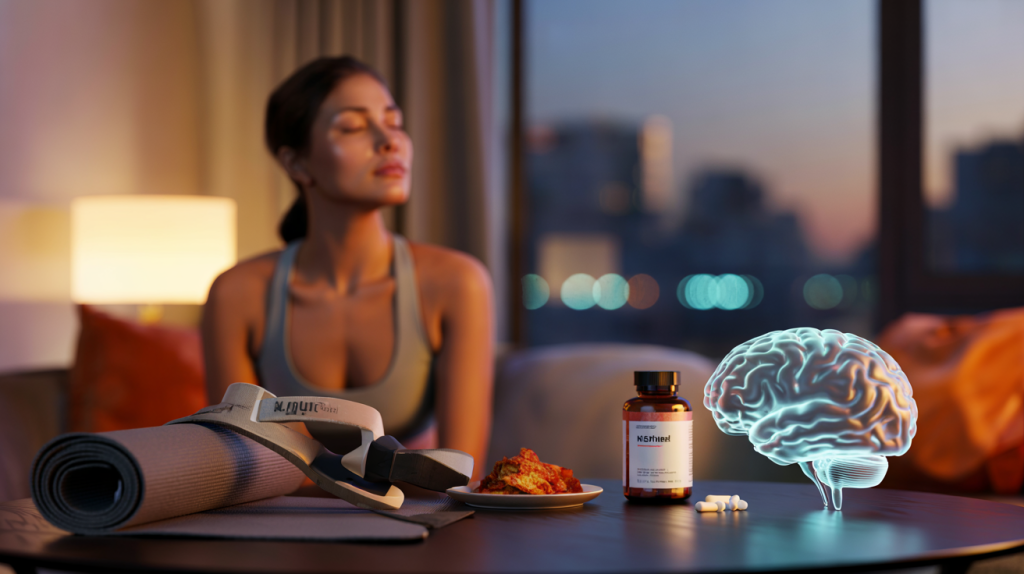
Feeling wound up and eyeing GABA for calm Fast facts on acide gamma-aminobutyrique, stress science, small but real trials, and smart ways to use it.
Stress is hitting hard. The American Psychological Association reported in 2022 that 27 percent of adults felt so stressed they could not function most days. No wonder searches for acide gamma-aminobutyrique also known as GABA spike every evening.
Here is the core picture. GABA is the brain’s main inhibitory neurotransmitter. It helps quiet neural activity when the stress response surges. Medicines like benzodiazepines act on GABA receptors. Supplements are different. Evidence in humans shows small short term relaxation effects, while a 2015 review noted GABA crosses the blood brain barrier only to a limited extent.
GABA 101 : how acide gamma-aminobutyrique relates to stress
GABA shapes the brake system in the brain. When stress hormones rise, GABA circuits help restore balance so thoughts stop racing and muscles untighten.
Signals tie to daily life. In primary insomnia, brain GABA measured with magnetic resonance spectroscopy was about 30 percent lower compared with healthy sleepers in a 2008 study led by John Winkelman. Sleep suffers when inhibitory tone dips.
Movement can lift GABA. A 60 minute yoga session raised brain GABA by 27 percent versus reading in a crossover study published in 2007 by Chris Streeter and colleagues. People felt calmer right after class. The physiology matched the feeling.
Do GABA supplements reduce stress : what trials and reviews report
Small human trials exist. In 2006, Atsushi Abdou tested 100 mg of oral GABA and recorded more alpha waves and fewer beta waves on EEG within one hour, patterns linked with relaxation. The same experiment reported a higher salivary IgA response under stress, suggesting a short lived calm signal.
Scope stays modest. Sample sizes were small and exposure short. A narrative review in Frontiers in Psychology in 2015 concluded that GABA likely has limited ability to cross into the brain in humans. That does not rule out peripheral or gut mediated effects. It just sets expectations.
Animal work adds biological plausibility. In 2011, Javier Bravo showed that Lactobacillus rhamnosus altered GABA receptor expression and reduced anxiety like behavior in mice, an effect that disappeared when the vagus nerve was cut. Interesting path, not a prescription.
Everyday habits that nudge the GABA system
People want actions that feel doable tonight. Realistic helps more than perfect.
Here are simple practices that research links to healthier inhibitory balance and stress relief :
- Prioritize sleep timing. Lower brain GABA has been observed in chronic insomnia, so building a stable wind down routine and dark room pays off.
- Do one session of mindful movement. The 2007 yoga study showed a 27 percent GABA rise after 60 minutes.
- Breathe slowly for five minutes. Longer exhales can lift vagal tone which often pairs with calmer arousal.
- Eat fermented foods like kimchi, tempeh or miso. Certain lactic acid bacteria produce GABA during fermentation, a gentle dietary nudge.
- Consider magnesium if intake is low. A 2017 systematic review by Christopher Boyle found suggestive benefits for mild anxiety symptoms, though study quality varied.
For supplements labeled GABA, doses in studies commonly ranged around 100 mg. Effects, when present, tended to appear within an hour and then fade. That pattern matches short action and limited brain entry.
Safety, interactions and who should be careful
Calm should not come with surprises. GABA can cause sleepiness in some users. Combining it with alcohol or sedative medicines raises the risk of excessive drowsiness because many of those drugs also act through GABA pathways.
Anyone taking benzodiazepines, barbiturates or certain sleep medicines needs a pharmacist or clinician to review combinations first. This includes people with sleep apnea or liver disease.
Pregnant or breastfeeding people, and teens, should get medical guidance before starting any new supplement. In Europe, the EFSA panel in 2011 judged that evidence did not substantiate health claims for GABA on normal blood pressure. Different claim, same message. Supplements are not cures.
Context matters. Anxiety disorders affected an estimated 301 million people worldwide in 2019 according to the World Health Organization. For ongoing or severe symptoms, psychological therapies and clinician guided care carry the strongest evidence. GABA may fit as a small supportive tool, not the whole toolbox. That is definitly the honest takeaway.