
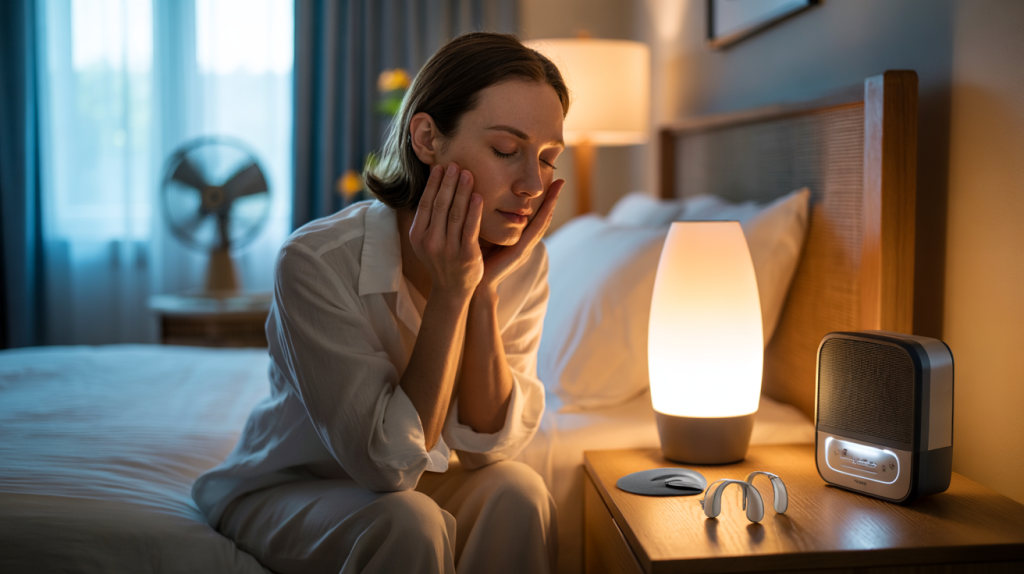
When the ringing hijacks your quiet: what helps right now
The buzzing will not wait. Tinnitus – acouphènes in French – can spike after noise, stress, or even a night of poor sleep. Quick wins exist : masking the sound with a fan or a white-noise app, stepping into a calmer room, and relaxing the jaw and neck often dial the volume down within minutes.
Here is the scale of the issue and why relief matters immediately. A 2022 JAMA Neurology review estimated tinnitus affects 14.4 percent of adults worldwide and severe cases hit 2.3 percent. In the United States, the NIDCD reported about 10 percent of adults – roughly 25 million people – experienced tinnitus for at least five minutes in the past year. That is a lot of nights cut short. And yet, proven tools exist.
Tinnitus 101 : why it starts, when to worry, how doctors assess
Most tinnitus stems from hearing loss and noise exposure. The inner ear sends fewer reliable signals, the brain turns the gain up, and phantom sound appears. Sometimes it follows an earwax plug, a middle-ear issue, jaw clenching, or neck tension. Less often, it signals a vascular or neurologic cause.
Red flags deserve prompt care : sudden hearing loss, one-sided tinnitus with ear fullness, true spinning vertigo, or a pulsing beat in time with your heart. The American Academy of Otolaryngology – Head and Neck Surgery 2020 guideline advises basic hearing testing first and avoids routine brain scans unless those red flags show up.
Fast relief tonight, steadier relief this month
For starters, soften the sound floor. Neutral background noise – a fan, rain track, pink noise between 60 and 70 dB – helps the brain stop chasing the ring. Many notice a drop in distress within 5 to 15 minutes. Small trick : place the sound source near the bed, not in your ear, if the ring sits high-pitched.
Stress feeds tinnitus. Slow breathing at 6 breaths per minute for 5 minutes lowers arousal and eases loudness perception. Gentle stretches for the jaw and neck help, especially if the tone changes when clenching teeth or turning the head. That points to somatic tinnitus, where targeted physical therapy can help.
Numbers matter here. A 2020 Cochrane review found cognitive behavioral therapy reduced tinnitus distress and improved quality of life compared with usual care. Benefits did not depend on loudness alone – they came from changing the brain’s alarm response. For those with measurable hearing loss, the 2020 AAO-HNS guideline recommends hearing aids. Amplification often cuts tinnitus intrusiveness because real sound replaces the brain’s fill-in noise.
Simple actions many overlook can also calm things down :
- Lower noise exposure for a few days. NIOSH advises 85 dB for 8 hours as a daily limit – halve exposure time for every 3 dB increase.
- Check for earwax with a clinician if fullness began suddenly. Do not insert cotton swabs.
- Use a sound app at bedtime and try CBT-I strategies to protect sleep. Short sleep amplifies tinnitus the next day.
- Review new meds with a pharmacist. Some drugs list tinnitus as a potential side effect.
- Keep steady caffeine rather than abrupt withdrawal. Large cohort data suggest no consistent worsening from coffee.
What to skip, what to add, and how to plan real progress
Gaps and myths persist. Supplements like ginkgo biloba or zinc lack convincing benefit in randomized trials, including a Cochrane analysis on ginkgo from 2012. Benzodiazepines may blunt distress short term but carry dependence risks and are not recommended by the 2020 AAO-HNS guideline for routine tinnitus care. The same goes for routine imaging without red flags.
So what builds durable relief. A blended approach. Sound therapy by day to reduce contrast. Sleep protection at night. CBT – in person or digital – to retrain the threat filter. Add hearing aids if hearing loss shows up on audiogram. For jaw-linked tinnitus, dental splints and targeted physiotherapy can cut the driver. Step by step beats chasing a single cure.
One more piece : timing. Early action helps because the brain learns fast. Aim for a hearing test within 2 to 4 weeks if the noise persists, then a plan that fits daily life. Many clinics now deliver CBT skills and hearing-aid sound enrichment remotely, which makes it easier to recieve care without waiting months.
Progress looks like this. Fewer spikes, shorter spikes, less grab on attention. The sound may remain, yet it stops running the show. Evidence-backed, practical, and sustainable – that is the point.
Sources : JAMA Neurology 2022 global prevalence analysis on tinnitus; National Institute on Deafness and Other Communication Disorders tinnitus statistics updated 2023; American Academy of Otolaryngology – Head and Neck Surgery Clinical Practice Guideline : Tinnitus, 2020 update; Cochrane Review 2020 on cognitive behavioral therapy for tinnitus; Cochrane 2012 review on ginkgo biloba for tinnitus; NIOSH recommended exposure limit for occupational noise.