
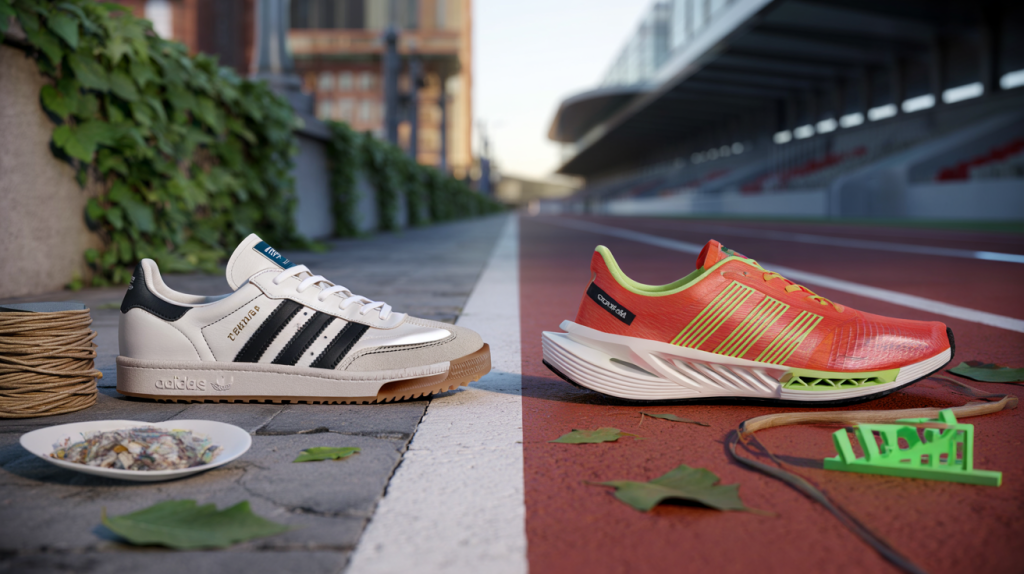
Adidas Sneakers 2026: context, data and what changes for your rotation
Adidas heads into 2026 pulled by two strong currents: retro Originals still selling out, and performance shoes rewriting race-day rules. The signal is loud. Lyst’s Q3 2023 Index named the Adidas Samba the hottest product worldwide, while marathon star Tigist Assefa shattered the women’s world record in Berlin 2023 wearing the ultra‑light Adizero Adios Pro Evo 1, as logged by World Athletics.
Behind the scenes, the brand tightens its sustainability targets and product pipeline. Adidas reported €21.4 billion in revenue for 2023 in its annual report, and keeps pushing its 2025 strategy that set a clear milestone: nine out of ten articles made with more sustainable materials by 2025, per the “Own the Game” plan. That trajectory shapes what will land on shelves in 2026, from recycled uppers to circular take‑back lines.
What Adidas trends are already shaping 2026
The main idea is simple: two wardrobes, one brand. Lifestyle pairs keep the outfit grounded. Performance models cut seconds off PBs. That split grows.
Observation first. Terrace classics – Samba, Gazelle, Campus, Spezial – moved from niche to mainstream between 2022 and 2024. Lyst’s ranking of Samba in 2023 confirmed it. Expect colorways to multiply, materials to diversify, and price ladders to spread across entry, premium and collaborative tiers.
The problem many readers face is choice overload. A wall of similar shapes, fast drops, and technical jargon. Yes, excitement is high, but missed purchases and returns waste time.
Data signals: sustainability, performance and materials
Adidas tied much of its 2026 offer to measurable goals. The company’s “Own the Game” roadmap promised that 90 percent of articles will be sustainable by 2025, a figure repeated across corporate updates. In practice, that points to heavier use of recycled polyester and nylon in 2026 product lines after the brand stated it would transition to recycled polyester from 2024 in many categories.
Low‑carbon design moves from concept to scale. The Futurecraft.Footprint project with Allbirds recorded 2.94 kg CO2e per pair in 2021 – a benchmark publicized by both brands. Circular design also matures: “Made To Be Remade” introduced returnable sneakers meant to be ground down and reborn, a program Adidas began piloting in 2021. Expect clearer labeling and app‑based returns to support it.
On performance, headline results steer innovation. Tigist Assefa’s 2:11:53 in 2023 forced a rethink of weight, foam geometry and plate layout. Adidas already iterated with Adizero Adios Pro 3 and the race‑day Adios Pro Evo 1. Look for 2026 general‑release models to adopt trimmed uppers, aggressive rockers, and lattice or tuned-plate midsoles tested in elite marathons.
Design codes to watch: Terrace icons, 4D, and the next-gen upper
Classics evolve, not vanish. Suede and leather keep their charm on Samba and Gazelle, but adidas scales vegan or plant‑based experiments in select drops after trials like Mylo-based concepts and textile blends showcased in 2021. Expect mix‑material panels that lift feel while cutting footprint.
Midsole tech quietly returns to the spotlight. 4D lattice printing, introduced with Carbon in earlier cycles, resurfaced in the 4DFWD range with improved energy return around 2022. That platform suits training and all‑day wear, and 2026 pairs may bring lighter lattices matched with recycled rubber outsoles to close the loop.
Color strategy shifts pragmatic. Neutrals carry the daily rotation. Bold collabs handle spikes in attention. Adidas has leaned on seasonal capsules to pace demand – smart for wallets and wardrobes.
How to choose an Adidas sneaker ready for 2026
Readers ask for a clear path through hype and specs. Here’s a compact way to decide, anchored in the facts above.
- If you want streetwear longevity, start with terrace silhouettes that Lyst data already crowned – Samba, Gazelle, Campus – then pick seasonless colors first.
- If you chase performance, look for Adizero models influenced by the 2023 Berlin blueprint: lower weight, rocker midsoles, and stated plate tech.
- If footprint matters, check labels tied to Adidas’ 2025 targets, recycled polyester callouts, or “Made To Be Remade” eligibility for returns.
- If materials intrigue you, trial 4DFWD or future lattice midsoles for a different underfoot feel without leaving the Adidas ecosystem.
One more thing. Fit and feel will beat pure novelty. Try on late afternoon when feet are slightly swollen, then walk a full minute before commiting – a small ritual that saves money.
The throughline holds: Adidas balances heritage with science. The numbers set the direction – revenue stabilizing in 2023, a 90 percent sustainability threshold locked for 2025, a world record validating the racing lab – and 2026 collections convert that into pairs ready for school runs, city nights, and start lines.
Want the safest bet right now. Lock a neutral terrace pair for rotation, then add one performance model shaped by the Adizero learnings. That two‑shoe setup rides today’s trend and tomorrow’s calendar without chasing every drop.