
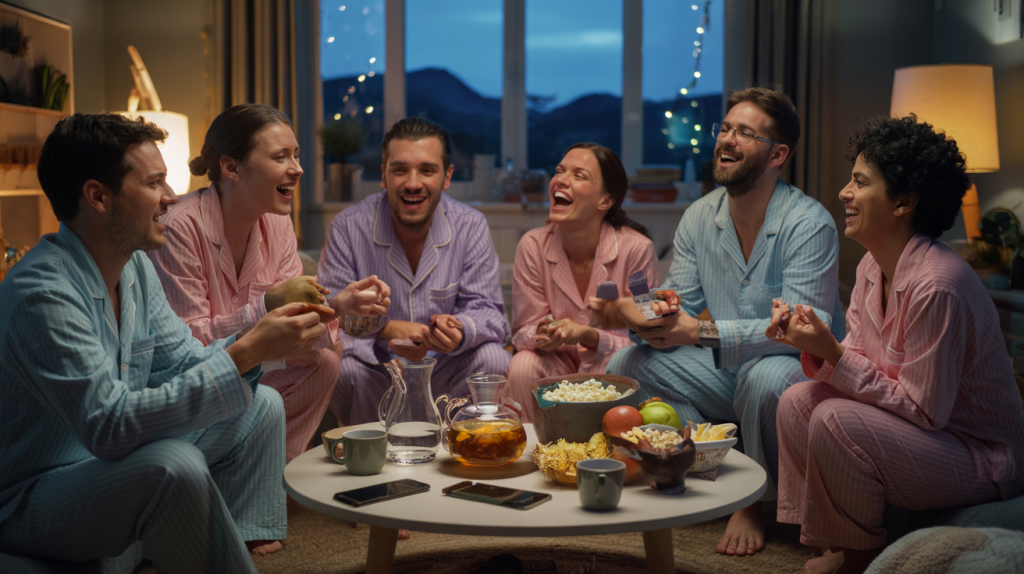
Curious about adult pajama parties? See how a simple night in can boost mood, connection, sleep and budget, with research and easy hosting moves.
Forget velvet ropes. The most energizing night trend right now happens at home in soft cotton, not on a crowded dance floor. Adult pajama parties bring friends together for real talk, laughs and restorative rest. The payoffs are clear : stronger bonds, calmer nerves, predictable costs and a deeper sense of belonging.
This is more than cozy vibes. Social connection links directly to health. The U.S. Surgeon General’s 2023 advisory reports social isolation raises the risk of premature death by 29 percent, heart disease by 29 percent and stroke by 32 percent, with a 50 percent higher risk of dementia among older adults. Laughter helps too. A 2012 study led by Robin Dunbar in Proceedings of the Royal Society B found social laughter triggers endorphins and raises pain thresholds. Staying in adds a budget upside as well. According to the U.S. Bureau of Labor Statistics, households spent an average of 583 dollars on alcoholic beverages in 2022, money a night in can redirect to food, games or nothing at all.
Why an adult pajama party works right now
The main idea is simple : people need low pressure ways to reconnect. Work shifts, tight budgets and lingering loneliness pull friends apart. A pajama party solves the logistics problem. Everyone arrives comfortable, no dress code, no travel late at night, no unpredictable tabs.
There is a sleep angle too. The Centers for Disease Control and Prevention notes adults need at least 7 hours of sleep per night. A stay-in evening that winds down on time supports healthier routines than bar hopping or long commutes home at 1 a.m.
Nostalgia adds quiet power. Research by Clay Routledge and colleagues in 2011 showed that nostalgia boosts feelings of social connectedness and meaningfulness. A throwback setup with board games, playlists from school years and shared snacks taps that effect without trying too hard.
Tangible benefits for mood, sleep and wallet
First come fewer barriers. No one needs to book a table or worry about rides. The host can accomodate different diets and energy levels without awkwardness.
Then comes mood lift. Group laughter releases endorphins, as shown in the 2012 Dunbar study, which explains why silly games, shared stories and light movies feel physically relaxing. That changes the tone of a weekend faster than scrolling alone.
Sleep improves when the plan avoids late caffeine and heavy pours. The National Institute on Alcohol Abuse and Alcoholism explains that alcohol may aid falling asleep but disrupts REM sleep and causes early awakenings. A pajama party that caps drinks early and pivots to tea or water helps everyone wake up clearer.
Money stays in check. With BLS data showing hundreds spent annually on alcohol, choosing a potluck or simple snack spread keeps costs predictable. Hosting rotates, which spreads effort and spending across the group over time.
Avoid these common pitfalls
Too much schedule kills the vibe. Packing in a movie, three games, a craft and a tasting turns connection into homework. Keep one anchor activity, then let conversation lead.
Phones can fracture the room. Parking devices in a bowl for the first hour resets attention. People relax once no one worries about missing anything online.
Late caffeine or spicy food backfires. Both can disrupt sleep and digestion. If energy dips, try short music breaks or a quick stretch instead of espresso.
Alcohol overload ruins the restorative part. NIAAA notes fragmented sleep and next day grogginess after heavy drinking. Offer low alcohol options and switch to herbal tea by the last hour.
How to host a low effort, high connection night in
Keep the plan short, the room soft and the choices clear. This format balances comfort with just enough structure to help shy friends ease in.
- Pick a theme with training wheels : nostalgic playlists, comfort-food potluck, cozy reading circle, or a puzzle-and-podcast session.
- Set a gentle timeline : arrive 7 p.m., food by 7:30, one activity at 8, lights lower at 9:30, soft close by 10:30.
- Create zones : floor cushions for chats, a table for games, a quiet corner with blankets for one-on-one catchups.
- Make sleep friendly choices : low lighting, decaf after 8 p.m., water on the table, and a final calm activity.
- Budget smart : simple snacks, shared grocery list, one treat to share like a bakery pie instead of takeout.
- Rotate roles : host, playlist curator, snack lead, game picker. Everyone contributes a small piece so no one burns out.
The logic is practical. A home gathering starts earlier, ends on time and serves the real goal which is unhurried closeness. The Surgeon General’s 2023 data on health risks from isolation shows why consistent, low cost rituals matter. Add in laughter’s endorphin effect from the 2012 research and the CDC’s sleep guidance, and a pajama party stops looking like a gimmick. It turns into an easy social technology that keeps friendships alive while protecting mood, rest and money.
Sources : U.S. Surgeon General, 2023 Advisory on Loneliness and Isolation ; Dunbar et al., 2012, Proceedings of the Royal Society B ; CDC, How Much Sleep Do I Need ; Bureau of Labor Statistics, Consumer Expenditures 2022 ; NIAAA, Alcohol and Sleep ; Routledge et al., 2011, Current Directions in Psychological Science.