
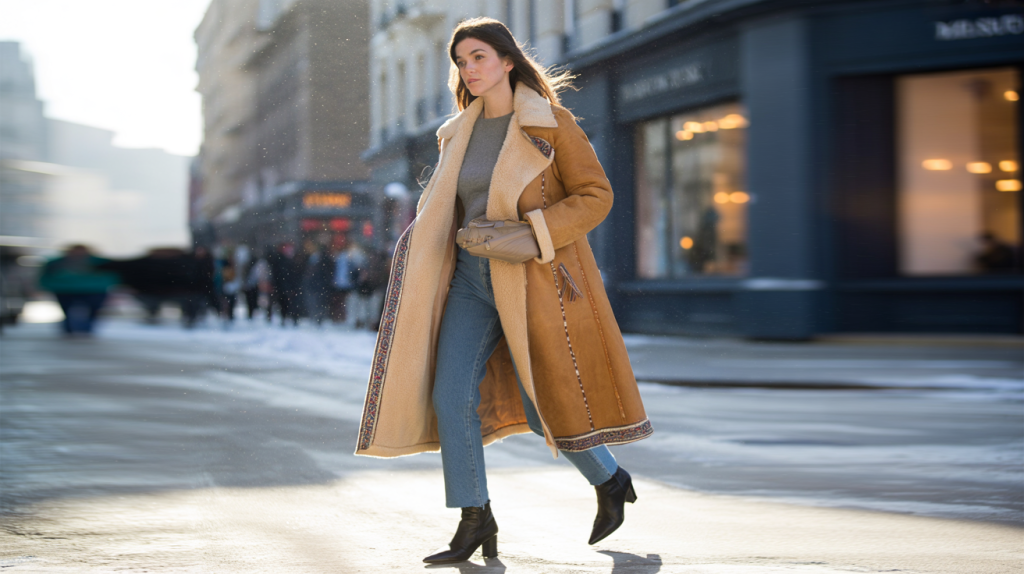
Cold streets, warm drama. The manteau peau lainée style afghan, the iconic shearling coat lined in plush wool, is stealing winter back from puffer jackets. From softly patinated vintage pieces to crisp, tailered versions in boutiques, this coat blends heat, history and a touch of rock soul.
Context first. Shearling means a tanned sheepskin with the fleece kept on, a construction that traps air and insulates without the bulk of faux fur. The look is Afghan inspired: suede outside, creamy wool inside, often with tapestry edges or oversized collars. The Victoria and Albert Museum notes its surge in Britain from 1967, when counterculture icons wore Afghan coats as a badge of freedom. Today the same silhouette returns, cleaned up for city life, still unmistakable at a glance.
What defines a manteau peau lainée style afghan today
The main idea is simple: a warm, long-lasting coat that holds shape and gets better with age. Brands riff on length, from hip-hitting jackets to sweeping mid-calf coats, but the tell remains a buttery suede shell and visible wool trims. Modern cuts soften the weight and sharpen proportions, which solves the old problem of bulky shoulders.
There is a practical angle. Wool breathes. According to The Woolmark Company, wool can absorb up to 30 percent of its weight in moisture without feeling wet. That is why an Afghan shearling stays comfortable from subway to sidewalk rather than overheating like synthetic pile.
Durability also matters. The Ellen MacArthur Foundation reported in 2017 that clothing utilization fell by 36 percent over the previous 15 years. A garment that ages well fights that slide. Shearling, when cared for, resists sagging and keeps its silhouette for years, which is precisely the point of choosing a piece with heritage roots.
How to wear the Afghan shearling coat without looking costume
One observation stands out: the coat is already the headline. Keep what sits under it clean and calm, then let texture do the heavy lifting. Black denim and a ribbed knit dress the look down for daytime. A silk shirt lifts it after dark without extra volume.
Common mistake, and it shows fast: pairing heavy shearling with chunky boots and oversized scarves all at once. The silhouette thickens, proportions blur. Try one statement at a time. If the collar is big, choose slim trousers. If the hem is long, show ankle or a sharp heel.
Real life example. A mid-calf, honey suede Afghan coat over a grey crewneck and straight indigo jeans reads effortless. Swap the knit for a white poplin shirt and loafers and the same coat turns smart. Two moves, zero fuss.
For those hesitating between vintage and new, think climate and care. The European Environment Agency estimates Europeans discard 5.8 million tonnes of textiles every year. Buying vintage extends lifespan and reduces demand on new materials, while a new responsibly sourced shearling offers traceability and updated finishes that resist stains. Both paths can be valid, depending on use.
Quick style playbook for steady results :
- Choose a neutral base: oatmeal, chocolate, camel, black. Let the wool contrast pop.
- Balance volume: wide coat, narrow bottom. Cropped coat, wider leg or midi skirt.
- Keep hardware minimal: one bag, one belt, no noisy extras.
- Texture mix: denim or cord brings casual bite, silk or leather adds polish.
- Footwear anchor: sleek Chelsea boots, low Mary Janes, or a pointed ankle boot.
Sizing, quality and care: what separates a keeper from a regret
Fit first. Shoulder seams should sit on the edge of the shoulder bone, not drop. The body should skim, not squeeze. A thumb-width of ease at the chest helps layers slide without straining buttons.
Quality tells are clear. Even, tight stitching on stress points. Dense, springy fleece with no bald patches. Suede grain that feels velvety, not chalky. If buying vintage, check cuffs and hem for wear and any dry cracking at fold lines.
Care basics rely on restraint. Brush suede with a crepe brush to lift nap. Blot, never rub, water spots. Hang on a broad wooden hanger to keep shape. For deep cleaning, specialist services are best. The Woolmark Company recommends professional care for leather or shearling finishes to preserve natural oils that keep the hide supple.
Where to find the look: vintage, responsible options and timing
Vintage Afghan coats surface in European and North American markets late autumn, then spike in price as temperatures drop. Condition drives value more than age. A clean lining and intact seams matter more than a specific year, though late 1960s pieces carry cultural weight, with the V and A’s timeline anchoring the style to 1967 and after.
Contemporary labels offer lighter, city-ready versions, often with trimmed shearling facing inside for warmth and suede outside for clean lines. Many publish material sourcing notes and tanning methods. Look for chrome free or metal free tanning where possible, since it reduces impact on wastewater compared with conventional chrome processes, according to industry guidance.
Shopping tactic that pays off: try coats when wearing the layers planned for winter. A knit with moderate loft changes drape and arm mobility. Five minutes of movement in store, lifting arms and sitting down, tells more than a mirror glance.
The Afghan spirit remains the same as it was in 1967, only easier to live with. Pick the right cut, mind proportion, rely on wool’s thermoregulation, then let the manteau peau lainée do its job: warmth with character, day after day.