
Waking up flat and feeling light is not luck. It often starts with the fruit on your breakfast plate. Choose the right ones and that post‑meal ballooning eases. Pick the wrong mix and the day begins tight jeans and a grumpy gut.
Here is the deal : certain fruits are gentler on digestion thanks to fiber that moves things along and lower FODMAP sugars that ferment less. Think kiwi, banana when still firm, citrus, strawberries, pineapple and cantaloupe. Paired smartly at petit déjeuner, they help reduce gas, pressure and that stretched belly feeling.
Anti bloating fruits for breakfast : what really helps
The main idea lands fast. Breakfast can solve a common morning problem: trapped gas from slow digestion or fermentable sugars. A gut friendly fruit base gives relief while still tasting fresh.
Evidence backs it. In a randomized trial published in the American Journal of Gastroenterology in 2021, participants with constipation who ate two green kiwifruit daily increased complete spontaneous bowel movements and reported lower overall gastrointestinal discomfort compared with psyllium and prunes (Chey et al., 2021). Less backup often means less bloating.
Monash University’s low FODMAP program lists several fruits as easier options in standard servings, including strawberries, oranges, clementines, pineapple, cantaloupe and firm bananas. That list matters for anyone who feels gassy after apples, pears or watermelon, which are higher in certain fermentable carbs.
Fiber plays a quiet hero. The National Academies set daily fiber targets at 25 grams for women and 38 grams for men (2005). Yet typical intake hovers around 15 to 16 grams per day in the United States, according to Harvard T.H. Chan School of Public Health. Closing that gap with the right fruit at breakfast is a simple win.
Low FODMAP fruit list for a calm belly at petit déjeuner
Not every fruit behaves the same in your gut. Here are choices that tend to sit light in the morning, with why they help and practical portions.
- Kiwi : gentle soluble and insoluble fiber; two fruits supply roughly 4 grams of fiber and have clinical data for easing GI discomfort (AJG 2021).
- Strawberries : lower FODMAP; about 1 cup offers near 3 grams of fiber per USDA FoodData Central 2019.
- Orange or clementines : low FODMAP citrus; one medium orange delivers about 3 grams of fiber and hydration from high water content.
- Firm banana : less ripe bananas are lower FODMAP; one small banana adds about 3 grams of fiber while feeling gentle for many.
- Pineapple : low FODMAP in typical servings; provides bromelain enzymes and a juicy, light texture.
- Cantaloupe : low FODMAP and high water; refreshing when a heavy breakfast would sit poorly.
- Papaya : contains papain; a 2013 randomized study of a papaya preparation reported reduced constipation and bloating after several weeks.
The science that explains the difference : fiber, FODMAPs and portions
Why these picks work comes down to two things. First, fiber improves transit, so gas does not linger. The 2005 National Academies reference values set 25 to 38 grams daily, yet most adults do not reach it. A breakfast that adds 6 to 8 grams from fruit makes a real dent.
Second, FODMAPs. These fermentable carbs are healthy for many, but in sensitive guts they pull water into the intestines and feed gas producing bacteria. Monash University’s ongoing database flags lower FODMAP servings for fruits like strawberries, oranges, pineapple, cantaloupe and firm bananas, while apples, pears and large servings of dried fruit are higher.
Portion size still matters. A bowl mounded with fruit can push even gentle options into too much fructose or polyols at once. Spreading fruit across the plate with a protein and a small whole grain stabilizes digestion and keeps blood sugar steady, which also reduces that shaky, air swallowing rush later in the morning.
A simple petit déjeuner plan that actually deflates
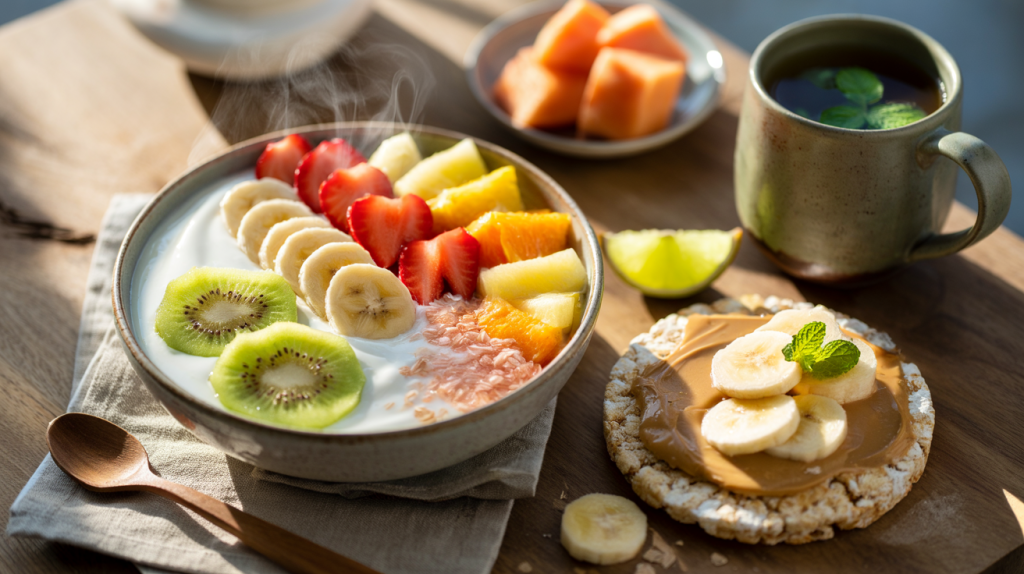
Morning needs to be easy. This build is quick and belly friendly: in a bowl, add 150 grams of plain lactose free yogurt or unsweetened soy yogurt, top with two peeled green kiwifruit, 1 cup sliced strawberries or 1 small orange, and 1 tablespoon rolled oats for texture. That lands roughly 6 to 8 grams of fiber with low FODMAP fruit.
No yogurt today? Go savory sweet. Two rice cakes or a thin slice of toasted sourdough, spread with almond butter, add 1 small firm banana in coins and a squeeze of lime. Sip warm water or peppermint tea. Carbonated drinks first thing can trap extra air, so save them for later.
Common breakfast traps do sneak in. A tall glass of apple or pear juice concentrates fermentable sugars. A handful of dried apricots or dates piles polyols and fructose into a very small space. Protein bars sweetened with sugar alcohols can puff the gut before noon. If dairy tends to bloat, choose lactose free or fermented options like kefir. Small tweaks, big change.
Finally, pace. Fast eating pulls in air and pressure builds. Two extra minutes at the table and a quick walk after breakfast help move gas along. It sounds basic, but it is definitly effective when paired with the right fruit.