
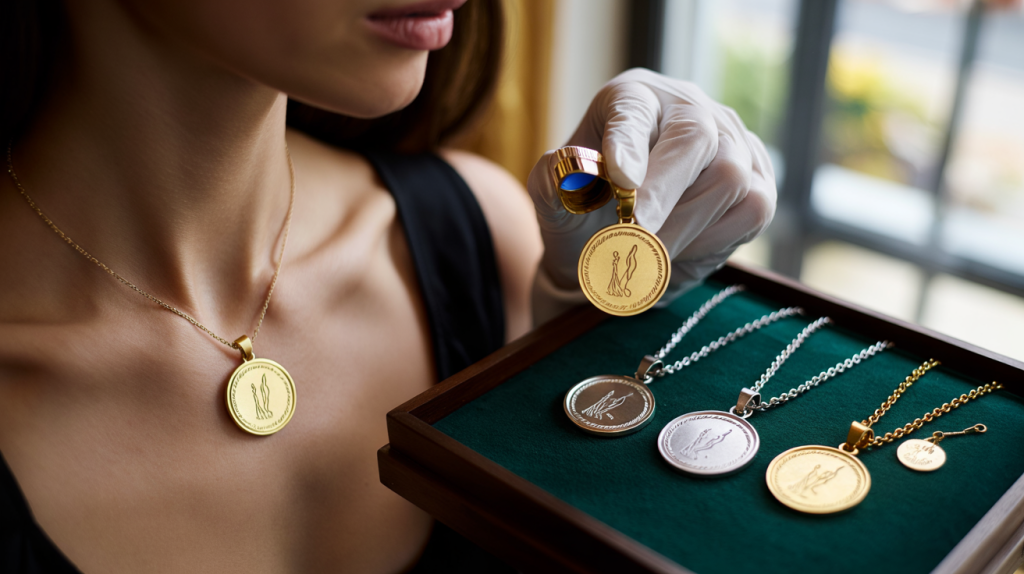
Type “Arthus Bertrand Lou Doillon medal” into a search bar and the appetite is obvious. A poetic piece, an artist’s line on a historic French médaille, a talisman that feels intimate on the skin. That is the promise readers come hunting for.
Context matters. Maison Arthus Bertrand, founded in 1803 in Paris, built its name on medals and official decorations, while Lou Doillon, musician and visual artist, is known for graphic, spontaneous drawings. When a storied workshop meets a contemporary eye, demand jumps and questions multiply: does it exist now, how to buy, how to spot the real thing, how to choose the right size and metal.
Arthus Bertrand and Lou Doillon medal: the context in one look
The interest is simple to understand: a medal from a house specialized in heritage craftsmanship, touched by an artist with a delicate line, speaks both to style and to emotion. That mix turns a jewel into a daily companion rather than a trophy piece.
Arthus Bertrand produces medals for milestones and everyday wear, with a long tradition of engraving. Lou Doillon explores drawing and typography in music artwork and illustration. If a medal brings those worlds together, people expect discreet symbolism, a piece that photographs well yet lives even better in real life, and quality that lasts years, not seasons.
How to verify authenticity: hallmarks, materials, documents
Authenticity is non negotiable. French precious metals carry legal hallmarks. On 18 carat gold, look for the fineness mark 750 and a small official hallmark, plus a maker’s mark stamped inside a lozenge. On sterling silver, the fineness mark reads 925, again with a maker’s mark. These marks are tiny, near the bail or on the medal’s rim.
A trusted piece comes with a branded box, a warranty or authenticity card, and a receipt that clearly states metal, weight or size, and the exact reference. When in doubt, an authorized boutique or an independent jeweler can check hallmarks under magnification in minutes.
Quality cues help too. Edges are clean, the surface satin or polish is even, engraving is crisp and centered. Chains include a matching metal tag and a secure clasp. Anything rough, poorly aligned, or oddly light should trigger extra questions before paying.
Choosing the medal: size, engraving, chain length
Most medals from French maisons come in a few classic diameters, often around 15 mm, 18 mm, or 21 mm, which wear differently on the neckline. Smaller reads intimate, larger becomes a statement. For daily wear, many choose the middle ground.
Metal sets the mood. Yellow gold in 18 carat offers warmth and patina over time, white gold feels graphic and neutral, silver is fresh and accessible. The fineness speaks for itself: 18 carat gold equals 75 percent pure gold, stamped 750, silver at 925 means 92.5 percent silver with a small addition of copper for strength.
Engraving turns an object into a memory. Initials, a short date, a small drawing if the design allows. Maison engraving is done by machine or by hand depending on model and request. Placement matters, often at the back to keep the front art untouched, sometimes along the rim for discretion. Lead times vary by boutique and order volume, so asking early avoids stress.
Chain length frames the whole piece. Around 40 cm sits high and elegant, 45 cm hits the collarbone, 50 cm and beyond relaxes the look and layers easily. If the medal has a strong visual, leaving space around it helps.
Where to look now: official channels, boutiques, timing
The safest path starts with the brand’s official website and social channels, then authorized retailers. A quick call to a boutique provides live availability, metal options, and engraving possibilities. Photos help, but trying a couple of diameters on the neck often changes the choice.
Special drops or artist editions can arrive quietly. Many maisons announce limited or seasonal pieces close to release, not months ahead. Signing up for newsletters, following Instagram posts and stories from Arthus Bertrand and Lou Doillon, and checking press in fashion and culture outlets keeps timing on your side.
Resale can be tempting if the piece is hard to find. Proceed carefully. Ask for macro photos of hallmarks, weight in grams, close ups of the bail and clasp, and a clear shot of any signature. Meet at a jeweler when possible, or use a platform that offers professional authentication before shipping. Paying slightly more for certainty beats a costly mistake.
For a smooth purchase and long wear, a few quick habits help.
- Compare sizes on a simple coin or ruler at home, then try in store to confirm.
- Request engraving options and a layout preview before committing.
- Keep the receipt, authenticity card, and box together for future service or resale.
- Clean gently with a soft cloth, avoid chemicals, and store the medal away from other jewellry to prevent micro scratches.
One last note on expectations. Artist led medals lean into nuance rather than loud logos. The beauty lives in the line, the proportion, the feel of the metal. If a model linked to Lou Doillon appears or returns to stock, it will reward patience and a quick move through official channels.