
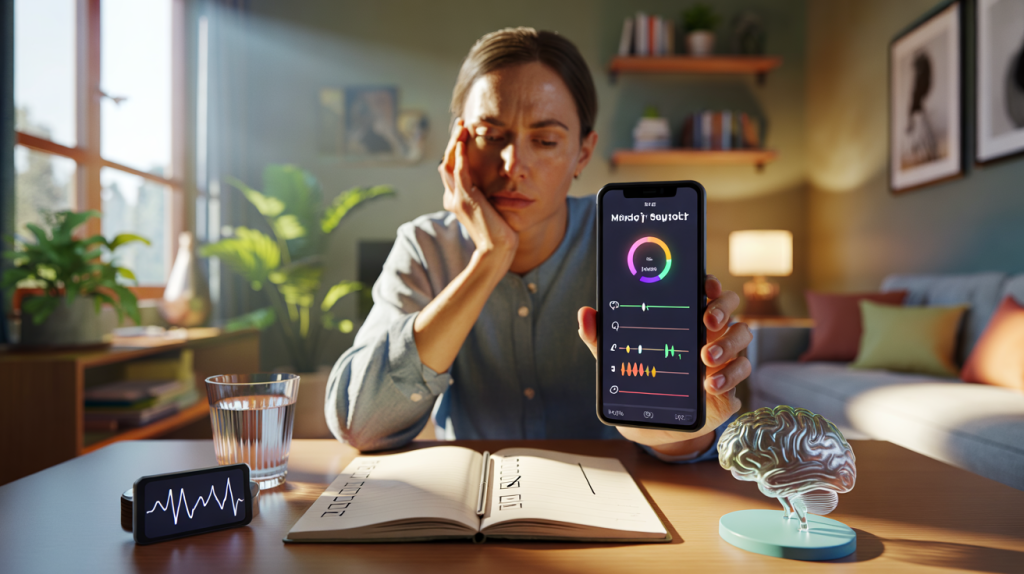
When the mind feels noisy or numb, waiting rarely helps. A simple mental health self-assessment – done the right way – can surface patterns fast and steer the next step calmly, without spiraling or self-diagnosing.
The need is real and growing. The World Health Organization reported that 1 in 8 people worldwide lived with a mental disorder in 2019, and anxiety and depression increased by about 25% during 2020 (World Health Organization, 2022). Early noticing matters: half of lifetime mental health conditions start by age 14 (World Health Organization, 2021). Here is how neuropsychology turns that urgency into a clear, usable check-in.
Mental Health Self-Assessment: Clear Purpose and Boundaries
Self-assessment spots changes in mood, thinking and daily function. It does not label or replace care, and it should feel brief and repeatable. Neuropsychologists lean on structured observations: the brain leaves clues in routines, attention, sleep and decision-making.
Think of it as a snapshot. One that compares today with your usual baseline, then tracks direction across weeks. The goal is to detect shifts early, not to solve everything tonight.
Neuropsychologist Tips to Read Your Brain’s Signals
Start with function over feelings. Has work or study quality slipped, or social energy drained faster than usual. These are cognitive load signals the brain broadcasts before big mood swings.
Look at sleep and focus next. The National Sleep Foundation recommends 7 to 9 hours for adults, and short sleep often precedes attention dips. If concentration wobbles, tasks stretch, or names vanish mid-sentence, that pattern may have already occured for a few days.
Track body cues without judgment. Appetite swings, headaches by afternoon, or a tight chest before calls tell a chronological story. One concrete example: noticing three weeks of rising irritability alongside cut-down meals points to stress stacking, not weakness.
Use language that is descriptive, not evaluative. Instead of “I am failing”, try “Meetings now leave me exhausted and I avoid calls after 4 pm”. That switch gives data your future self or a clinician can use.
- Two-minute baseline: rate mood, energy and stress from 0 to 10.
- Sleep check: note hours last night and average over the past week.
- Focus probe: did you reread emails or miss steps in a simple task today.
- Body scan: one area of tension, one appetite shift, one physical symptom.
- Connection count: how many real conversations in the last 48 hours.
- Direction arrow: better, same, or worse than last week – pick one and date it.
Validated Screening Tools: PHQ-9, GAD-7 and Safe Use
Short, validated questionnaires add structure. The PHQ-9 screens depressive symptoms with scores from 0 to 27, using cut points at 5, 10, 15 and 20. At a threshold of 10, it showed sensitivity of 88% and specificity of 88% for major depression (Kroenke, Spitzer et Williams, 2001, Journal of General Internal Medicine).
The GAD-7 screens generalized anxiety with scores from 0 to 21 and cutoffs at 5, 10 and 15. A score of 10 identified cases with sensitivity of 89% and specificity of 82% (Spitzer, Kroenke, Williams et Löwe, 2006, Archives of Internal Medicine).
For a quick well-being lens, the WHO-5 has five items scored to 0-25. Scores below 13 suggest low well-being and call for follow-up, especially if persistent (World Health Organization Regional Office for Europe).
Use these tools monthly or during a tough spell, keep results with dates, and compare trends. They guide decisions and conversations. They do not deliver a diagnosis – that part belongs to a clinician.
Red Flags and When to Seek Professional Care
Some signals mean stop self-testing and get help. Active thoughts of self-harm or of not wanting to live, a sudden surge in risky behavior, several nights with almost no sleep plus racing ideas, or hearing or seeing things others do not – these are medical red flags.
If the PHQ-9 item on self-harm is anything other than 0, escalate. In the United States, the 988 Suicide and Crisis Lifeline offers 24-7 support by call, text or chat since July 2022. Elsewhere, use local emergency numbers like 112 or 999. Immediate safety first, questions later.
Delays are common and costly. The average gap between symptom onset and treatment reaches about 11 years in the United States (National Alliance on Mental Illness, 2023). A saved record of sleep, function and validated scores accelerates care because it shows pattern, not just a bad day.
From a neuropsychology angle, the missing piece is predictability. A short, repeated self-check turns vague discomfort into a timeline. That timeline points to action: adjust load, sleep consistently, talk with a clinician when red flags or steady decline appear. Small, structured steps beat guesswork every time.