
Fast context : why stretching eases back pain quickly
Back pain stops mornings in their tracks. The right stretches calm irritated tissues, reduce stiffness, and free movement so daily tasks stop feeling like a test.
The scale is huge. In 2020, an estimated 619 million people lived with low back pain globally, and projections point to 843 million by 2050 (The Lancet Rheumatology, 2023). In the United States, 39 percent of adults reported back pain in the past 3 months during 2019 (NCHS Data Brief No. 415, 2021). Major guidelines back gentle exercise and stretching as first steps for persistent low back pain, before pills or imaging, including the American College of Physicians 2017 guideline and NICE NG59 updated in 2020 (Annals of Internal Medicine, 2017; NICE, 2020).
Back pain basics : what a smart routine actually fixes
Most non-specific back pain blends muscle guarding, joint stiffness, and tight hips or hamstrings. That mix ramps up pain signals and limits how far the spine glides.
Targeted mobility unlocks the system. By easing hip flexors, glutes, hamstrings, and thoracic rotation, the lumbar area stops doing every job alone. Pressure drops, and so does the ache.
There is a catch. Random stretching helps less than a clear, repeatable routine. The moves below focus on short, low-load holds that calm the back and restore motion without provoking symptoms.
Effective stretches for low back pain and sciatica
Do these on a firm surface, pain-free or at most mild discomfort. Breathe slowly and stop with any sharp, spreading, or numbness sensations.
- Child’s pose : Kneel, big toes together, knees apart. Sit back toward heels and reach forward. Hold 20 to 30 seconds. Great for general stiffness.
- Knee-to-chest : Lie on back, bring one knee to chest, other leg straight. Hold 20 to 30 seconds each side. Eases lumbar tension.
- Figure-4 piriformis stretch : Lie on back, ankle over opposite knee, pull the thigh toward chest. Hold 20 to 30 seconds. Helpful for buttock tightness tied to sciatic-type pain.
- Cat-cow : On hands and knees, arch up then gently dip the back. Move with slow breaths for 30 to 60 seconds. Mobilizes the spine safely.
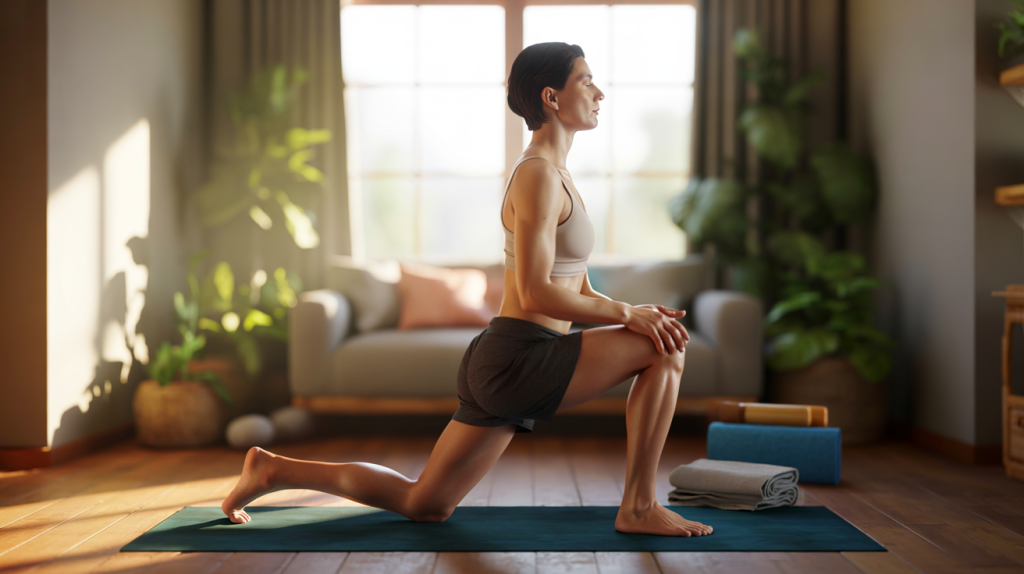
- Hip flexor lunge : From a half-kneel, tuck pelvis slightly and shift forward until a front-of-hip stretch appears. Hold 20 to 30 seconds each side. Reduces pull on the low back.
- Hamstring doorframe stretch : Lie near a doorway, one leg up on the frame, knee slightly bent, other leg through the doorway. Hold 20 to 30 seconds. Calms tug on the pelvis.
- Open book thoracic rotation : Lie on side, hips and knees bent. Reach top arm open behind you, following with eyes. Hold 5 seconds, repeat 8 to 10 times each side. Unstiffens the upper back.
- Prone press-up (McKenzie) : Lie face down, prop on forearms or hands, let hips stay on the floor. Hold 5 to 10 seconds, repeat 8 to 10 times. Often settles pain aggravated by sitting or bending.
Guideline context matters. NICE recommends group exercise including stretching for low back pain with or without sciatica (NICE NG59, 2016 updated 2020). The American College of Physicians advises non-drug therapies such as exercise and mindfulness for chronic low back pain (2017). Cochrane analyses report small to moderate benefits of exercise on pain and function in chronic low back pain, which aligns with consistent, gentle stretching over weeks rather than a single session.
Common mistakes that keep pain lingering
People hold breath and tense the shoulders. That invites more guarding. Slow nasal breaths drop the tone and let tissues give way.
Bouncing or pushing into sharp pain fires up nerves. Stretches should feel easing, warm, and controllable. Nerve-like zings or numbness are a red flag to back off.
All back, no hips. When hip flexors and hamstrings stay tight, the lumbar area overworks. Adding the lunge and doorframe moves changes how standing and sitting feel within days.
Doing too much, too soon. The back often settled when loads are titrated. Two rounds today beat heroic marathons that flare symptoms tomorrow. Small, repetable wins count.
Safe routine : timing, frequency, and when to stop
Timing is simple. The American College of Sports Medicine advises holding each flexibility move 10 to 30 seconds for most adults, 2 to 4 repetitions, at least 2 to 3 days per week, with daily practice delivering extra gains (ACSM Guidelines, 2021). Warm muscles respond better, so slide these in after a short walk or a hot shower.
Morning stiffness is common. Many feel looser if starting with cat-cow and open book before leaning into deeper holds like hamstrings. Evening can suit longer holds when the body is warm.
Expect gradual change. Two to four weeks of consistent practice often brings easier bending and fewer night wakings, matching the timelines seen in exercise trials. Some days will be flat. That is normal, definitly not a failure.
Stop and seek care with red flags : new numbness or weakness in a leg, loss of bladder or bowel control, fever, recent significant fall, unintended weight loss, or pain that wakes and will not ease. For sciatica that stubbornly shoots below the knee beyond a few weeks, a clinician or physical therapist can tailor progressions like nerve glides and graded loading.
The plan scales. On calmer days, glide through all eight moves once. On tougher days, pick three friendly options and breathe through them. Pair the routine with light walking and regular breaks from sitting, as those habits sit squarely with guideline advice and amplify relief.
Sources : The Lancet Rheumatology 2023; NCHS Data Brief No. 415, 2021; Annals of Internal Medicine 2017, American College of Physicians guideline; NICE NG59 2016 updated 2020; American College of Sports Medicine Guidelines 2021.