
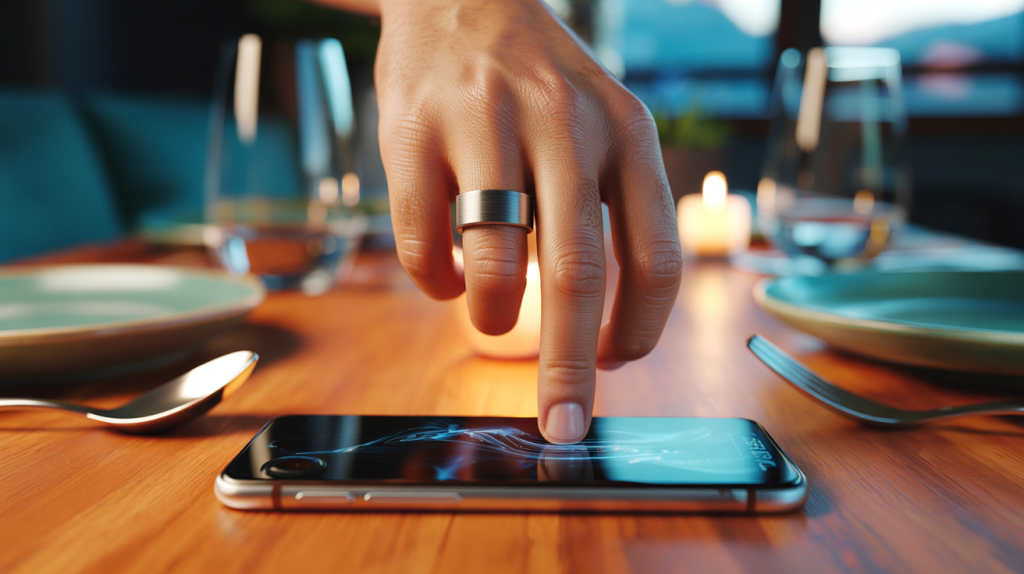
What is a bague anti smartphone and why it is trending
One small ring, one big pause. The bague anti smartphone is a discreet piece of jewelry designed to interrupt an automatic phone grab, either by making the grip awkward or by sending a tactile cue that says stop for a second.
Call it a friction tool. Some versions are chunky bands that block a comfortable thumb reach, others feature a small ridge that taps the screen when you fidget, and a few simply act as a visible reminder during meals or meetings. The promise is not to quit technology. It is to stop the reflex scroll that steals hours without permission.
The attention problem in numbers : screen time stats you can trust
There is a reason this ring conversation exploded. Reviews.org reported in 2023 that the average American checks a phone 144 times per day and spends roughly 4 hours 25 minutes on it daily, outside of work. That is a lot of tiny interruptions stacking into whole evenings.
Pew Research Center found in 2022 that 46 percent of U.S. teens say they are online “almost constantly”. For parents, that stat lands hard during homework or dinner. For teens, it feels normal, which says a lot about habit loops and social pressure.
Common Sense Media’s 2021 census measured average daily screen use among U.S. teens at 8 hours 39 minutes, not counting school. The number predates some of today’s fastest growing apps, so it offers a conservative floor rather than a ceiling.
How an anti smartphone ring shifts habits in real life
The main idea is embarrassingly simple. By adding a tiny physical roadblock or cue to the phone grip, the ring inserts a one second decision point. That micro pause lets the prefrontal cortex catch up before a habit runs the show.
Behavior researchers have long noted that small changes to the environment beat willpower battles. A ring sits between fingers and glass, so the environment changes at the exact moment the impulse appears. No pop up. No app permissions. Just friction where it matters.
In practice, the ring works best when paired with a clear rule. Example : ring on during meals, commutes, and the first hour after waking. People report fewer pickups and shorter sessions in those windows, because the brain expects the pause. It feels a bit like placing the phone in another room, only portable.
Choose and use your anti smartphone ring : simple steps
Shoppers usually face two paths. A symbolic ring that signals presence, or a functional ring with bulk or a small bump that makes the thumb stretch clumsy. Both can help. The choice depends on where the habit bites hardest.
- Pick a ring that subtly interferes with your usual grip, not one that hurts. Comfort keeps the habit change alive.
- Define two trigger moments, like at the table and in bed before sleep. Tie the ring to those contexts for thirty days.
- Combine with one setting tweak, such as grayscale or moving social icons off the home screen, to compound the pause.
- Track pickups with your phone’s dashboard for a week, then compare. Reviews.org’s 144 daily checks is a clear benchmark to beat.
- Agree on a visible cue at home, for instance the ring on a dish by the door at 7 p.m., so everyone reads the same signal.
Common mistakes show up fast. Buying a ring that is too delicate means no tactile cue, so nothing changes. Going too aggressive can backfire because pain is a poor coach and the ring ends up in a drawer. Another trap is using the ring all day, then fatigue wins. Short, named windows work better and feel kinder.
For parents and teams, the ring also acts as a social contract. A meeting starts, rings on the table, phones face down. The rule is visible, not preachy. Teen bedrooms at night follow the same idea, and yes, the adults play by it too. Consistency beats lectures. That has been true since forever.
There is one more piece that closes the loop. Data. Most phones already log pickups and notifications. Set a weekly reminder to check those numbers and celebrate a small, specific win, like ten fewer pickups after 9 p.m. The brain likes evidence, and tiny wins stack into identity. That is where a modest ring becomes a lever for attention that money usually cannot buy.
Not everyone will click with jewelry, and that is fine. The underlying mechanism is transferable. Any physical friction that lives where the habit begins can do the job, from a textured case to a pocket routine. The ring just travels everywhere, sits on your hand, and asks one honest question before the scroll begins. Do you really want to do this right now. The answer will not always be no, and that is not a failiure. It means the pause is working, and the choice is yours to make and to own.