
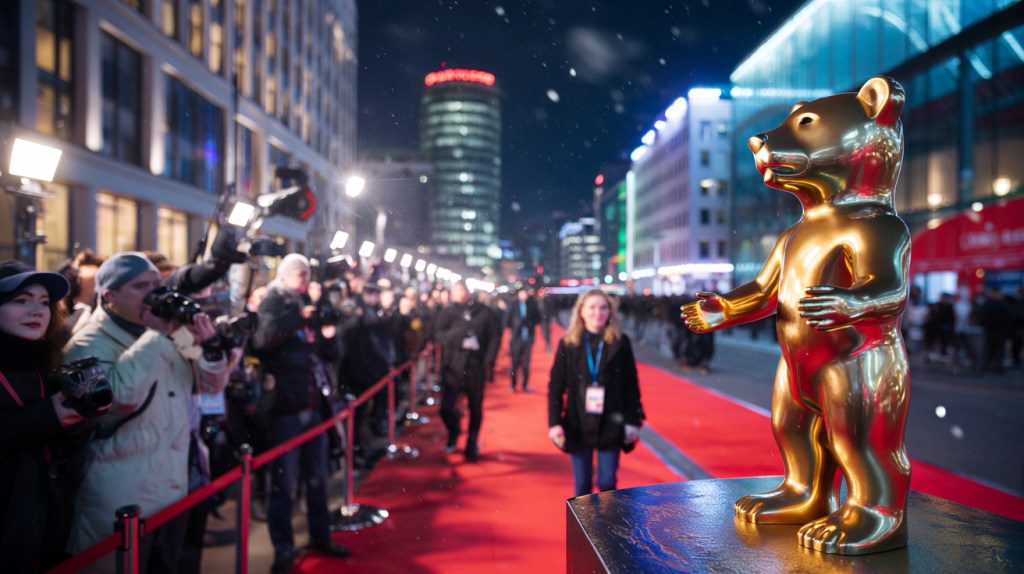
Berlin’s film heartbeat is already syncing to Berlinale 2026. After the leadership switch to Tricia Tuttle in 2024, the festival signals a sharpened focus on discovery and audience energy across the city’s screens. Founded in 1951, the Berlin International Film Festival sits among cinema’s Big Three, with the Golden Bear remaining the headline prize.
The context is clear and timely. Berlinale pairs a huge public program with industry powerhouses like the European Film Market and the development platform Berlinale Talents. The festival traditionally unfolds in February in Berlin, and recent markers matter: the 2024 edition ran 15-25 February 2024, and Mati Diop’s “Dahomey” won the Golden Bear that year, as confirmed by the Berlinale winners list.
Berlinale 2026 outlook – continuity, changes, and the new director
The main idea is simple: Berlinale 2026 looks set to consolidate a new era. Tricia Tuttle, appointed as festival director in 2024, inherits a public-first festival that also convenes the industry’s dealmakers at Potsdamer Platz and Gropius Bau. The single-director model replaces the recent dual leadership and aims for clearer editorial lines across Competition, Encounters, Panorama, Forum, Generation and Berlinale Series.
There is a common mistake when reading the tea leaves this early: assuming the program shifts overnight. The festival evolved in stages before. One pivotal change arrived in 2021, when the acting prizes became gender-neutral – two Silver Bears now honour Best Leading Performance and Best Supporting Performance. That policy, published by the Berlinale, reframed awards conversation without changing the Golden Bear’s centrality.
A useful example shows how Berlin impacts the wider season. Sebastián Lelio’s “A Fantastic Woman”, premiered at Berlin in 2017, later won the 2018 Academy Award for Best International Feature Film. It underlines a pattern: titles breaking in Berlin often travel far. Expect 2026 selections to balance established auteurs and rising voices the way the festival historically does.
Program and awards – Golden Bear dynamics, sections that matter, timelines
Observation first. Berlinale’s Competition crowns the Golden Bear and Silver Bears, while Encounters champions formal risk. Panorama leans into audience-driven discoveries, Forum explores adventurous cinema, Generation screens for young viewers, and Berlinale Series tracks prestige television. This architecture helps viewers navigate a very full ten days.
Numbers anchor the ecosystem. Berlinale Talents annually invites about 200 emerging creators across disciplines, as stated by the program itself. That network often bridges directly into Forum, Panorama or even Competition in later years. Also factual, and recent: the 2024 Golden Bear went to “Dahomey” by Mati Diop, a reminder that documentaries can take the top prize in Berlin.
Timing matters for planning. Traditionally, the festival unveils sections and Competition titles in waves through January, followed by a press conference close to the start. The rhythm does not rush audiences – it builds anticipation. Readers tracking 2026 should watch for early section teasers in the new year, then the official Competition reveal just before February. It is a cadence long familiar to the Berlin crowd.
Industry pulse – European Film Market, tickets, and getting the most from Berlin
The problem many festivalgoers face is choice overload. The European Film Market runs parallel to the festival and concentrates global buyers and sales agents under one roof, typically centered at Gropius Bau and nearby hubs. While access is accredited, the market’s presence shapes premieres, press screenings, and the immediate traction of new films.
Advice comes down to focus and windows. Public screenings can sell out quickly once on sale, especially Competition world premieres and Panorama crowd-pleasers. One underused route is exploring Encounters and Forum, where discovery often beats red carpets on sheer surprise. That is how audiences caught seismic work in recent years before the awards noise grew louder.
Logical next step for 2026: follow official channels for dates, programme drops, and sales windows on the Berlinale site, then map screenings near Potsdamer Platz and the City West venues to cut travel gaps. Berlin’s transport grid can accomodate packed schedules, but tight turnarounds between Forum events and high-demand Competition slots still require margin. The missing piece many overlook is Talents public talks – the platform’s 200-participant cohort often shares craft insights that make the entire week click into place.