
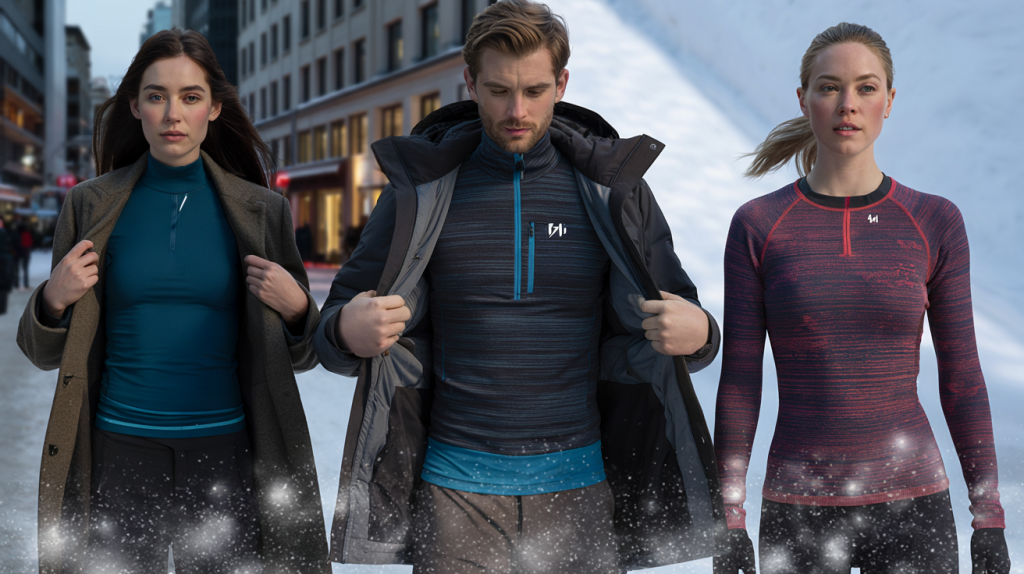
Cold snaps bite harder when the first layer fails. The safest bet this winter : proven base layers, known in France as sous pulls, from brands that nail warmth, breathability and comfort. Quick hits to save time : Uniqlo Heattech for budget warmth, Icebreaker and Smartwool for merino, Patagonia Capilene for fast drying, Odlo and Helly Hansen for alpine conditions, Falke for precision fits, Kari Traa for women specific cuts.
The fabric story matters as much as the logo. Cotton traps moisture and chills, while merino wool and technical synthetics move sweat away from the skin. The Woolmark Company reports wool can absorb moisture up to 35 percent of its dry weight while feeling dry, a big reason merino keeps its cool when activity spikes. Uniqlo’s Heattech, launched in 2003 with Toray Industries, popularized thin thermal knits that warm without bulk. That set the tone : light, stretchy, efficient.
Best base layer fabrics for winter warmth : merino wool, synthetic, blends
Here is the core idea. Winter comfort starts with moisture management next to skin. Merino wool excels at balancing warmth and odor control, while polyester and polypropylene dry fast and cost less.
Numbers add perspective. Textile Exchange noted in its 2023 Preferred Fiber and Materials Market Report that polyester represented about 54 percent of global fiber production in 2021. Availability drives price and variety, which explains the huge choice in synthetic base layers. On the natural side, fine merino typically ranges near 17 to 23 microns for next to skin pieces, giving that soft, non prickly feel cited by The Woolmark Company across its education materials.
Blends often hit the sweet spot. A merino face with a synthetic core wicks faster during stop and go winter days. Helly Hansen mixes merino with its polypropylene Lifa technology for skiers who heat up on the climb and cool quickly on the lift. Yes, that thin layer can be enough on a freezing commute.
Top brands and flagship sous pull models for men and women
The names below appear again and again in winter kits, from city riders to mountain guides. Quick descriptions, typical prices and where they shine.
- Uniqlo Heattech : thin, stretchy thermal knits for everyday use, often priced from 15 to 30 dollars. Great under shirts and suits.
- Icebreaker 200 Oasis : pure merino with reliable durability, usually from 90 to 115 dollars. Good all rounder for travel and layering.
- Smartwool Merino 250 : warmer grams per square meter for deep cold, often from 110 to 125 dollars. Cozy without feeling heavy.
- Patagonia Capilene Midweight : fast drying recycled polyester grid, commonly from 79 to 89 dollars. Ideal for high output sports.
- Odlo Performance Wool : hybrid knit that breathes well in variable weather, generally from 85 to 120 dollars. Nordic heritage shows.
- Helly Hansen Lifa Merino : inside polypropylene, outside merino for warmth, from 90 to 120 dollars. Built for ski days.
- Falke Wool Tech : precise, body mapped fits, typically from 100 to 130 dollars. Polished feel under a sweater.
- Kari Traa Rose : women specific merino with stretch, from 100 to 130 dollars. Warmth with style under a parka.
- Arcteryx Rho : sleek, smooth fleece like interior, often from 110 to 130 dollars. Clean fit under technical shells.
- Decathlon Wedze and Quechua : value synthetics and merino blends, many pieces from 15 to 45 dollars. Solid for tight budgets.
Sizing, care and durability : how to make a base layer last
Fit changes performance. A base layer should sit close to the skin without squeezing. Too loose, and moisture lingers. Too tight, and mobility suffers. For merino, pick your usual size or one up if you have broad shoulders. For synthetics, many athletic cuts run snug by design.
Care is simple. Wash cool, turn garments inside out, use mild detergent, avoid fabric softeners that clog fibers. Merino benefits from air drying to maintain elasticity. Odor control improves too, as natural lanolin resets between wears. A small thing, big payoff.
Look for build details that survive winter cycles. Flat seams reduce rub. Raglan shoulders sit better under backpack straps. A longer hem stays tucked on the bike. These touches raise the cost a bit, yet extend life by seasons, not months. Definetely worth the check at purchase.
Price, sustainability and certifications to watch before you buy
Prices vary with fiber, knit and origin. Synthetics dominate supply, which keeps entry prices low. Merino costs more per kilo, so mid and premium brands trend higher, especially above 200 grams per square meter.
Certifications help decode claims. Responsible Wool Standard by Textile Exchange launched in 2016 to verify animal welfare and land management through the supply chain. Oeko Tex Standard 100 began in 1992, testing finished textiles for harmful substances. Bluesign started in 2000, focusing on responsible chemical use and resource efficiency during manufacturing. When a hangtag lists one or more of these, the fabric story becomes concrete.
One last filter before checkout. Match fabric to use, not trend. Daily city wear calls for thin synthetics or light merino that fit under work clothes. High exertion days need quick drying knits with mesh zones. Long cold waits at a stadium reward heavier merino. If still hesitating, start with a light merino top and a synthetic midweight option, then rotate based on the day and the forecast.