
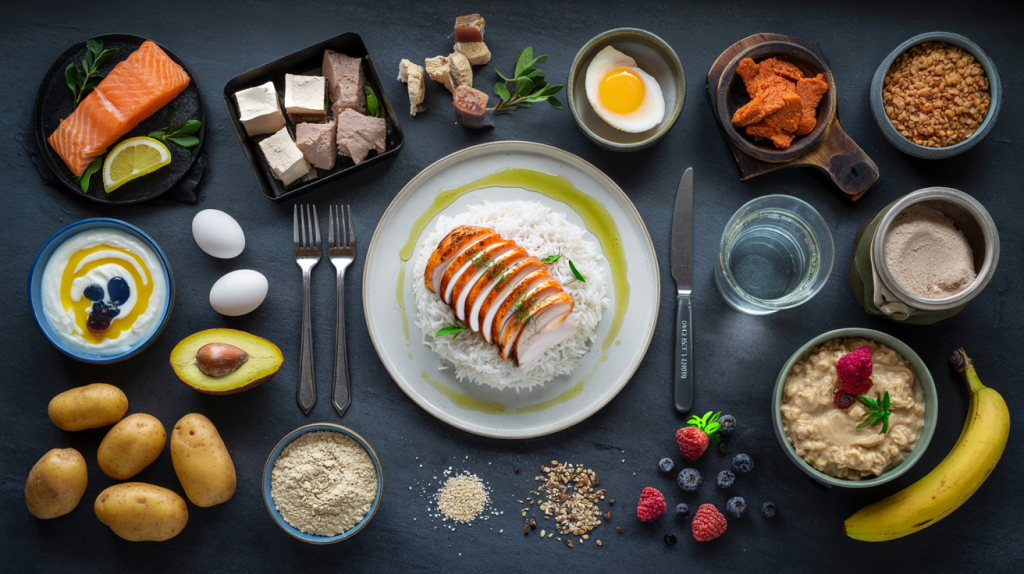
Build muscle faster with a science backed food list, smart timing, and easy portions that fit real life. Evidence meets taste, without the fluff.
You train hard, yet the mirror does not move. The fix often sits on the plate. Muscle grows when the body gets enough protein, steady carbs, and a small energy surplus, day after day. Most lifters progress at 1.6 to 2.2 g protein per kg of body weight, split across the day, with each meal large enough to trigger muscle protein synthesis, not just snack at it (Morton et al., British Journal of Sports Medicine, 2018; Journal of the International Society of Sports Nutrition, 2017).
Food choice matters as much as totals. Simple staples deliver the goods quickly : eggs, dairy, lean meat or tofu, oily fish, legumes, whole grains, fruit, potatoes, extra virgin olive oil, nuts. Layer them over a modest surplus of about 200 to 500 kcal above maintenance during training phases, then let the routine do the rest (National Strength and Conditioning Association text, 2016).
Best foods for muscle gain : the short list that works
Hit target protein with options that chew well, travel well, and cook fast. These portions sit close to one strong serving for most people.
- Chicken breast cooked, 120 g : about 35 g protein (USDA FoodData Central, 2024)
- Salmon cooked, 120 g : about 25 g protein plus omega 3s (USDA, 2024)
- Canned tuna, 100 g drained : 23 to 25 g protein (USDA, 2024)
- Eggs, 3 large : about 18 g protein and key leucine (USDA, 2024)
- Greek yogurt 2 %, 200 g : about 20 g protein, easy on the go (USDA, 2024)
- Cottage cheese, 200 g : about 24 to 26 g protein and calcium (USDA, 2024)
- Firm tofu, 150 g : about 21 g protein, iron, magnesium (USDA, 2024)
- Tempeh, 150 g : about 30 g protein plus fiber like benefits (USDA, 2024)
- Lentils cooked, 250 g : about 22 g protein with slow carbs (USDA, 2024)
- Whey isolate, 30 g scoop : about 24 g protein when time is tight (USDA, 2024)
Round the plate with carb allies that refill glycogen fast, then keep energy steady : potatoes, rice, oats, pasta, fruit. Add fats that bring flavor and support recovery, like extra virgin olive oil, walnuts, and chia.
Carbs, fats et micronutrients : what actually fuels growth
Carbohydrates power hard sets and protect performance. Recreational and strength trainees often land well at 3 to 5 g carbs per kg body weight on training days, adjusted to volume and appetite (Academy of Nutrition and Dietetics, Dietitians of Canada, and American College of Sports Medicine position, 2016).
Fats support hormones and joint comfort. A practical bracket sits at 20 to 35 percent of daily calories, with room for extra virgin olive oil, eggs, salmon, dairy, and nuts, based on sports nutrition guidance from 2016 ACSM and allied bodies.
Omega 3s show a useful edge. In older adults, about 1.86 g EPA plus 1.5 g DHA daily for 8 weeks enhanced the muscle protein synthesis response to amino acids and insulin, a mechanism relevant to lifters chasing better recovery too (Smith et al., American Journal of Clinical Nutrition, 2011). Many aim for 1.5 to 3 g EPA plus DHA per day from fish and supplements.
Micronutrients quietly decide progress. Vitamin D links to muscle function, iron carries oxygen, calcium and magnesium support contraction. Whole foods cover most needs, yet testing and supplementation can be warranted in low sun months or for plant forward diets, guided by a clinician.
Timing, leucine, and creatine : how to eat around training
Distribute protein across the day for repeated growth signals. A practical target is 0.4 to 0.55 g protein per kg per meal, across three to five meals, giving each sitting roughly 2 to 3 g leucine in mixed foods for a robust anabolic signal (Journal of the International Society of Sports Nutrition, 2018).
Before training, a mixed meal two to three hours ahead sets the tone : protein for amino acids, carbs for fuel. After training, a simple shake or meal containing 20 to 40 g quality protein and easy carbs tops up what the session used, then dinner finishes the job the same night, per the 2018 JISSN timing paper.
Creatine monohydrate remains the most proven aid. Daily 3 to 5 g increases training capacity and lean mass over weeks, with decades of safety data in healthy adults (Kreider et al., Journal of the International Society of Sports Nutrition, 2017). No cycling needed. Mix it with a meal or post workout drink, consistency beats timing.
Sample day : simple menu for prise de muscle
Breakfast sets the pace. Oats cooked in milk, topped with banana and 2 tablespoons peanut butter, plus a side of 3 eggs. Around 45 to 50 g protein, steady carbs, and fats that keep hunger in check.
Lunch earns its spot. Rice bowl with 150 g grilled chicken, 1 cup black beans, salsa, avocado, and a squeeze of lime. Roughly 55 g protein, slow carbs, fiber, and potassium that play nice with training.
Pre workout snack if needed. Greek yogurt 200 g with berries and honey or a whey shake blended with a ripe banana. Quick digestion, about 20 to 30 g protein and fast carbs. Simple, not fussy.
Dinner closes the loop. Salmon 150 g, roasted potatoes, and a big salad with extra virgin olive oil. About 35 g protein, omega 3s, and a salty crunch that hits different after a sweaty session. Add bread if the day still sits under target carbs.
Numbers still matter. For a 75 kg lifter, this template lands near 130 to 165 g protein, 300 to 400 g carbs depending on portions, and a modest surplus. Adjust gramms up or down by changing carb portions first, then protein if still low. Track two weeks, watch body weight trend by 0.25 to 0.5 percent per week, then tune the dial.
One final check against the science : protein sits in range per Morton 2018 and JISSN 2017, carbs match the 2016 ACSM bracket for moderate training, and creatine can quietly raise the ceiling over the coming month. Tasty food, repeatable moves, measurable changes. That is the playbook.