
Cut soreness and rebuild faster after training. Discover the foods and exact portions that speed muscle repair without guesswork, all science backed.
Best foods for muscle recovery right now : what actually helps
Muscles do not grow in the gym. They rebuild in the hours after, when smart food choices kick in. The most effective plate blends complete protein rich in leucine, fast carbohydrates to refill glycogen, colorful antioxidants, and a small hit of healthy fats.
Here is the core plan that research keeps confirming. Aim for 20 to 40 grams of high quality protein with 2 to 3 grams of leucine soon after training, as advised by the International Society of Sports Nutrition in 2017 JISSN. Add 1.0 to 1.2 grams of carbohydrate per kilogram per hour, for up to 4 hours when recovery needs to be rapid, per the 2016 position stand from the American College of Sports Medicine, the Academy of Nutrition and Dietetics, and Dietitians of Canada MSSE 2016. Cherry on top, literally : tart cherry juice reduced soreness and strength loss across trials in a 2021 systematic review JISSN 2021.
Protein, leucine and timing : how much and when
The main idea is simple. Muscle protein synthesis needs adequate essential amino acids and especially leucine to flip the switch. Whey, milk, eggs, soy and lean meats hit that target with fewer calories and faster digestion.
Common mistake spotted every day : under eating protein after hard sessions, then trying to compensate at dinner. According to the JISSN position stand, spreading total intake to 0.3 grams per kilogram per meal across the day, with 20 to 40 grams right after exercise, supports greater synthesis than a big single load JISSN 2017. A scoop of whey with 3 grams leucine, or 250 grams of Greek yogurt, or two eggs plus a glass of milk gets you there. Waited two hours and hungry now? Still helps, but the early window felt easier to use.
Omega 3 fatty acids also modulate the response. In a controlled trial, daily fish oil delivering around 3.5 grams EPA plus DHA increased the sensitivity of muscle protein synthesis to amino acids and insulin in adults American Journal of Clinical Nutrition 2011. Translation : the same protein dose did more work. Salmon at lunch, then a whey shake after training, is a practical combo.
Carbs, antioxidants and omega 3 : the science backed picks
If another workout lands within 24 hours, carbohydrate timing matters. The ACSM joint statement recommends 1.0 to 1.2 grams per kilogram per hour for the first 4 hours to maximize glycogen resynthesis when sessions are close MSSE 2016. Rice, pasta, bread, potatoes, ripe bananas or cereal with milk work. For lighter schedules, meals with 3 to 5 grams per kilogram per day usually cover training needs.
Polyphenol rich fruits have shown real world effects. A trial in trained women found that blueberries consumed around exercise sped strength recovery and reduced oxidative stress markers JISSN 2012. Montmorency tart cherry juice, taken for several days before and after strenuous sessions, reduced delayed onset muscle soreness and recovered strength faster across multiple studies JISSN 2021. This is not magic. It is consistent nutrition giving your muscles and connective tissue the tools they need.
One more piece that often gets missed. Ingesting 15 grams of gelatin or collagen with 50 milligrams vitamin C about 45 to 60 minutes before activity increased collagen synthesis in a lab model, suggesting a simple way to support tendons and ligaments under load AJCN 2017. That small pre session drink complements the protein and carbs you take after.
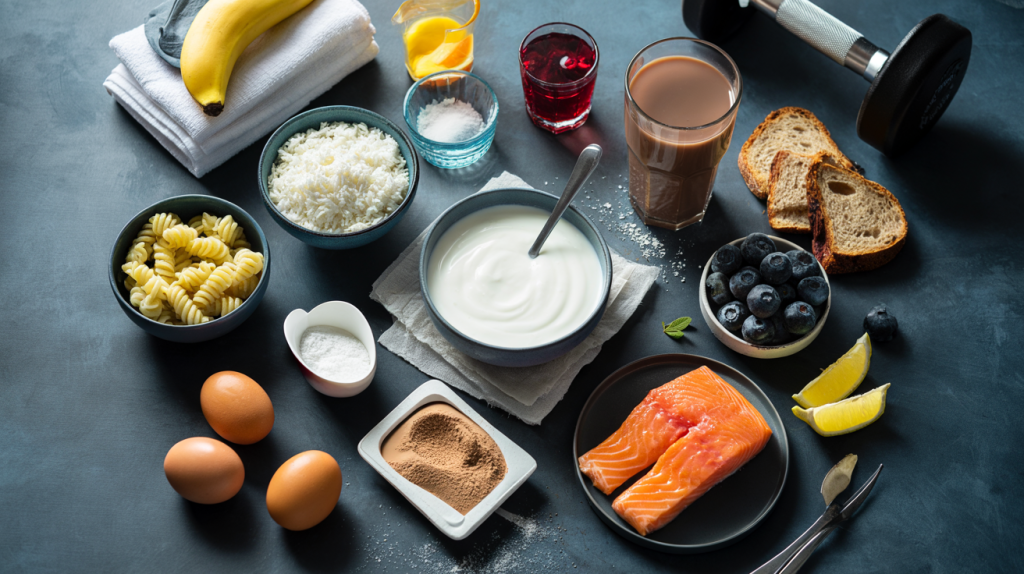
One smart shopping list : simple foods that work
Let us turn this into a basket you can use tonight. No fancy powders required, unless you like them.
- Whey or soy isolate : 25 to 30 gramms protein, at least 2 grams leucine, mixes fast after training
- Greek yogurt or cottage cheese : 200 to 300 grams delivers 20 to 30 grams protein with calcium
- Chocolate milk : 400 to 500 milliliters for a 3 to 1 carb to protein ratio, supported in a 2018 review of performance and recovery outcomes European Journal of Clinical Nutrition 2018
- Rice, pasta, oats, potatoes, bananas and bread : easy carbohydrates to hit 1.0 to 1.2 grams per kilogram per hour when needed
- Salmon, sardines or trout : two servings weekly to cover omega 3, or a daily fish oil providing 1 to 2 grams EPA plus DHA
- Blueberries and tart cherry juice : one cup berries or 30 to 60 milliliters concentrate twice daily around heavy blocks
- Gelatin or collagen plus orange juice : 15 grams with vitamin C before loading to support connective tissue
- Salted water or milk : fluid plus sodium to rehydrate, especially after sweaty sessions
Put it together with a simple template. After training, take 25 to 30 grams protein, add 1 gram per kilogram of carbohydrate, include a colorful fruit serving, drink water with a pinch of salt. Later meals keep the 0.3 grams per kilogram protein rhythm and fill total carbs based on tomorrow’s plan. Small choices, repeated, change how you feel when you wake up.