
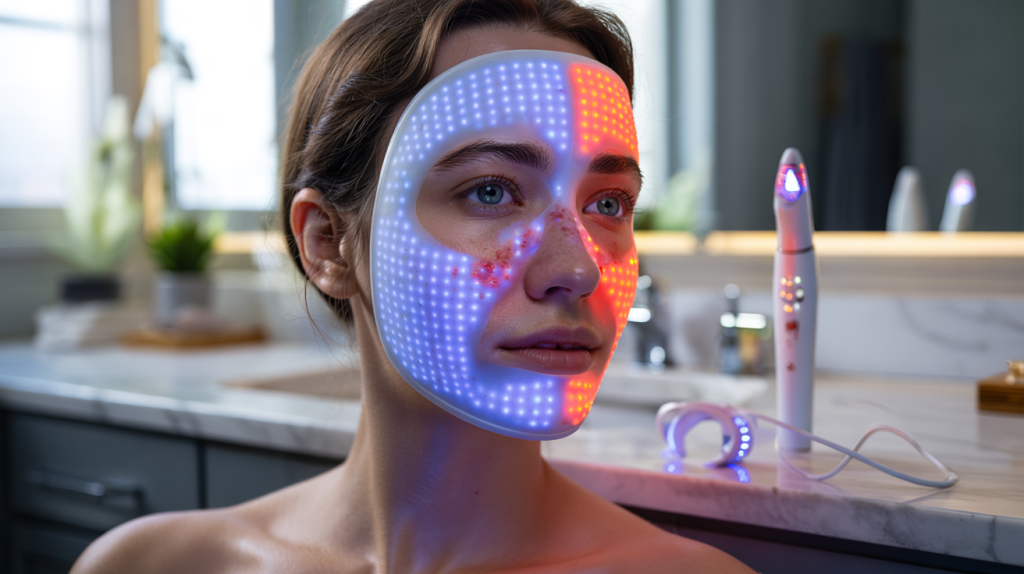
Acne is stubborn and everywhere. The American Academy of Dermatology reports up to 50 million people in the United States deal with it each year, which explains the rush on LED masks and wands promising calmer skin without prescriptions.
The quickest answer a shopper wants today is simple. The best LED acne device combines blue light at about 415 nm to target bacteria and red light around 630 to 633 nm to ease inflammation, covers enough skin to treat consistently, and holds FDA clearance for acne. Used regularly, dermatology sources say results often show up in 4 to 12 weeks.
Best LED acne device picks you can actually use at home
These models are widely compared by dermatology clinics and informed buyers, with clear wavelengths and established manufacturers. Choose by face coverage, routine, and budget.
- Omnilux Clear : full face silicone mask using blue 415 nm and red 633 nm, comfortable fit and short sessions, marketed with FDA clearance for acne.
- LightStim for Acne : handheld panel using blue 415 nm and red 630 nm, spot treating clusters, FDA cleared for mild to moderate acne.
- Dr. Dennis Gross SpectraLite FaceWare Pro : rigid face mask with blue 415 nm and red 630 nm, fast three minute programs, strong brand support.
- Foreo Espada : compact blue 415 nm pen for single blemishes, pairs light with vibration to improve contact, very quick daily use.
- MZ Skin Light Therapy Mask : multi wavelength face device including blue and red modes, best for those who want acne and tone sessions in one unit.
How LED blue and red light treat acne on skin
Blue light focuses on the bacteria now called Cutibacterium acnes. The bacteria produce porphyrins that absorb blue 415 nm light and generate reactive oxygen species that damage the microbe. That reduces inflammatory breakouts where bacteria fuel the process.
Red light near 630 to 633 nm does not target bacteria. It calms local inflammation, supports skin repair, and can reduce visible redness after a breakout. Many devices combine both so you hit bacteria and swelling in the same daily session.
Coverage matters. Masks cover cheeks, jaw, and forehead in one pass. Wands are slower yet precise for a stubborn area like the chin. Daily or near daily sessions keep the effect going because bacteria and inflammation come back if you stop too soon.
Evidence and safety notes from dermatology sources
The American Academy of Dermatology notes that light therapies can help acne, with at home devices typically using lower energy than in office treatments. The AAD states that improvement may appear within 4 to 12 weeks when used as directed and that consistency counts for results.
A Cochrane review on light therapies for acne published in 2016 described the overall evidence as low certainty, with modest benefits versus sham controls in short term studies. Translation for shoppers is simple. LED can help mild to moderate acne, yet it is not a substitute for medical care when cysts, scarring, or severe flares are present.
Safety has a timeline too. In July 2019, Johnson and Johnson recalled the Neutrogena Light Therapy Acne Mask over a potential risk to people with underlying eye conditions or those using photosensitizing drugs. The episode pushed buyers and brands to take eye protection and instructions more seriously.
As for medications, the AAD cautions about drugs that increase light sensitivity, like some oral antibiotics and isotretinoin. If any of these are on your list, ask a clinician before you start LED. Most healthy users tolerate LED well, yet devices must not be shared on broken skin or used on open wounds.
Buying guide for the best LED acne device : what really matters
Start with wavelengths. Look for blue around 415 nm and red around 630 to 633 nm. If a product conceals wavelengths entirely, that is a red flag for a technical device.
Then look at face coverage. Full masks make daily use easier if breakouts spread across cheeks and jaw. Pens or small panels suit occasional T zone or maskne clusters. Routine wins, so pick a format you will actually use five days a week.
Session length has to fit your life. Many reputable devices run three to ten minutes per day. Short programs increase the odds you stay consistent long enough to recieve results.
Check regulatory status. For the United States, FDA clearance for acne indicates the company submitted safety and performance data for the intended use. It is not a cure label. It does separate serious manufacturers from cosmetic gimmicks.
Look for transparent documentation. Clear wavelengths, user manuals, and a one or two year warranty are basics. Eye shields or an automatic eye safety cutout add peace of mind, especially after the 2019 recall story.
Price varies widely. Compared with in office blue and red sessions, which can cost well over 100 dollars per visit, home devices in the 100 to 450 dollar range are feasible for long term prevention. If acne is severe or scarring, ask a board certified dermatologist about combining LED with prescription options to reduce downtime and boost outcomes.