
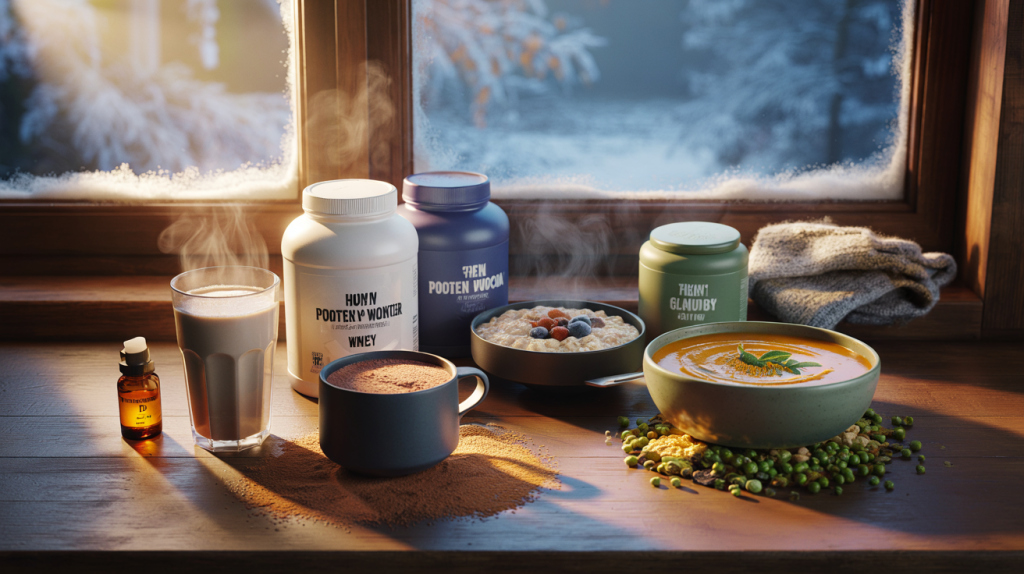
Best Protein Powder for Winter: the quick answer
Cold days hit appetite, training and immune resilience. For winter, whey isolate works right after workouts to trigger recovery quickly, micellar casein before bed supports overnight repair and steadies hunger, and a pea plus rice plant blend helps dairy-free readers keep muscle while staying kind to digestion. Fortified options with vitamin D and B12 make sense when daylight is short.
The need is real. Adults generally require 0.8 g of protein per kg body weight daily (Source : National Academies, Dietary Reference Intakes, 2005). Older adults benefit from 1.0 to 1.2 g per kg to protect muscle in colder months with fewer steps and more indoor time (Source : PROT-AGE Study Group, 2013). Recovery hinges on leucine – aim for 2 to 3 g per meal to stimulate muscle protein synthesis, which whey delivers more easily than most sources (Source : International Society of Sports Nutrition Position Stand, 2017). Casein digests slowly for up to 6 to 7 hours, a useful overnight window in winter (Source : Boirie et al., 1997). And vitamin D status drops in winter, with an estimated 40 percent of Europeans below 50 nmol/L in multiple countries (Source : Cashman et al., 2016) – powders fortified with vitamin D3 add a simple layer of support.
Whey vs Casein in cold months: what changes
Short days, fewer outdoor sessions, more cravings. That pattern pushes many to lose lean mass while snacking on quick carbs. Whey isolate – usually 90 percent protein by weight – absorbs fast and packs leucine to hit that 2 to 3 g threshold in one scoop, making it an easy post-workout anchor when daylight is brief (Sources : product specifications; ISSN 2017).
Evenings tell a different story. Hunger creeps in, dinner runs late, then sleep. Micellar casein forms a gel in the stomach, releasing amino acids gradually – the classic winter buffer for long nights and reduced activity (Source : Boirie et al., 1997). Many shift to 30 g casein before bed to curb late snacking and wake up less ravenous. It reads simple because it is.
One caveat that saves frustration. Collagen is not a complete protein for muscle, since it lacks enough tryptophan and has a low leucine content. Great for cooking texture, not for hitting synthesis targets in winter training blocks (Source : FAO protein quality standards, 2013).
Plant-based protein powders, vitamin D and immunity
Plenty move toward plant proteins in winter for comfort, ethics or digestion. A pea and rice blend closes essential amino acid gaps and bumps digestibility compared with single-source pea alone (Sources : FAO 2013; Gorissen et al., 2018). For athletes or older adults, that blend narrows the leucine and lysine gap while staying gentle on the gut.
Immunity sits in the background all season. Protein supports antibody production and immune cell turnover, so under-consuming makes colds linger longer than needed (Source : Calder et al., Nutrients, 2020). Vitamin D status also tracks with winter infections. Fortified plant or dairy powders that include vitamin D3 address the seasonal drop described across Europe in 2016 data (Source : Cashman et al., 2016). That combo – adequate protein and D – is practical, not hype.
Timing helps too. A higher protein breakfast of 25 to 30 g reduces daylong hunger and evening snacking, a pattern replicated in controlled trials (Source : Leidy et al., 2015). Oatmeal plus a scoop, or a hot cocoa style shake, feels seasonal and works.
How to choose and use protein powder in winter meals
The biggest mistakes show up fast. Picking flavor over formula, sipping only cold shakes, ignoring third-party testing, confusing collagen for a full protein, or skipping leucine-rich options after strength work. Nothing dramatic – small errors that stack up over months.
Labels matter. Look for whey isolate if lactose sensitive, micellar casein at night, or a pea plus rice blend if dairy free. Seek vitamin D and B12 in plant formulas during low-sun periods. NSF Certified for Sport or Informed Choice seals reduce contamination risk that has been flagged in independent audits.
- Quick pick guide : post-workout whey isolate with 2 to 3 g leucine per serving; pre-sleep micellar casein for slow release; dairy free choose pea plus rice with vitamin D3 and B12; budget go unflavored so you can blend into soups, porridge or hot drinks to recieve benefits without extra sugar.
Warm prep changes adherence. Stir unflavored whey into hot porridge off the heat to avoid clumping. Casein thickens hot cocoa into a cozy dessert-like sip. Plant blends fold well into blended soups – tomato, pumpkin, carrot – when whisked after cooking. Proteins may denature with heat, but the amino acids remain intact for the body.
Numbers keep the plan grounded. Target 0.8 g per kg daily for adults, or 1.0 to 1.2 g per kg if older or during higher training loads in winter (Sources : National Academies 2005; PROT-AGE 2013). Distribute in 25 to 40 g servings that deliver 2 to 3 g leucine, as recommended by the ISSN for muscle protein synthesis at each meal (Source : ISSN 2017). That pattern is the missing piece when daylight shortens and appetite shifts.