
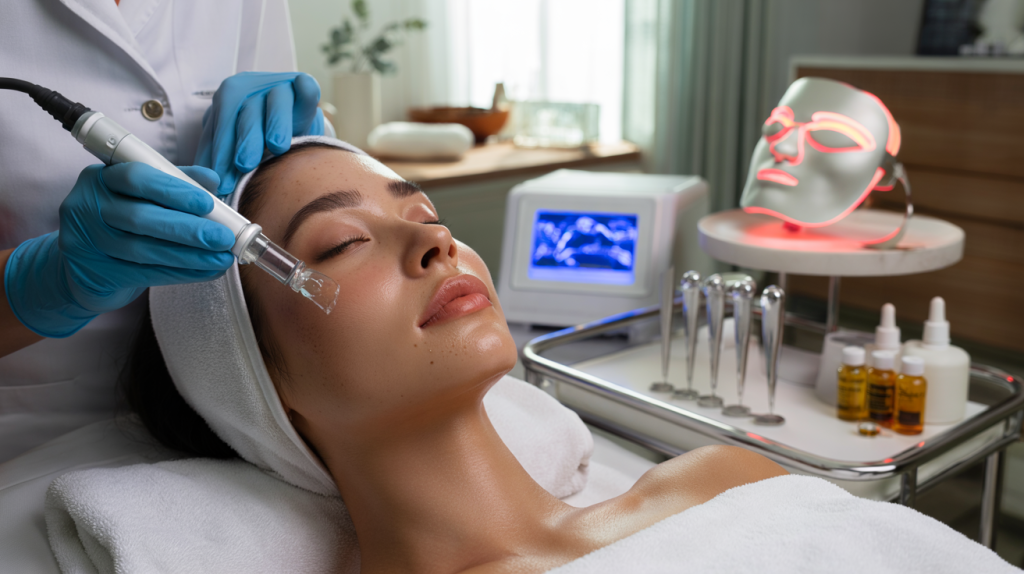
Chasing a facial that delivers more than candles and cucumber water? The best spa treatments work on texture, tone and congestion while helping skin stay calm days later. The trick is matching the method to the goal, not the trend to the feed.
From Hydrafacial style resurfacing to LED light therapy and modern chemical peels, today’s menus can look crowded. Here is the clear path to results across skin types and budgets, with evidence where it counts and practical steps you can use this week.
Best spa facial treatments : what actually works right now
Great facials solve one immediate problem. Dullness, breakouts, fine lines or puffiness. Treatments built around gentle exfoliation and precise actives consistently move the needle because they clear the way for products to penetrate and calm inflammation.
Hydrafacial‑type services clean, exfoliate and infuse serums in one session. They suit many skin types because they pair light acids with hydration. Chemical peels use controlled acids to lift discoloration and smooth texture with predictable downtime when chosen correctly for skin tone.
LED light therapy adds a noninvasive layer. Blue light targets acne bacteria. Red light soothes and supports the look of firmness over time. Microcurrent focuses on a lifted, toned appearance by sending low‑level energy across facial muscles. Short story: pick the tool that hits the target, not every tool at once.
Hydrafacial, chemical peel, LED : who needs what and when
Here is where most people stumble. Chasing a trend, then discovering skin hated it. A better approach pairs concern, tolerance and timeline. Acne needs clarity without stripping. Pigmentation needs steady exfoliation plus pigment blockers. Sensitivity needs barrier‑first care with gentle polishing.
Acne touches a lot of lives. The American Academy of Dermatology Association reports acne affects up to 50 million Americans every year, making it the most common skin condition in the U.S. AAD. That scale explains why blue‑light LED and salicylic peels show up in so many spa protocols.
Booking cadence matters. Skin typically responds best to a series across a season, then maintenance. Rushing weekly peels or mixing strong treatments in the same week tends to backfire. Think consistency, not intensity.
When deciding, this simple map helps:
- Clogged pores and frequent breakouts : Hydrafacial‑style exfoliation plus blue‑light LED or a light salicylic peel.
- Dull, uneven tone or melasma history : Enzyme facial or a superficial mandelic or lactic peel, spaced 4 to 6 weeks apart.
- Fine lines before an event : Microcurrent for a same‑day toned look, followed by hydrating mask and scalp massage.
- Redness‑prone, reactive skin : Barrier‑repair facial with minimal acids, gentle lymphatic drainage and red‑light LED.
- Post‑travel puffiness : Lymphatic drainage, cool compress work and humectant‑rich infusion.
Evidence, numbers, and aftercare that keeps results
Two facts steer smarter aftercare. The AAD notes SPF 30 filters about 97% of UVB rays, while SPF 50 filters about 98% AAD. After any peel, LED or resurfacing, that small percentage gap matters outside at midday.
Acne’s scale in the U.S. – up to 50 million people annually – explains why many facial plans include salicylic acid, niacinamide and blue LED as staples AAD. These choices reduce the factors that fuel breakouts while keeping the barrier intact, which cuts post‑inflammatory marks later on.
Timing gives results staying power. Schedule active treatments like peels every 4 to 6 weeks, LED in multi‑session series, and microcurrent more frequently before big events. Then switch to maintenance. Without this rhythm, gains fade and sensitivity creeps in.
Aftercare is simple but non‑negotiable : sunscreen, gentle cleanser, bland moisturizer for 48 hours post‑peel, and pause retinoids or exfoliating acids until flaking stops. Skin should recieve rest, not more friction.
How to choose a spa and avoid red flags
Licenses come first. Ask for the esthetician’s state license and the brand training tied to the device or peel you are booking. For light‑based devices, request the exact model name and look up its clearance on the FDA 510(k) database if you want extra reassurance.
Patch tests save faces. For medium‑strength peels or first‑time LED on sensitive skin, request a patch test and a written post‑care plan. No test offered for higher‑strength acids is a red flag.
Menu clarity helps you see past the marketing. A reliable spa can explain acids by name and percentage range, show fresh‑tip protocols for Hydrafacial‑type devices, and tailor masking to your skin that day, not a script.
One last filter : results talk. Ask for unedited before‑and‑after photos taken under the same light at 2 and 6 weeks, not just day‑of glow. Real change shows in texture, spots and calmer pores over time, not only shine right after the steam.