
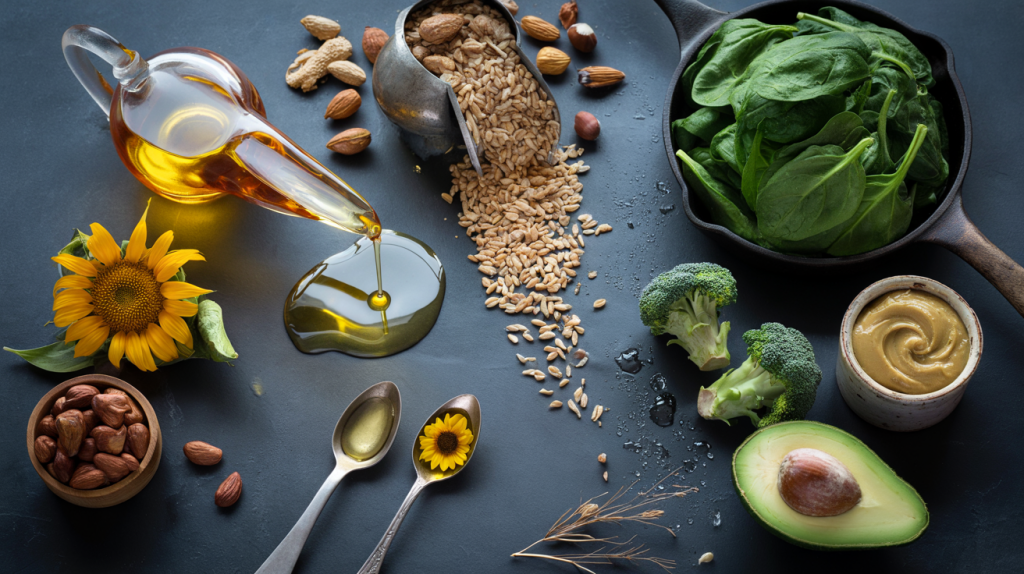
Vitamin E acts like a quiet bodyguard for cells, especially against oxidative stress. For a straight shot to the daily target, the clear winners are wheat germ oil, sunflower seeds, almonds, and hazelnuts. One tablespoon of wheat germ oil provides about 20.3 mg of alpha tocopherol, already exceeding the adult recommendation, according to NIH Office of Dietary Supplements and USDA FoodData Central.
Looking for everyday picks that fit busy routines. An ounce of sunflower seeds comes in around 7.4 mg, almonds near 7.3 mg, and a tablespoon of sunflower oil roughly 5.6 mg. Add a half cup of cooked spinach at about 1.9 mg and the plate starts to do the work by itself.
Best vitamin E sources to eat today
Most vitamin E in food appears as alpha tocopherol. Plant oils and nuts lead by far, then leafy greens and a few fruits. Numbers below come from USDA FoodData Central and the NIH ODS fact sheet.
- Wheat germ oil, 1 tablespoon : about 20.3 mg alpha tocopherol, which is roughly 135 percent of the adult RDA
- Sunflower seeds, dry roasted, 1 ounce : about 7.4 mg
- Almonds, dry roasted, 1 ounce : about 7.3 mg
- Sunflower oil, 1 tablespoon : about 5.6 mg
- Safflower oil, 1 tablespoon : about 4.6 mg
- Hazelnuts, 1 ounce : about 4.3 mg
- Peanut butter, 2 tablespoons : about 2.9 mg
- Spinach, cooked, 1/2 cup : about 1.9 mg
- Avocado, half a fruit : roughly 2 mg
- Broccoli, cooked, 1/2 cup : about 1.2 mg
Simple pattern that keeps working. A small portion of nuts plus a spoon of a vitamin E rich oil already covers most needs, then greens round it out.
How much vitamin E per day : RDA, EFSA, and safety limits
The NIH Office of Dietary Supplements sets the Recommended Dietary Allowance for adults at 15 mg per day of alpha tocopherol. The target during lactation rises to 19 mg. These figures reflect current consensus in the United States.
In Europe, the European Food Safety Authority set Adequate Intakes in 2015. Adults are advised to reach 13 mg per day for men and 11 mg per day for women, expressed as alpha tocopherol.
High dose supplements are a different story. The tolerable upper intake level for adults is 1000 mg per day from supplements, notes NIH ODS, because very large doses may increase bleeding risk, especially with anticoagulant medicines.
Common mistakes that quietly cut vitamin E
Using only highly refined oils. Refining can reduce natural tocopherols compared with minimally processed oils. Choosing extra virgin or unrefined options keeps more vitamin E in the bottle.
Long heating and light exposure. Vitamin E is sensitive to oxygen and light. Store oils in dark, cool places and add delicate oils near the end of cooking or after heat.
Low fat meals all day. Vitamin E is fat soluble, so absorption improves when there is some dietary fat present. A handful of nuts or a drizzle of oil with vegetables makes a visible difference.
Relying on capsules for a quick fix. Food provides a complex mix of tocopherols and other antioxidants. Supplements have a place in specific cases under medical advice, especially if certain conditions or medications are involved. Interactions with warfarin or similar drugs are documented by NIH ODS.
Easy food swaps and meal ideas to hit 15 mg
Start at breakfast. Whole grain toast with 2 tablespoons of peanut butter gives about 2.9 mg. Add a kiwi or a few mango slices and there is a gentle boost before noon.
Lunch can do the heavy lifting. Toss a large salad with a tablespoon of sunflower oil for about 5.6 mg, then sprinkle an ounce of sunflower seeds for another 7.4 mg. That already meets the 15 mg mark without trying too hard.
Dinner is a chance to stabilize intake. Serve cooked spinach, half a cup at around 1.9 mg, beside a protein. Finish with a spoon of wheat germ oil as a cold garnish, which adds roughly 20 mg if used, so go light. Taste first, then pour. A little goes a long way.
On days when nuts feel more appealing, an ounce of almonds brings about 7.3 mg. Pair with a small avocado half for roughly 2 mg and a side of broccoli at 1.2 mg. That trio quietly climbs toward the target without effort, definetely the kind of rhythm a week can sustain.