
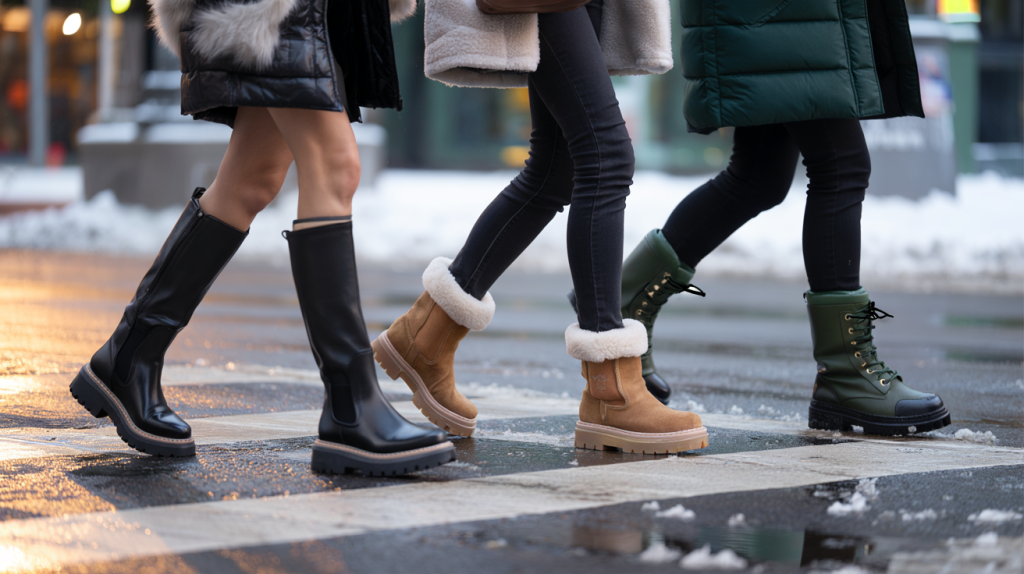
Shopping for winter boots when under 5 foot 4 often feels like a trade-off : stay warm or look balanced. The fastest win is simple. Pick insulated, waterproof boots with a short shaft – 5 to 7 inches – a slim ankle, and a light lift of 1 to 2 inches. That combo keeps proportions clean, adds height without strain, and still grips on ice.
There is more at stake than style. Data from the CDC National Center for Health Statistics shows the average U.S. woman stands about 5 foot 4 inches, based on 2015–2018 measurements published in 2021. Petite frames need warmth without bulk. For city winters and daily errands, 200 gram insulation works; for colder snaps or longer outdoor time, 300 to 400 gram insulation is safer. Source : CDC NCHS Data Brief No. 362, 2021. Source : REI Co-op Expert Advice, updated 2024.
Best winter boots for petite women : the fast answer
Think short and structured. Chelsea-style winter boots, insulated hiker-mids, and mini shearling styles with rugged outsoles are the most forgiving on shorter legs. Look for a tapered or hidden platform that lifts the silhouette without looking like a heel. A narrower shaft or adjustable lacing keeps the boot close to the leg line, so hems do not bunch and calves do not look drowned.
Examples that tend to work : insulated Chelsea boots with 5 to 6 inch shafts and lug soles for urban slush; mid-height hikers from outdoor brands with waterproof membranes for mixed commutes; mini shearling boots with a platform for warmth without visual weight. Yes, you can be 5 foot 1 and wear snow boots without feeling swallowed up.
Fit and proportions : shaft height, heel, and calf width
The main visual trick is where the shaft ends. On petites, a shaft that hits just above the ankle bone and below mid-calf usually lengthens the leg. Tall shafts landing close to the knee tend to compress the silhouette. A subtle lift – think 1 to 2 inches of wedge or platform – elongates lines and keeps stability on slick sidewalks.
Calf circumference matters. If calves are slim, target a shaft circumference under roughly 13 inches or choose boots with laces or buckles to tighten. If jeans pool at the top, that extra fabric shortens the leg in photos and in real life. Almond or round toes read sleeker than square boxes, yet toes still need space to splay inside warm socks.
Warmth and grip : insulation, waterproofing, traction
Cold bites faster in tight boots. The American Podiatric Medical Association reported that 77 percent of U.S. adults have experienced foot pain, a reminder that comfort is not cosmetic. A roomy toe box with wool or technical socks keeps circulation moving. Source : American Podiatric Medical Association, 2014 Foot Health Facts Survey.
Insulation numbers are practical. For daily city wear and moderate cold, 200 gram synthetic insulation is a solid baseline. Prolonged outdoor time, wind, or sub-freezing days often call for 300 to 400 gram. Shearling-lined minis feel toasty near freezing, then need thicker socks when temps drop. Waterproof means sealed seams and a membrane; water resistant is not enough for snow banks and slush rivers.
Traction shows up in the outsole. Deep, widely spaced lugs clear slush. Some brands test to ASTM F2913, the recognized standard for surface traction. If a product page names the standard, that is a good sign. Ice compounds exist, yet petite wearers often prefer a grippy lug sole that does not look like a mountaineering boot with office clothes.
Your petite-proof winter boot checklist
Use this quick list in-store or on a product page. It saves time, and occassionally saves a return.
- Shaft height : 5 to 7 inches to avoid chopping the leg line.
- Lift : 1 to 2 inches via hidden wedge or platform for subtle height and stability.
- Adjustability : laces, elastic gores, or buckles to snug the ankle and calf.
- Insulation : 200 g for city cold, 300–400 g for longer, colder outings. Source : REI Co-op Expert Advice, 2024.
- Waterproofing : sealed seams plus a membrane; look for clear waterproof labeling.
- Outsole : chunky but not cartoonish lugs; any mention of ASTM F2913 testing is a bonus.
- Fit test : try with winter socks, walk a minute, check heel slip and toe wiggle.
Real-world picks then align with your needs. Commute and office days favor insulated Chelsea boots with a clean upper that pairs with trousers. Weekend errands fit mini shearling platforms with a weather-treated upper. Snowy parks and dog walks lean toward mid hikers with toe rands and gusseted tongues. The aim stays the same – warmth without bulk, grip without a clunky silhouette.
One last piece fixes a lot of borderline fits : insoles. A supportive insole can lift you a few millimeters, prevent heel slip, and soften impact on concrete. Lace-to-toe hikers give the best micro-adjust across winter socks, while side zips in city boots add speed without changing the look. If between sizes, the thicker sock day wins – size accordingly.
Small detail, big payoff. Measure your ankle-to-calf where boots end, compare to the product’s shaft height and circumference, then match insulation to your climate by the numbers above. That is the missing link that turns a cute pair into a dependable winter tool that also flatters a petite frame.