
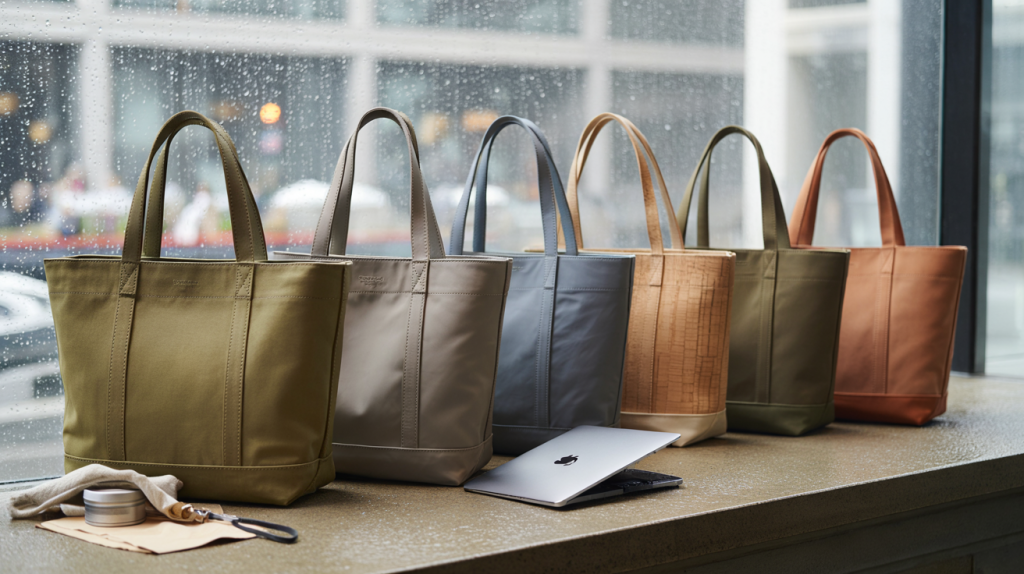
Why switch from a suede tote bag right now
Suede ages beautifully on day one, then rain hits, stains set, and the bag starts living a risky life. The search for an alternative is not just about style – it is about durability, weather reality, and lighter impact without losing that polished finish.
Fashion’s footprint has been measured. In 2018, the industry generated 2.1 billion tons of CO2e – around 4 percent of global emissions – according to McKinsey and Global Fashion Agenda’s 2020 report. Livestock alone accounts for 14.5 percent of global greenhouse gases, says the Food and Agriculture Organization in 2013. Switch the daily tote away from animal suede and the choice can cut maintenance headaches while aligning with those numbers.
What shoppers want solved: rain, wear, and ethics
The recurring problem shows up fast – suede hates moisture and city grime. Commuters need a tote that handles laptops, spills, and a surprise shower without turning delicate.
Price is part of the equation, as is care. Synthetic options raise plastic questions too. Only 9 percent of plastic waste was recycled globally in 2019, the OECD reported in 2022. That nudge explains the rise of recycled fibers, plant-based leathers, and waxed natural cloths that can be repaired.
Textile impact matters upstream. The World Bank has attributed up to 20 percent of global industrial wastewater to textile dyeing and treatment, a reminder that choosing undyed or low-impact finishes can be a small but real lever.
Data-backed alternatives to a suede tote bag
Here are materials that keep the refined look while easing upkeep and risk in daily use.
- Organic cotton canvas – Grown without synthetic pesticides, it can be waxed for weather resistance. Textile Exchange’s 2017 life cycle assessment found organic cotton uses 91 percent less blue water and can cut emissions compared to conventional cotton.
- Recycled nylon – Light, tough, and repaired easily. Upcycled ocean or post-industrial nylon reduces reliance on virgin fossil inputs, with robust abrasion resistance for commuters.
- Recycled polyester twill – Structured like suede’s cousin but faster to dry. Pair with solution-dyed fabrics to save water and energy during coloring.
- Cork leather – Naturally water resistant, smooth to the touch, and patinas with use. Harvesting does not fell the cork oak and supports Mediterranean agroforestry.
- Pineapple leaf fiber leather, known as Piñatex – Made from agricultural waste leaves, giving a pebbled look that reads premium without animal hide.
- Cactus leather – From nopal cactus, often air-dried and coated for durability. Soft handfeel, a clean matte finish, and good color hold.
- Apple peel leather – Uses leftovers from the juice industry to create a supple surface close to suede’s visual warmth.
- Mushroom mycelium – An emerging option with a velvety touch. Early generations are pricey, yet the handfeel lands convincingly luxe.
- Waxed cotton twill – Heritage look, re-waxable at home, practical for rough weather. Sligthly heavier, but it softens with carry.
How to choose the right swap and keep it sharp
Start with function. If the bag carries a 13-inch laptop, check the base panel and strap anchoring. Look for bartacks or box-stitches at stress points so weight does not stretch the seam over time.
Ask for material transparency. Recycled content percentages, dye method, and coating type are worth reading. Solution dyeing reduces water and energy in synthetics, while plant-based leathers with water-based coatings avoid many solvents used in older finishes.
Care changes by fiber. Canvas and waxed cotton can be spot-cleaned and reproofed. Recycled nylon spot-cleans with mild soap. Plant-based leathers prefer a damp cloth, then air dry away from heat. This is where suede falls short in the rain – water spots etch the nap, and cleaning costs bite.
Price, longevity, and the overlooked styling trick
Cost-per-wear is the quiet filter. A mid-range recycled nylon or waxed canvas tote often outlasts suede for commuting, because scuffs and showers do not end the party. The purchase stings less when the bag covers Monday through Sunday without babying.
Weight plays into comfort. A structured cork or recycled polyester twill keeps shape without hardware bulk, useful for long days. Soft-structured bags in cactus or apple leather fold into a carry-on, then pop back elegantly on arrival.
Color strategy solves seasonality. Go for mid-tone neutrals – taupe, olive, steel – that hide marks better than black and feel warmer than beige. That palette lets plant-based textures look intentional, not like a compromise.
There is one last angle that ties back to the data. Opt for pieces with repair services or spare parts. Extending a product’s life by just nine months can reduce its carbon, water, and waste footprints by 20 to 30 percent, according to work widely cited by WRAP in 2012. A replaceable strap or re-wax kit quietly buys those months.