
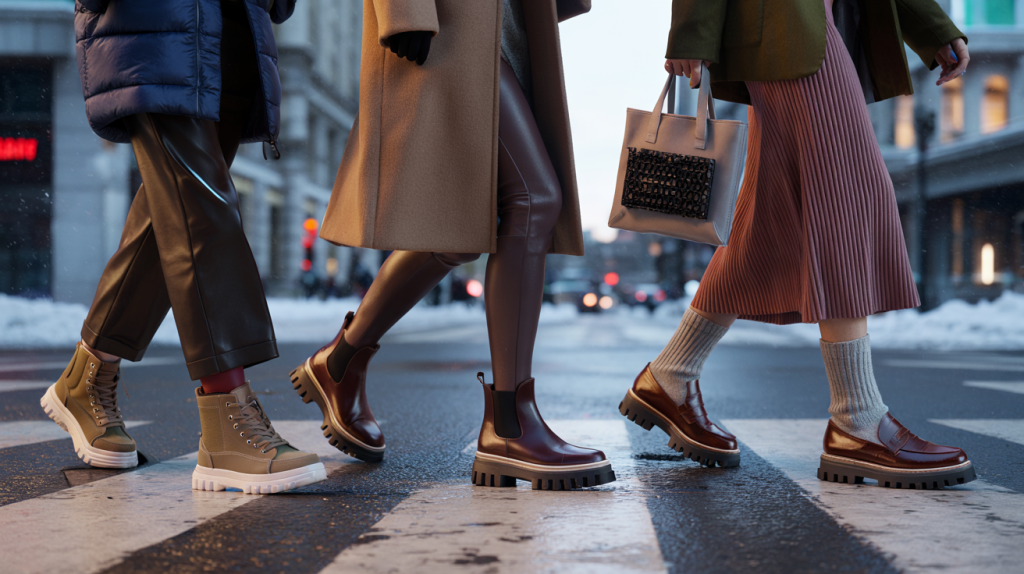
Cold streets, chic looks. Discover warm, grippy, waterproof alternatives to winter boots for women that still feel light and easy to wear.
Snow piles up, sidewalks turn slick, yet heavy winter boots do not fit every outfit or commute. Good news : several lighter options keep feet warm and dry, while looking sharper than bulky boots.
From lined sneakers to lug sole loafers, the market now blends performance materials with everyday silhouettes. The trick is choosing insulation, waterproofing, and traction smartly, then matching them to how you move through the day. Here is what actually works, with clear cues from technical standards and material science.
Alternatives to winter boots for women that work outside
The main idea is simple : swap height for smart features. Many women reach for insulated high top sneakers, leather Chelsea styles with a serious sole, or waterproof clogs when the forecast wobbles between slush and dry cold. These options feel lighter, slip on fast, and pair with jeans or tailored wool pants without the big boot look.
Insulated sneaker boots became a cold weather staple because they cushion like trainers yet trap heat. Look for synthetic fills such as PrimaLoft, originally developed for the U.S. Army in 1983, now offered with up to 100 percent recycled content according to PrimaLoft. They compress well and keep warmth even when damp.
For city commutes, waterproof leather or coated canvas low boots cut splash without weighing you down. A sealed membrane makes the difference. W. L. Gore explains that a GORE‑TEX membrane has pores around 20,000 times smaller than a water droplet, which blocks liquid while letting vapor escape, detailed on the brand’s site in product education.
Materials that keep feet warm and dry without bulky boots
One observation keeps coming back : warmth depends on insulation and a dry microclimate, not just shaft height. Thinsulate, launched by 3M in 1979 and documented on 3M resources, traps air in fine fibers for steady warmth inside shoes that still look sleek.
Waterproofing comes in layers. Some shoes use full bootie membranes. Others rely on treated leather and taped seams. Both can work if paired with a thermal insole to cut heat loss into cold pavement. Pair with merino socks to move moisture away from skin, then the membrane can vent it out.
Looking at outsole compounds helps too. Vibram’s Arctic Grip technology, introduced in 2016 and described on Vibram’s site, aims to grip wet ice with specialized rubber formulations. While not a cure all on glaze ice, it is a real upgrade over flat fashion soles.
Traction, slips, and what the labels actually mean
Here is the problem that needs solving : winter slips. Buying lighter footwear is fine, but only if the sole fights slick surfaces. Technical labels are helpful. The common workplace standard for slip resistance uses SRA, SRB, and SRC codes that test on ceramic tile and steel with lubricants. SATRA, a respected footwear lab, explains these classifications and test surfaces in its guidance at satra.com. While this is an occupational standard, the same principles apply to consumer outsoles.
In real life, city walkers combine two tactics. First, choose lugs with channels that shed slush so rubber actually contacts the ground. Second, add removable traction when needed. Microspike or coil slip‑ons stash in a tote and go on in under a minute for icy blocks, then come off indoors without drama.
One more detail matters for comfort over hours outside : weight. Lighter pairs reduce fatigue and keep stride natural on stairs and transit. That is where many switch from tall boots to insulated sneakers or Chelsea styles with a modern lug. The feel is simply easier.
What to buy now : smart picks that replace winter boots
Shopping aimlessly wastes time. Focus on these alternatives that cover commuting, errands, and nights out while staying winter ready.
- Lined high top sneakers with PrimaLoft or Thinsulate, plus a waterproof membrane
- Waterproof leather Chelsea with a deep lug sole and elastic gores for quick on and off
- Insulated clogs or mules with a backstrap and grippy rubber for mild winter days
- Lug sole loafers in treated leather, paired with warm socks for office to dinner
- Water resistant trail inspired sneakers with a rockered midsole for long walks
- Removable traction devices that fit over flats or sneakers for surprise ice
- Thermal insoles that reflect heat upward inside any closed shoe
Styling comes last, but it seals the deal. Cropped wool trousers sit cleanly over a Chelsea with a serious tread. Denim and a quilted coat love insulated high tops. A midi skirt pairs with lug loafers and thick rib socks for a neat line. And on the worst mornings, traction add ons bring peace of mind without changing the outfit.
Missing piece solved : filter for three specs before checkout. Insulation stated by name, a waterproof claim tied to a membrane, and a sole with real channels. If a product page mentions PrimaLoft 1983 origins, GORE‑TEX pore science that blocks liquid water yet breathes, or SRC style slip testing described by SATRA, confidence jumps. Pick a pair that fits your route, then retire the heavy boots to the back of the closet. Your new winter favorit might not look like a boot at all.