
Straight answer, rich context. Is Bi Gan really back with “Résurrection”? Here is what is confirmed, how his cinema works, and the smart way to follow it.
Looking for clarity first. As of December 2025, there is no officially released Bi Gan feature titled “Résurrection”, and no industry announcement under that exact name from trusted film sources. Public filmographies list two features by the Chinese director Bi Gan, “Kaili Blues” in 2015 and “Long Day’s Journey Into Night” in 2018, entries traceable in Cannes program archives and Golden Horse listings.
The search still makes sense. “Résurrection” captures how critics describe Bi Gan’s cinema of returns, where places, faces, and memories resurface with unusual intensity. So a rigorous critique can unpack what such a project would involve, drawing on verified facts about his method, his timelines, and how audiences react when story and time begin to fold.
Bi Gan “Résurrection” critique : what is confirmed today
Facts first, without fog. The director Bi Gan, born in 1989 in Kaili in Guizhou province, has two completed features on record. “Kaili Blues” arrived in 2015 and “Long Day’s Journey Into Night” premiered in 2018 in the Cannes selection Un Certain Regard, according to the festival program published that May. His short “A Short Story” screened in 2022, extending his work between features.
No trade outlet of record, including Variety and The Hollywood Reporter, has published a formal greenlight or release notice for a feature called “Résurrection”. Chinese festival calendars and production bulletins list new projects each spring and late summer. Cannes traditionally unveils its lineup in April, Venice follows announcements during late July or early August, Toronto in early September. Any genuine Bi Gan comeback under that title would surface across those windows with credits and running time.
The label sticks for another reason. After 2018, coverage often framed the director’s return as a revival of his signature tools, not a literal title. That framing aligns with the work itself, which treats time as something that can wake up again on screen.
Style, time and place : how Bi Gan builds a resurrection on screen
Numbers tell parts of the story. “Long Day’s Journey Into Night” runs about 138 minutes, and ends with a continuous shot of roughly 59 minutes in 3D, a choice documented in festival notes and interviews at Cannes 2018. The camera glides through mines, rooftops, and a village fair, turning memory into something the body can cross.
“Kaili Blues” in 2015 lasts around 113 minutes and contains a long set piece that knits past and present inside one fluid movement. The setting is not abstract. Bi Gan shoots in Guizhou, often near Kaili, returning to alleyways, tunnels, and foggy hills that viewers come to recognize. Faces reappear, names echo, clocks drift. The effect is not a trick. It is a system, and it gives the sensation of a life looped back into view.
Production context matters. “Kaili Blues” drew attention on the festival circuit in 2015, then Bi Gan scaled up to stereoscopic 3D for the 2018 feature, a rare choice for an art film at the time. Marketing in China leaned on the romance angle for a New Year’s Eve release on 31 December 2018, before word of mouth redirected viewers to its dream logic. Dates and formats explain audience expectations better than adjectives.
Watching tips and real world markers : from 59 minutes of 3D to festival calendars
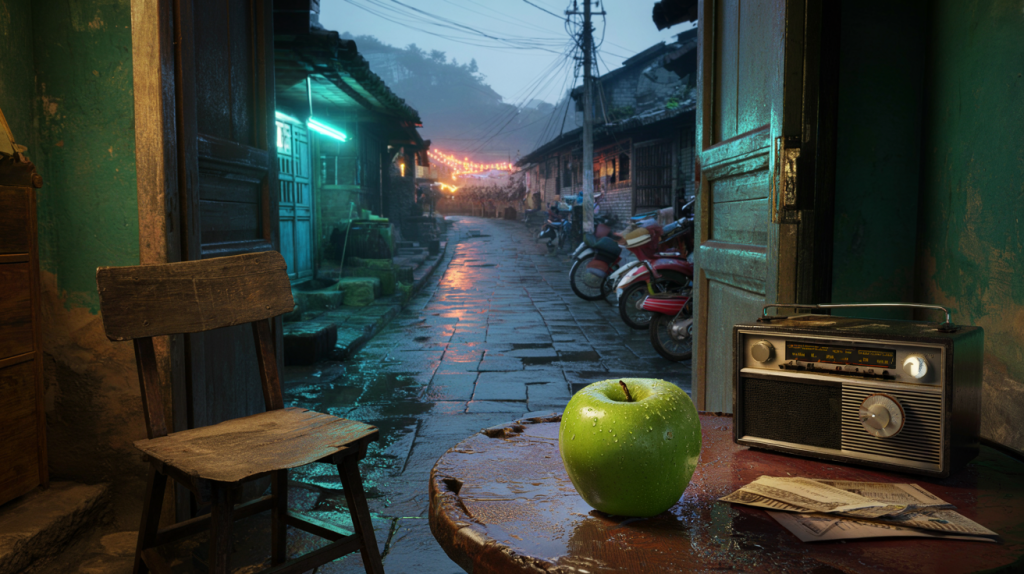
One common frustration repeats. Viewers look for plot signposts, miss the architecture, and feel lost. A practical approach starts simple. Track objects, not twists. A green apple, a song on a radio, a broken chair. In Bi Gan’s films, these items reenter later scenes and carry time forward. The design is precise, just not explained by dialogue.
Sound does heavy lifting. In the 2018 feature, the 3D finale is scored by ambient hums, wind, and a drifting melody that acts like a map. Watching with headphones on a legal platform, or in a quiet cinema when repertory screenings rotate, changes comprehension more than a rewatch without focus. That is not taste, it is mechanics.
There is also a pacing clue. The 59 minute take is not a stunt, it is a delivery system. When the camera refuses to cut, continuity binds moments into a present tense that revives earlier scenes. That is the closest the films come to the idea many call resurrection. Place returns, memory recurs, and the body stays inside it long enough to notice.
What to expect if “Résurrection” becomes an actual title later. Based on the director’s documented choices in 2015 and 2018, anticipate long unbroken movements, recurring spaces in Guizhou, and a narrative that treats dreams as evidence. Verification would arrive through festival announcements and production credits with dates, country of production, running time, and key crew. Absent those markers, any viral poster or teaser remains unconfirmed. It sounds basic, yet it is definetely the quickest way to separate rumor from reality.