
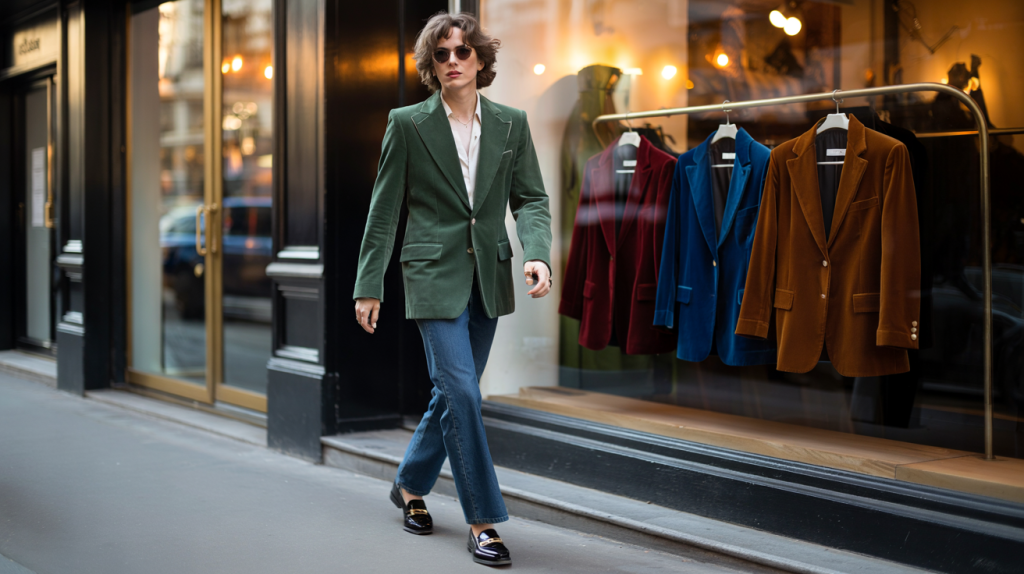
The 1970s velvet blazer is back in the spotlight. See how to wear it now, where to find the best pieces, and why this retro jacket suddenly looks modern.
Velvet has slipped from disco dance floors to today’s sidewalks without losing an ounce of charisma. The 1970s blazer velours – lush, saturated, slightly louche – returns as the season’s standout jacket, easy to style and unexpectedly versatile. Clicked for inspiration, readers land here for clear answers: how to wear it, which cuts matter, and what separates a great vintage find from a passable copy.
The revival is not random. Designers have been re-spotlighting velvet for years. Yves Saint Laurent set the tone with “Le Smoking” in 1966, including sharp velvet iterations that redefined evening suiting (Victoria and Albert Museum). Gucci ran with glamorous velvet suiting in Fall 2016, showing the fabric’s night-life punch on a modern runway (Vogue Runway). And color drives desire again in 2024 with Pantone’s soft “Peach Fuzz 13-1023”, proof that tactility and warmth are back at the center of style (Pantone Color Institute).
Why a 70s velvet blazer feels right now
The main idea is simple: a blazer velours années 70 gives instant atmosphere. Strong lapels, plush pile, rich tone. It dresses up denim, cools down party looks, and turns a grey office corridor into a small runway. The problem many face: velvet looks “evening only”. In daylight, it can feel too shiny or costume-like.
There is a fix. 70s shapes balance romance with structure. A slightly boxy or gently waisted cut avoids over-polish. Mid pile fabrics read softer than glossy high pile. Deep green, ink blue, chocolate, burgundy, and yes, black – these shades behave like neutrals under winter light.
Sustainability adds weight to the choice. Clothing utilization fell by 36% compared with 15 years earlier, a loss that pushes many toward pieces that last and carry stories, including vintage tailoring (Ellen MacArthur Foundation, 2017). Velvet blazers from the 70s were built for repeat wear, with sturdy canvases and generous seam allowances ready for tailoring.
How to wear a 1970s velvet blazer today
Start with proportion. If the jacket has broad lapels, keep the base quiet: a fine knit, straight-leg jeans, leather loafers. For evening, a silk shirt or a crisp tee changes the mood without trying too hard.
Color does the heavy lifting. Navy velvet softens a white shirt for office dinners. Forest green frames gold jewelry. Burgundy amplifies black trousers and pointed boots. When bolder: a camel turtleneck under chocolate velvet creates a studio-70s palette that still reads smart.
Buttons and pockets guide styling. A single-button cut flatters a dress and boots. Double-breasted looks great with tailored trousers and a slim belt. Patch pockets lean casual. Flap pockets hint at tuxedo energy. If the blazer is longline, show ankle to keep the look light.
Vintage or new: sourcing, fit and authentication
Plenty hunt the original deal. Others prefer a new jacket that behaves like vintage but fits straight from the hanger. Both routes can work. Authentic 70s pieces often came in cotton velvet or silk-cotton blends, with sturdy lining and weighty drape. Modern versions sometimes use stretch, which reads more casual and creases less.
When buying vintage online or in-store, use a quick checklist and move with intent.
- Check pile: rub gently upward. If the nap crushes but recovers, good. Bald or shiny elbows mean heavy wear.
- Read the label: look for cotton, silk, or viscose velvet. Polyester velvet is fine for price and care, just a different handfeel.
- Inspect seams and shoulder pads: 70s pads are lighter than 80s. Loose pad edges are easy repairs, torn armholes are not.
- Measure the back: shoulder seam to shoulder seam tells truth. Compare with a jacket that fits.
- Ask for natural light photos to judge color. Indoor tungsten makes burgundy and green look almost black.
Tailoring seals the deal. Shorten sleeves to show a half-inch of cuff. Nip the waist slightly if the torso feels boxy. A good alterations specialist will steam rather than press to protect the pile. Expect simple sleeve work to be affordable, complex shoulder changes less so. One tip: bring the shirt and shoes you plan to wear to the fitting for a tailord silhouette.
Care, texture and longevity: make velvet last
Velvet is a weave, not a fiber. Treat it by texture. Steam to release creases, never iron directly on the pile. If a mark appears, hover the steamer and brush lightly with a soft clothes brush. For storage, use a wide hanger so the shoulders keep shape.
Dry cleaning remains standard for lined velvet jackets, especially vintage. Ask for low-heat finishing and no hard pressing. At home, air the blazer after wear, then rest it 24 hours before closet time. That pause keeps the pile lifted.
The missing link between runway nostalgia and real-life wear is practicality. Choose mid-weight velvet that drapes without collapsing, prioritize lining that slides over knitwear, and anchor the jacket with everyday pieces. History provides the swagger – modern pairing does the rest.
References : Victoria and Albert Museum | Vogue Runway | Pantone | Ellen MacArthur Foundation