
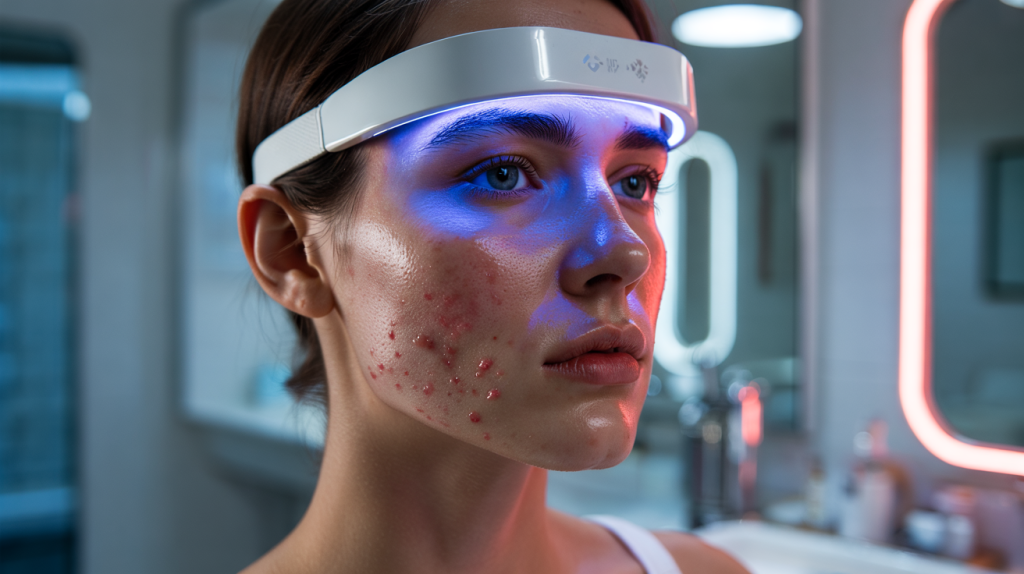
Acne flares feel relentless, and blue LED has slipped into bathroom cabinets et clinic rooms with a promise: calmer skin without harsh drugs. Here is the key context fast. Blue light at around 415 nm targets Cutibacterium acnes by exciting bacterial porphyrins, creating reactive oxygen species that reduce inflammatory lesions. The American Academy of Dermatology Association reports acne affects up to 50 million Americans each year, with about 85 percent of people aged 12 to 24 experiencing it at some point (AAD, 2024) – demand for gentler options is real.
Results exist, but they depend on the right candidate, the right device, and steady use. Reviews such as the Cochrane analysis on light therapies for acne (2016, updated searches into 2021) concluded evidence remains low to very low certainty, though some trials showed modest reductions in inflammatory lesions when blue or blue-red light was used regularly. That is the nuance: worth considering for mild to moderate inflammatory acne, most helpful alongside standard topicals, less convincing alone.
Blue light therapy for acne: how it works on skin
The mechanism is direct. C. acnes produces porphyrins that absorb blue wavelengths near 415 nm. Under this light, the porphyrins trigger oxidative damage that cuts bacterial load and local inflammation, without the peeling associated with benzoyl peroxide or retinoids. Clinics often pair blue with red light around 633 nm to add an anti-inflammatory boost deeper in the skin. No ultraviolet is involved when devices are correctly filtered.
This is why the treatment slots into routines where the skin barrier needs a break from harsher steps, or when someone cannot tolerate frequent actives. At-home masks and panels deliver lower fluence and need consistent schedules. In-office systems deliver higher energy in fewer sessions, then taper.
What studies and safety signals say in 2025
Evidence sits in the middle ground. The Cochrane Review on light-based therapies for acne (2016) found light may reduce lesion counts compared with sham across several small trials, but study quality was limited and effects varied. Guidance reflects that caution. The AAD notes that light therapies can help some patients, usually require multiple sessions, and improvements may fade if treatment stops. The United Kingdom’s NICE acne guideline (NG198, 2021) does not recommend routine light therapy due to insufficient high-certainty data compared with established treatments.
Safety is generally favorable when eye protection is used. Still, one headline mattered: in July 2019, Johnson et Johnson voluntarily recalled the Neutrogena Light Therapy Acne Mask due to a theoretical risk of eye injury for a small subset of users with underlying eye conditions or on photosensitizing drugs. That recall did not apply to all devices, yet it pushed the industry toward clearer goggles and stricter instructions.
How to use “lumière bleue acné traitement” at home without the traps
At-home blue light should sit inside a routine, not replace it. Dermatology clinics typically design protocols over 4 to 8 weeks, then reassess. For home devices, manufacturers commonly program short, fixed sessions and advise daily or near-daily use; missing days weakens momentum. Sensitive eyes need protection, always. People taking photosensitizing medications – for example isotretinoin, certain antibiotics, or St. John’s wort – must clear light exposure with their clinician first.
Some devices combine blue and red LEDs to target both bacteria and inflammation, which users often find more comfortable long term. Pairing with a gentle, non-comedogenic regimen matters: a mild cleanser, a fragrance-free moisturizer, and proven actives at night such as adapalene or benzoyl peroxide as tolerated. Those actives still hold the strongest evidence for acne control.
Quick, practical checks before starting blue light at home :
- Confirm the wavelength range includes blue around 415 nm and, if present, red near 633 nm.
- Look for regulatory clearance in your region and an included eye shield that fully blocks the LEDs.
- Scan your meds list for photosensitizers; ask a healthcare professional if unsure.
- Commit to the full program duration stated by the device – consistency beats intensity.
- Track inflammatory lesions weekly with photos to judge real change, not just feeling.
Who benefits, who should skip, and the combo that makes it work
Pattern recognition helps. Blue light tends to suit mild to moderate inflammatory acne – papules and pustules on the cheeks, jaw, or forehead. Comedonal acne with primarily blackheads and whiteheads often responds better to retinoids. Nodulocystic, scarring acne needs systemic care, not LEDs.
Clinicians often recommend a combined path to make gains stick. During the first 6 to 8 weeks, pair regular blue light sessions with a nighttime retinoid such as adapalene 0.1 percent, a morning benzoyl peroxide wash or leave-on, and a non-comedogenic moisturizer to calm dryness. The AAD underscores that these medications remain first-line, with light therapy as an adjunct for those who want a non-drug boost or cannot tolerate stronger regimens. If there is no measurable improvement by week 8, the plan usually shifts.
And a last piece that people skip in the rush: relapse. Acne is chronic and tends to recur. Light’s antibacterial effect fades when sessions stop, so maintenance – fewer sessions spaced out, or simply sticking with topical prevention – keeps skin from sliding back. Sounds simple, yet that steady, occassional maintenance is the missing link between a good month and a good year.