
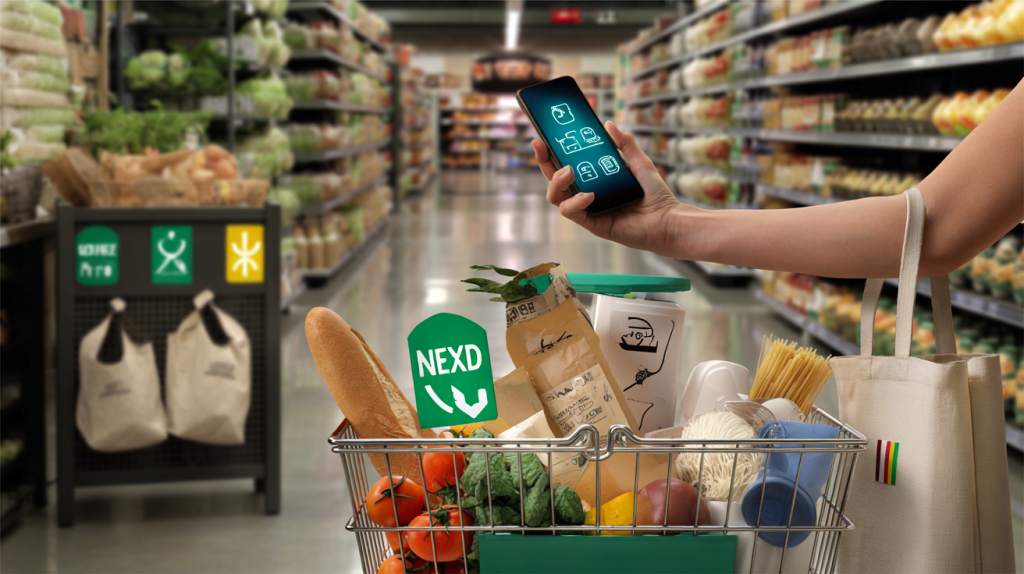
Prices at the checkout have cooled a bit, yet the feeling sticks : groceries still bite into budgets. The good news is simple and practical. Real bons plans exist, and they add up fast when used together, not in isolation.
Why trust this approach right now ? Food prices surged 15.8% year on year in March 2023 in France, according to INSEE. Global food commodity costs then eased : the FAO Food Price Index averaged 2023 at 13.7% below 2022. Shelves react slowly though. Households need tactics that work this week, not next year.
Bons plans courses pas cher : where savings start today
First observation : the right basket costs less when mixing private labels, seasonal produce and anti-waste bargains. One strong move per aisle makes a visible difference by the end of the trip.
Common frustration pops up at the promo corner. Big red tags look generous, yet rules limit how far discounts can go. Knowing the frame stops disappointment and redirects effort to better levers.
Shoppers who stack store loyalty, coupon apps and short-dated boxes see immediate wins. It feels almost too simple, but this combo quietly trims euros without changing family menus.
Prices and rules in France : what the data says
Context matters : France caps food promos. Under the EGalim framework, price discounts on food are limited to 34% and volume offers to 25%. The DGCCRF details these limits, in place since 2019 and extended by subsequent measures. So that -70% mega deal on a staple food will not appear. Hunting for stacked benefits becomes the smarter play.
Global signals help calibrate expectations. The FAO reports that food commodity prices eased in 2023 versus 2022, yet transmission to retail takes time and varies by category. Cereals move one way, fresh produce another. Reading the aisle becomes a weekly skill, not a once-a-year habit.
One more figure shows a door opening : anti-waste channels scale fast. Too Good To Go said it passed 300 million meals saved worldwide in 2023. When supply of unsold food grows, good-value baskets get easier to snag.
Real-world tactics for cheap groceries : apps, labels, timing
Start with labels. Store brands often share factories with national names and carry steady quality. Pick them for pantry basics where taste variance stays low, like flour, rice, pasta. Rotate brands only on items where family taste truly matters.
Next up : timing. Hit stores in the early evening for short-dated markdowns on fresh meat, dairy and bakery. Anti-gaspi bins refresh around that time. Check signage, learn each store’s rhythm, then go on those days only.
Apps do the heavy lifting. Anti-waste apps release surprise bags at specific hours, while coupon and cashback apps refund after purchase. Two taps before checkout can mean a few euros back per trip. Small, repeatable, definitly effective.
Avoid a frequent mistake : chasing promos that push unneeded sizes. The 34% cap can still lure shoppers into buying double. If extra goes to waste, any saving vanishes. Keep quantities honest, keep savings real.
Weekly checklist : bons plans courses pas cher to put on repeat
Quick actions that compound over a month, without changing what you cook :
- Plan 5 dinners around seasonal produce and one low-cost protein like eggs or pulses.
- Compare unit prices on the shelf, not headline prices, for the top 10 items you buy most.
- Swap national brand to store brand on two pantry staples this week, just two.
- Pick one anti-waste channel : in-store short-dated shelf or an app slot you can actually catch.
- Stack once : store loyalty price plus one coupon or cashback on a product you already planned to buy.
- Freeze portions the day you shop so zero cooked food ends up binned on day three.
- Keep a tiny buffer list on your phone for rotating promos : coffee, laundry, oil. Buy only when the price dips.
- Track results with a simple note : date, store, basket price, savings line. Two minutes, big clarity.
- Revisit a hard rule every Sunday : no promo, no purchase on non-urgent items.
- Glance at official data once a month via INSEE and FAO to spot category trends that justify a swap.
- Use market hours for fresh deals near closing time, then batch-cook one base recipe for the week.
- Set one splurge per week on a favourite item, to keep motivation steady while the budget stays on track.
The angle stays simple : accept promo limits, follow the data, and stack small, reliable moves. That is how bons plans courses pas cher turn into a steady, quieter grocery bill.