
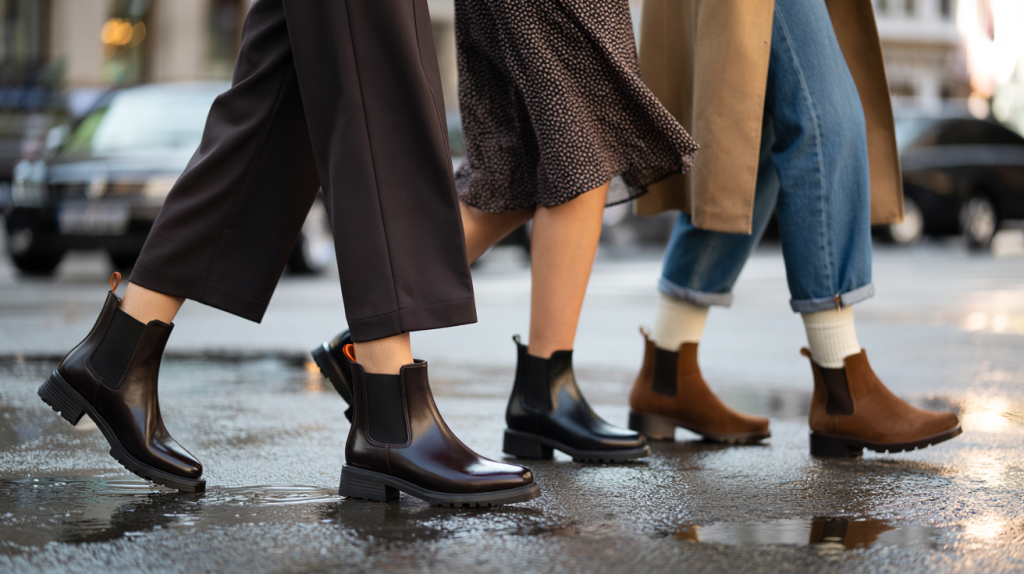
Two elastic panels, a pull tab, ankle-hugging shape. In just a few lines, bottes chelsea femme explain why they became a wardrobe constant. They slip on in seconds, work with denim or dresses, and handle rain when treated right. That mix of ease and polish is why search interest surges every fall. The real question is how to pick the pair that lasts and looks good with everything.
Here is the context that matters. The Chelsea boot was patented with elastic sides in 1851 by J. Sparkes-Hall for Queen Victoria, a design note still visible today (Victoria and Albert Museum). The Beatles turned the style into a pop icon in the early 1960s with Cuban-heeled versions on stage, especially in 1963 across British venues (British Pathé archive). Modern takes add traction, weatherproof membranes and sleek lasts, so women get comfort without losing that crisp silhouette.
What makes bottes chelsea femme so reliable
The main idea is simple. A clean ankle boot, no laces, a close fit. That architecture creates a straight line from hem to heel, which elongates the leg and tucks under wide or slim trousers. It also reduces fuss. No tongue, no eyelets, fewer failure points.
Under the surface, material choices decide everything. Smooth full-grain leather keeps its shape and polishes back from scuffs. Suede feels light and luxe for dry days. For wet commutes, look for sealed seams or a waterproof membrane. GORE states its ePTFE membrane holds about 9 billion pores per square inch, each roughly 20,000 times smaller than a water droplet yet about 700 times larger than a molecule of moisture vapour, so sweat can escape while rain stays out (Gore).
Grip changed the game too. After fatal alpine accidents in 1935, Vitale Bramani created the lug sole in 1937, the foundation of Vibram, and that tread pattern still anchors slippery sidewalks today (Vibram). A discreet lug under a Chelsea keeps the profile sharp while adding real-world traction.
How to choose women’s Chelsea boots : fit, materials, weather
The most common mistake starts at the ankle. Too wide, and the boot rubs and looks bulky. Too tight, and the elastic strains early. Aim for a snug hug around the ankle bone with room to wiggle toes across the widest part of the forefoot. If between sizes, many women go up a half size to pair with socks in colder months.
Heel height sits in the comfort zone. The American Podiatric Medical Association generally promotes lower heels for daily wear, and many Chelsea heels land around one to two inches which balances posture and stability for long days on foot (American Podiatric Medical Association). A slight block heel helps with shock absorption without changing your gait.
Weatherproofing needs clarity. Water-resistant leather repels light rain after a protective spray. Waterproof designs require sealed seams and a bootie-style membrane inside, otherwise water sneaks in at the elastic. Brands that use GORE-TEX must seam-seal internals to carry the label, which is why those pairs feel reliably dry in sustained showers (Gore). If commutes include slush, consider a rubberised welt and a lugged outsole inspired by that 1937 Vibram pattern.
Style tips : bottes chelsea femme with jeans, dresses, office looks
Office first. A slim black leather pair under tailored trousers reads as quiet power. The line stays clean, the stack of fabric rests on the boot and never bunches. A crisp white shirt, a blazer, and the job is done.
Weekend looks change the texture. Indigo straight-leg jeans cropped at the ankle show a touch of sock and the boot’s top line. Add a fisherman knit and a trench for unpredictable skies. For dresses, a mid-length floral with a chocolate suede Chelsea makes the outfit land in that effortless zone. A small Cuban heel, a nod to the 1963 Beatle era, adds lift without teetering.
Then there is weather. On rainy days, a polished leather with a subtle lug and a hydrophobic spray handles puddles. On dry spring mornings, sand or taupe suede brightens denim and light tailoring. Occured to many after the first wear: lighter suede needs a brush and spray before leaving the house.
Care, longevity et smart buys : make your Chelsea boots last
Leather ages beautifully if treated right. Rotate pairs so leather rests between wears. Use cedar shoe trees at night to absorb moisture and keep the shape. Brush suede with a crepe brush in one direction, and lift stains with a suede eraser. For leather, a gentle cleaner followed by conditioner keeps fibers supple, then a neutral cream brings back shine.
A quick checklist before you buy :
- Pinch test : the upper should feel firm, not papery, and spring back without deep creases.
- Gusset quality : elastic returns to shape instantly and sits tight to the ankle with no gaping.
- Stitching : even, tight stitches, clean welt edges, no glue residue at the sole.
- Outsole : fine tread for city wear, or a discreet lug for rain and cobblestones.
- Lining : leather or breathable membrane for all-day comfort in varied temps.
- Heel counter : squeeze the heel; it should feel structured and supportive, not collapsible.
One last piece ties it all together. If the goal is a single do-everything pair, a black or dark brown full-grain leather Chelsea with a modest block heel and a lightly lugged sole covers desk to dinner, September to April. History and tech meet in that silhouette, from the 1851 elastic idea to today’s breathable waterproof liners. Pick that balanced spec, and the boots will earn their spot by the door, ready for every exit.
Sources : Victoria and Albert Museum, British Pathé archive, Gore, American Podiatric Medical Association, Vibram.