
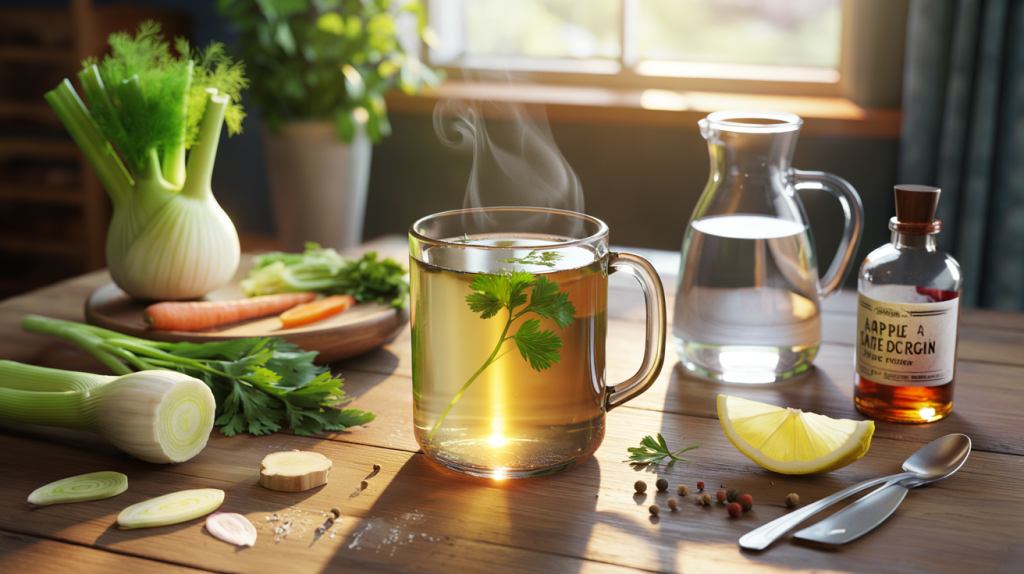
Woke up puffy after a salty dinner or a long flight ? A simple, savory fix has been buzzing in naturopathy : the “bouillon drainant naturopathe” – a light vegetable broth meant to encourage fluid release, not water retention.
The method stays straightforward : drink an unsalted, potassium rich broth with celery, fennel, parsley, leeks and sometimes dandelion leaf. Many come for the promise of comfort. The core idea aligns with physiology : more fluids, less sodium, and a smart hit of potassium helps the body regulate water balance.
What a naturopathic draining broth targets
Water retention often follows excess sodium, hormonal swings or long periods sitting. You feel rings tight, ankles heavy, face puffy.
Public health data points to the same culprit : most people overshoot salt. In the United States, average intake reaches about 3,400 mg sodium per day while guidelines recommend less than 2,300 mg (CDC, updated 2023).
This broth trend aims at that problem. It swaps salty cubes for vegetables naturally rich in minerals and water, so you hydrate while dialing down sodium.
Science check : hydration, sodium and potassium
Hydration matters for fluid balance. European guidance sets adequate water intake at about 2.5 liters per day for men and 2.0 liters for women, including all beverages and foods (EFSA, 2023). The NHS echoes a practical target : 6 to 8 glasses daily for adults (NHS, page reviewed 2023).
Potassium helps counter sodium’s effect on fluid retention. The World Health Organization suggests adults get at least 3,510 mg potassium daily to support blood pressure control (WHO Guideline, 2012). Many vegetables in this broth contribute to that goal.
Food composition data backs it up : celery provides roughly 260 mg potassium per 100 g, fennel around 414 mg, parsley about 554 mg, and leeks near 180 mg (USDA FoodData Central, accessed 2024). A generous pot can deliver meaningful amounts without added salt.
Herbal edges exist, yet evidence stays early. A small 2009 human pilot reported increased urination after dandelion leaf extract (Journal of Alternative and Complementary Medicine, 2009). Results look interesting, not definitive.
Recipe : a simple bouillon drainant with a naturopath twist
Keep it light, unsalted and herb forward. One pot gives enough for a day.
- In a large pot, add 2 liters water, 2 celery stalks, 1 small fennel, 1 leek, a handful of flat parsley stems, 1 small carrot, 1 thin slice fresh ginger, 3 peppercorns.
- Optional : a few fresh dandelion leaves when in season. Skip if on diuretics.
- Simmer gently 35 to 40 minutes. Do not add salt. Strain and sip warm across the day to recieve the flavor.
- For taste without sodium : finish in the cup with lemon juice or a splash of raw apple cider vinegar.
Timing helps. Many naturopaths suggest drinking a cup in the morning and one mid afternoon to avoid nighttime wake ups.
Short runs work best. Use it one to three days when you feel bloated, then return to balanced meals.
Who should pause, and how to use it safely
People with kidney disease must handle potassium carefully. The National Kidney Foundation warns that reduced kidney function can elevate blood potassium to risky levels (NKF, 2024). Ask a clinician before trying potassium rich broths.
Anyone on potassium sparing diuretics, ACE inhibitors or ARBs needs medical guidance. The combo can raise potassium too high. That includes heart failure and hypertension patients under treatment.
Pregnant individuals and those with gallbladder or complex GI conditions should seek tailored advice. A gentle broth looks harmless, yet context matters.
Two reminders lock it in. First : sodium reduction drives the effect. With 90 percent of Americans exceeding sodium recommendations, cutting salty processed foods often delivers the biggest shift (CDC, 2023). Second : hydration counts. Even mild dehydration can mimic bloating, so spread fluids across the day (NHS, 2023).
One more detail clarifies expectations. This broth will not melt fat. It can ease transient puffiness while supporting a lower sodium pattern. Pair it with potassium rich whole foods like leafy greens and legumes for steady benefits, then season meals with acids, herbs and spices instead of salt.