
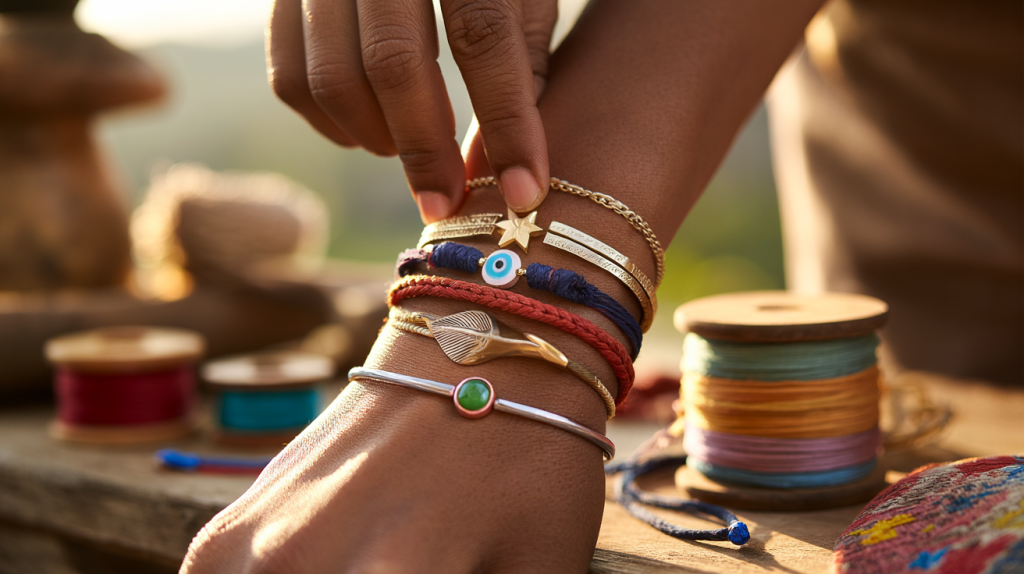
A small charm on the wrist. A quiet promise of protection. The bracelet grigri has traveled from West African streets to contemporary fashion, blending talismanic meaning with easy, everyday style. People are not just buying jewelry here – they are choosing a story to wear.
The appetite for symbolic pieces keeps growing. The global jewelry market is projected to reach 358 billion dollars in revenue in 2024 (Statista, 2024). Handmade and personalized bracelets ride that wave as platforms multiply their audiences – Etsy reported 92 million active buyers in 2023 (Etsy, 2023 Annual Report). A bracelet grigri sits right at this intersection of craft and feeling, where a discreet bead or engraved charm becomes someone’s daily anchor.
What is a bracelet grigri: origins, meaning, and why it matters now
The word “grigri” points to a protective amulet with roots in West Africa. Encyclopaedia Britannica describes gris-gris as a charm associated with West African spiritual practices, later seen in parts of the Caribbean and Louisiana. The idea is simple and old: carry a token with intention.
The fashion world picked up the thread long ago. Christian Dior famously clung to a lucky star around his launch in 1947, turning superstition into a quiet design language that echoes today through talisman-inspired accessories. In Benin, National Vodun Day has been observed on 10 January since 1992, a reminder that these beliefs are living culture, not costume.
So a bracelet grigri in 2025 feels both ancient and fresh. It reads personal, not flashy. Giftable, yet meaningful. And yes, the kind of piece people do not take off at night.
How to wear a grigri bracelet without losing the magic
Start with a single idea. One charm for protection, a color for energy, a stone tied to memory. Layer later. When stacking, keep textures varied – cotton cord next to a slim chain, a matte bead against polished metal. The bracelet should move, not shout.
A common mistake is ignoring skin comfort. Nickel sensitivity is widespread, and it ruins the experience when a wrist turns red. A review of population studies reported nickel allergy around 17 percent in women and 3 percent in men (Contact Dermatitis, 2011). Choosing stainless steel marked nickel-safe, solid gold, titanium, or sterling silver reduces that risk significantly.
Another trap is treating a grigri like pure trend. The symbol matters. If the motif comes from a living tradition, learn its meaning and buy from makers who understand it. That respect shows, and the bracelet carries better on the wrist.
Choosing your bracelet grigri: materials, symbols, authenticity
Materials speak before the charm does. Recycled metals are not only practical – they are lighter on the planet. The World Gold Council reported that recycled gold can cut greenhouse gas emissions by around 90 percent compared with mined gold (World Gold Council, 2018). If gold is your route, look for recycled or certified sources. For cords, waxed cotton and silk age beautifully, while nylon lasts through swims and summer sweat.
Symbols should be clear to you. A small eye for vigilance, an animal for bravery, an initial that roots the piece to a person. If the design references West African gris-gris, consider artisans or brands working directly with creators linked to that heritage. It turns a purchase into participation, not appropriation.
Real life example. A friend celebrating a new job receives a slim cord bracelet with a single bead in her birthstone and a tiny engraved star. She wears it to every meeting, taps it before speaking, and yes – feels steadier. Is that magic or psychology. The distinction fades on the wrist.
Here is a quick path to getting it right :
- Pick one intention – protection, luck, remembrance – then choose a symbol that says it without words.
- Check materials – hypoallergenic metals and soft, durable cords keep the bracelet on your wrist, not in a drawer.
- Mind proportions – small charms for daily wear, larger ones for occasional statements.
- Ask origin questions – who made it, where, and how. Support artisans tied to the tradition when possible.
- Think maintenance – a gentle cloth for metal, mild soap for cords, and remove before chlorine pools.
Price, places to buy, and the bit people forget
Where to look first. Independent jewelers and verified artisan marketplaces show the best range of bracelet grigri styles – from minimalist cords to fine-metal talismans. Museum shops and cultural foundations sometimes collaborate with West African artists on limited runs. Brand flagships release seasonal charm capsules that echo the talisman idea with a polished spin.
Do not skip sizing. A bracelet that moves half a finger on the wrist feels alive; one that slides over the hand feels risky. Measure snug, then add about 1 to 1.5 cm for comfort. That tiny detail decides whether it becomes a daily piece or a pretty mistake.
There is one more piece that completes the story. The ritual. Touch the charm before stepping out, name what it stands for, and let routine do its work. The psychology of a cue can shift behavior fast. In a market this large and busy – 358 billion dollars projected in 2024 for jewelry alone (Statista, 2024) – the bracelet grigri wins not by shouting value, but by quietly aligning with a person’s day. That is why it sticks. And why jewellry boxes keep making space for one more small, deliberate thread.