
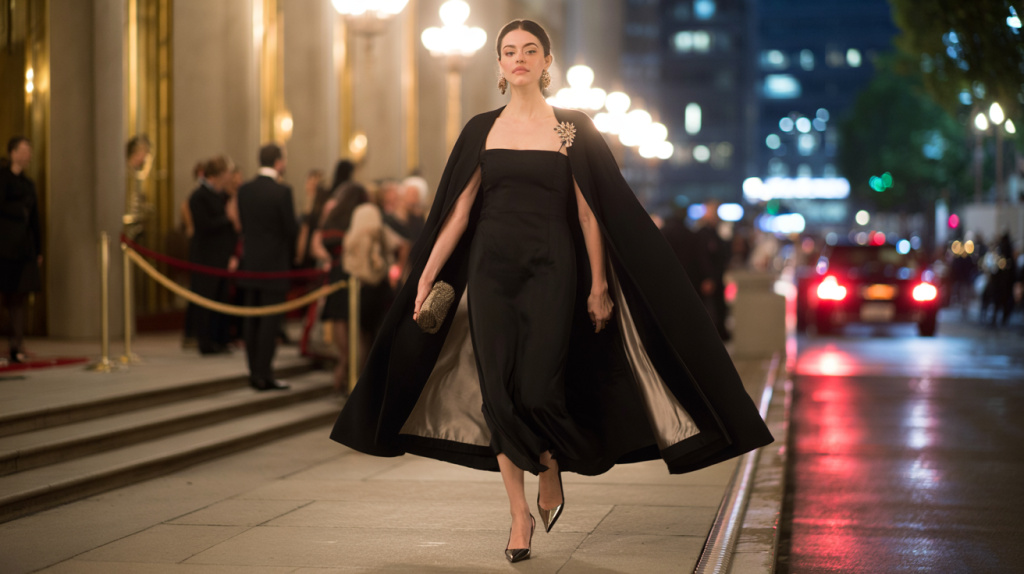
The black evening cape is having a big moment again, and for good reason. It sharpens a look in seconds, glides over dresses and tailoring, and solves that awkward coat check moment on chilly nights. For anyone typing “cape noire soirée” in a hurry before an event, the short answer lands here : choose a clean, structured silhouette, keep the outfit underneath streamlined, and let the cape do the talking.
Red carpets have been reminding everyone of this power piece for years, from Billy Porter’s velvet tuxedo cape at the 2019 Oscars to sleek opera capes over column gowns. In real life it works the same way. Over a bias slip, a tux suit or a jumpsuit, a black cape brings drama without fuss, reads dressy for black tie, polite for weddings and modern for cocktails. The key is proportion and finish.
Cape noire soirée style decoded
Here is the main idea : the cape replaces both jacket and statement accessory. It frames the face, drops clean vertical lines and creates a long silouhette. That comes with a bonus of warmth and ease, especially between car and venue.
History keeps circling back to it. In 1926, Vogue spotlighted Coco Chanel’s little black dress, fixing black as evening shorthand. Capes tagged along whenever minimalism rose again. Lyst’s Year in Fashion 2023 reported searches for “quiet luxury” up 23 percent, and a pared back black cape fits right inside that mood.
The problem it solves is familiar : looking polished without juggling scarves, wraps or fussy sleeves. A structured cape in wool crepe or velvet reads formal without effort, while a fluid satin or chiffon version softens a fitted dress. Both finish an outfit in one move.
How to wear a black evening cape now
Start with length. Mid calf brings ceremony over gowns. Knee length balances minis, midis and slim trousers. Wrist length skims cocktail looks and keeps hands free for a glass or clutch.
Necklines matter. A jewel neck cape flatters high or straight neck dresses. A plunge or asymmetric dress prefers a cape with an open front to keep the line uninterrupted. If the base outfit is sparkly, choose a matte cape. If the base is matte, a subtle sheen lifts it.
Accessories stay deliberate, not busy. Swap necklaces for statement earrings so the shoulder line stays clean. A brooch on the left shoulder can anchor the fabric and add a single point of light. Belting a cape works only on thin, fluid versions and only when the outfit underneath is slim.
Quick checklist for the night :
- Match formality : velvet or satin capes for galas, wool crepe for weddings and cocktail.
- Mind proportions : long cape with column dress, shorter cape with volume skirts.
- Keep hands visible : petite clutch or top handle bag, not oversized totes.
- Shoes that show : slingbacks or pointed pumps extend the leg under a cape.
- Hair off the shoulders if possible to keep the neckline crisp in photos.
Dress code, red carpet cues and common pitfalls
For black tie, a floor skimming cape over a column gown or tux suit reads instantly formal. For cocktail, a knee length cape over a midi in satin or crepe does the job. Creative dress codes welcome capes with texture like hammered satin or featherlight chiffon, but keep the color pure black to maintain that evening gravity.
Typical mistakes are small but visible. Bulky shawls under a cape create bumps at the shoulders. Over layered jewelry fights the clean line. Too many trends at once dilute the message. One strong move is enough, and the cape already is that move.
A practical cue from red carpets still helps off camera : rehearse the entrance. Fasten any hidden snaps, check arm slits, and practice sitting so the hem doesn’t drag. A two minute test at home saves twenty on the night.
Fabrics, care and planet friendly choices
Fabric choice shifts the mood. Wool crepe holds its shape and photographs sharp. Velvet absorbs light for deep color and warmth in winter. Satin reads dressy under chandeliers. Chiffon or georgette floats for summer events. Lining counts too, since a smooth satin lining lets the cape slide over beaded or lace dresses.
Care comes next. Many formal capes are dry clean only, but less frequent care extends their life. Use a wide hanger, store in a breathable garment bag, and steam lightly before leaving home. Spot treat the hem right after an event, not the next morning.
Sustainability belongs in the conversation. The United Nations Environment Programme reported in 2019 that fashion accounts for 8 to 10 percent of global carbon emissions. Renting or buying pre loved trims that impact. A 2019 study by Barnardo’s in the UK found that people spent an estimated £2.7 billion on outfits worn once, and 33 percent of young women considered a garment old after one or two wears. A timeless black cape flips that script : it repeats well, looks different over each base outfit, and stays current across seasons.
One last practical tip for longevity. Choose stitched hems over glued trims, metal hooks over flimsy loops, and reinforced arm slits that won’t stretch with movement. Quality finishes let the cape move, not fight back, so the night stays about the event, not the outfit.