
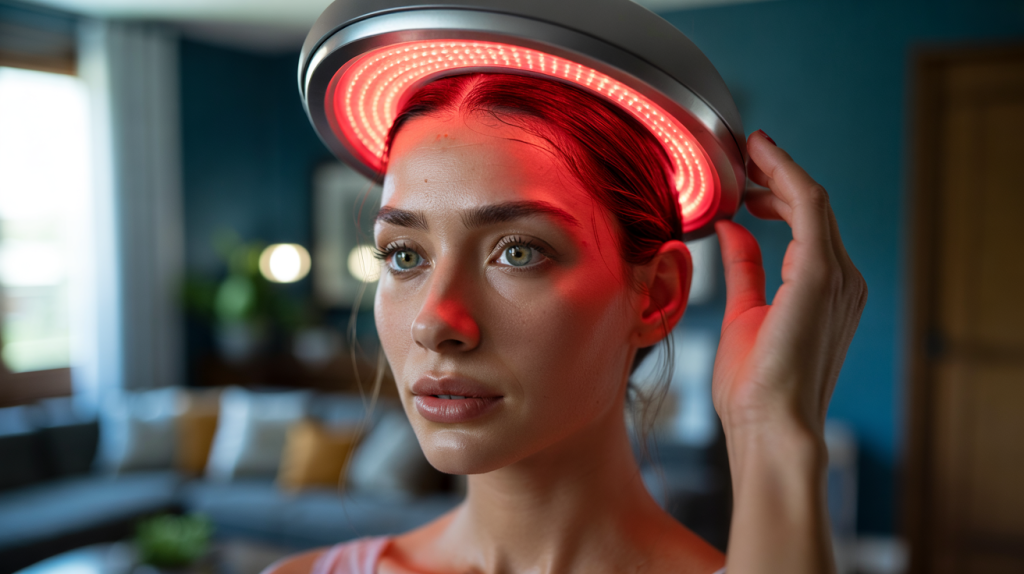
Clicks on laser caps keep surging for one reason : people want regrowth that fits into everyday life. The short answer lands fast. FDA cleared laser devices for pattern hair loss starting in 2007, and multiple randomized trials report measurable gains in hair density when users stick to the schedule.
That matters, because hereditary hair loss touches millions. The American Academy of Dermatology Association estimates about 80 million people in the United States live with this condition. Studies of low level laser therapy show meaningful increases in hair count versus sham devices, with few serious side effects reported. Results tend to appear from three to six months, then plateau if treatment continues.
How a laser cap stimulates hair regrowth
Laser caps use low level red light to nudge follicles out of dormancy. The light energy, typically in the red to near infrared range around 630 to 680 nanometers, is absorbed by cellular enzymes and can increase ATP production, a process known as photobiomodulation. The target is miniaturized follicles seen in androgenetic alopecia.
Dermatology reviews describe an increase in anagen phase duration and a reduction of inflammation around follicles, both linked with thicker shafts and more hairs per square centimeter (Avci et al., Seminars in Cutaneous Medicine and Surgery, 2013). Most consumer caps schedule sessions of 15 to 30 minutes, two to four times per week, based on protocols used in clinical trials.
Laser cap results : what solid studies actually show
Evidence has stacked up over the past decade. A systematic review and meta analysis in the Journal of the American Academy of Dermatology in 2017 found a statistically significant increase in hair density with laser therapy versus sham, with a pooled mean difference of about 17 hairs per square centimeter. No serious device related adverse events were recorded across the included trials (Adil and Godwin, 2017).
Earlier double blind randomized studies on home use devices reported similar magnitudes. In one multicenter trial, participants using red light lasers experienced roughly 20 additional terminal hairs per square centimeter after 24 to 26 weeks compared with the sham group, in both men and women with pattern hair loss (Jimenez et al., American Journal of Clinical Dermatology, 2014).
Regulators moved first back in 2007 when the United States Food and Drug Administration cleared a comb device for male pattern hair loss via the 510 k pathway, later followed by models for women and then multiple helmet or cap formats. These products are class II devices and are cleared for safety and substantial equivalence, not for new drug level efficacy claims (U.S. FDA 510 k database, 2007 onward).
Common mistakes, smarter use, and who should avoid a casque laser
Hair grows slowly. Stopping at week four is the classic mistake. Trials that showed benefits kept participants on plan for at least 16 to 26 weeks, then maintained use.
Another pitfall is treating the wrong cause. Patchy shedding, scalp pain, sudden thinning after illness, or eyebrow loss may signal conditions that do not respond to laser light and need medical care first.
Consistency and expectations matter. Dermatologists often combine a laser cap with topical minoxidil and, for eligible men, oral finasteride, to maximize outcomes and reduce shedding cycles during the first months (American Academy of Dermatology Association, clinical guidance). Users who take photos in the same lighting every four to six weeks tend to notice progress that mirrors what trials measured.
Practical moves that help the odds :
- Confirm the diagnosis with a board certified dermatologist before buying
- Choose a cap cleared by the FDA, using red light diodes in the 630 to 680 nanometer range with full scalp coverage
- Follow a fixed schedule for at least 24 weeks, then continue for maintenance
- Pair with evidence based treatments like minoxidil, unless contraindicated
- Track change with standardized photos and a part width measurement
Choosing a casque laser : devices, safety, timing, and realistic expectations
Selection starts with clearance status and build quality. Look for published data on the specific model or a device line with peer reviewed trials, a written warranty, clear treatment timing, and customer support. Most users who respond begin to see reduced shedding by month three and early density changes by month four to six, consistent with clinical timelines reported in the literature.
Side effects tend to be mild. Reported events include transient scalp warmth, irritation, or headache, with no serious complications across controlled studies and meta analyses to date (Adil and Godwin, 2017). People with photosensitivity disorders, those on photosensitizing drugs, and anyone with scarring alopecias should seek specialist advice. Pregnant users should also consult their clinician before starting.
One more factor often decides success. The earlier the start in androgenetic alopecia, the better the response curve, because more follicles can still recieve light and cycle back into growth. Late stage shiny scalp has fewer viable targets, which explains why maintenance beats rescue in this category.
Context keeps this grounded. About 80 million in the United States live with hereditary hair loss, and the first laser device clearance happened in 2007. The signal from controlled trials points to measurable density gains around 17 to 20 hairs per square centimeter after several months, with a safety profile that allows at home use. For many, that is enough to tip the balance when combined with standard medical therapy and steady routines.