
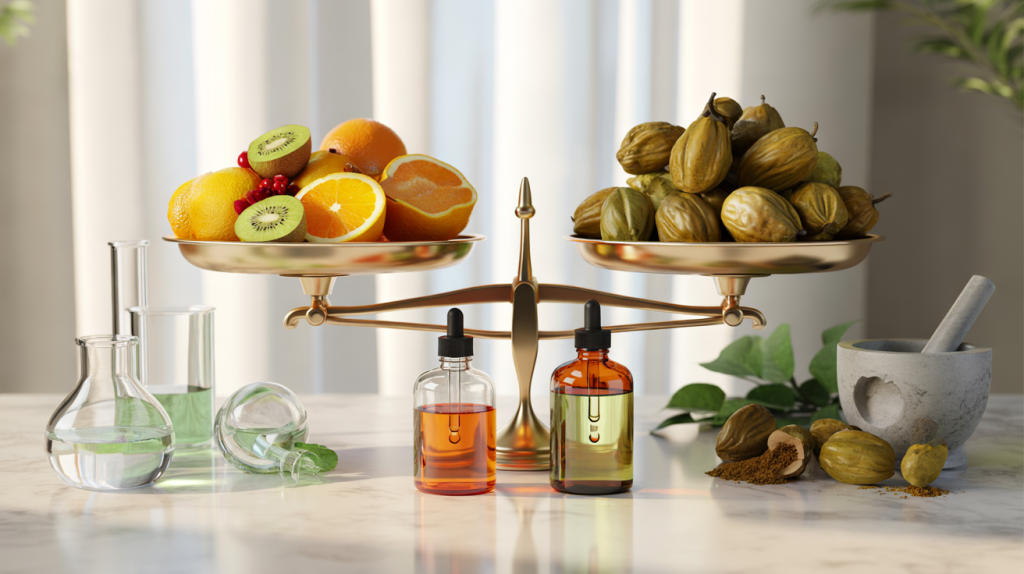
Chebula vs vitamin C : what the buzz hides
Searches explode for “chebula replaces vitamin C”. Skincare fans hope for glow without sting, supplement shoppers want a plant shortcut. The promise feels simple : swap one antioxidant for another and carry on.
Reality lands more nuanced. Vitamin C is an essential nutrient with decades of data in health and dermatology. Chebula – the Ayurvedic fruit Terminalia chebula, also called haritaki – brings powerful polyphenols like chebulagic and chebulinic acids, gallic and ellagic acids. Both fight oxidation. They do not do the same job.
Chebula and vitamin C : the claim tested
First, nutrition. The National Institutes of Health Office of Dietary Supplements sets the Recommended Dietary Allowance at 75 milligramms for women and 90 milligrams for men, with smokers needing an extra 35 milligrams daily (NIH ODS, updated 2022). The tolerable upper limit sits at 2,000 milligrams for adults. Deficiency can show after 1 to 3 months without enough vitamin C, with fatigue and gum issues among the early signs (NIH ODS, 2022).
Vitamin C status saturates on modest intakes : daily 100 to 200 milligrams generally achieves near-maximal plasma levels according to NIH ODS. That is why fruit and vegetables stay non-negotiable. Chebula, while antioxidant, is not established as a dietary source of ascorbic acid that can meet these needs in humans.
So the straight answer : chebula does not replace vitamin C in the diet. In skincare, though, chebula can stand in as an alternative antioxidant when classic L-ascorbic acid formulas feel too strong or too finicky.
Skin benefits : stability, sensitivity, and results
Topical vitamin C has a track record. Reviews in dermatology report improvements in fine wrinkling, dyspigmentation, and photodamage with properly formulated products over 8 to 12 weeks (Indian Dermatology Online Journal, 2013). Effective L-ascorbic acid usually sits between 10 % and 20 % at a pH below 3.5 for skin penetration, but that low pH can tingle and the molecule oxidizes fast with light and air.
Formulators often pair 15 % L-ascorbic acid with 1 % vitamin E and 0.5 % ferulic acid to stabilize the blend and boost photoprotection – a combination shown to enhance and even double UV protection in laboratory settings (Journal of the American Academy of Dermatology, 2005). When that setup irritates, users start looking for gentler routes.
Enter chebula. Lab studies catalog robust radical scavenging from its tannins and phenolics, which helps buffer oxidative stress on the skin surface (Pharmacognosy Reviews, 2013). Early cosmetic testing exists, but large, peer-reviewed human trials directly comparing chebula serums to L-ascorbic acid are still limited. That means chebula can offer antioxidant support and visible brightness in some routines, yet claims about collagen stimulation or pigment reduction do not carry the same weight of evidence as vitamin C today.
How to choose : routines that work in real life
This is where small decisions change results. Skin tolerates habits more than hype.
– Sensitive or redness-prone skin : start with a chebula-rich antioxidant serum once daily, then add a low-acid vitamin C derivative later if needed.
– Pigmentation or firming goals : try a stabilized L-ascorbic acid between 10 % and 15 % in the morning, paired with sunscreen. If stinging occurs, switch to a chebula formula and revisit vitamin C slowly.
– Packaging check : opaque, air-restrictive bottles help both vitamin C and chebula stay potent. Orange or brown tint in vitamin C can signal oxidation.
– Diet baseline : keep daily fruit and vegetables for 100 to 200 milligrams of vitamin C intake. Supplements are optional when food falls short, not a swap for meals (NIH ODS, 2022).
– Label literacy : L-ascorbic acid gives the strongest vitamin C data. Derivatives like sodium ascorbyl phosphate or ascorbyl glucoside are gentler but often need time and higher percentages to match results (Indian Dermatology Online Journal, 2013).
Safety, sourcing and what science still needs
Herbal supplements vary in quality. If choosing chebula orally, look for third-party testing seals such as USP or NSF on the bottle, and discuss use with a clinician when pregnant, nursing, or taking chronic medications. Tannins in botanicals can affect absorption of certain drugs, so timing doses apart helps in practice.
Skincare remains more straightforward. Rotate a chebula serum for daily antioxidant coverage when acidity triggers discomfort, or keep a well-formulated vitamin C for targeted brightening and firming. Both can live in the same routine at different moments of the week. The missing piece is head-to-head, randomized clinical trials comparing chebula to benchmark 15 % L-ascorbic acid across endpoints like melanin index, wrinkle depth, and tolerability over 12 weeks. Until those arrive, the swap is partial : chebula complements vitamin C for skin, while diet still needs vitamin C itself.