
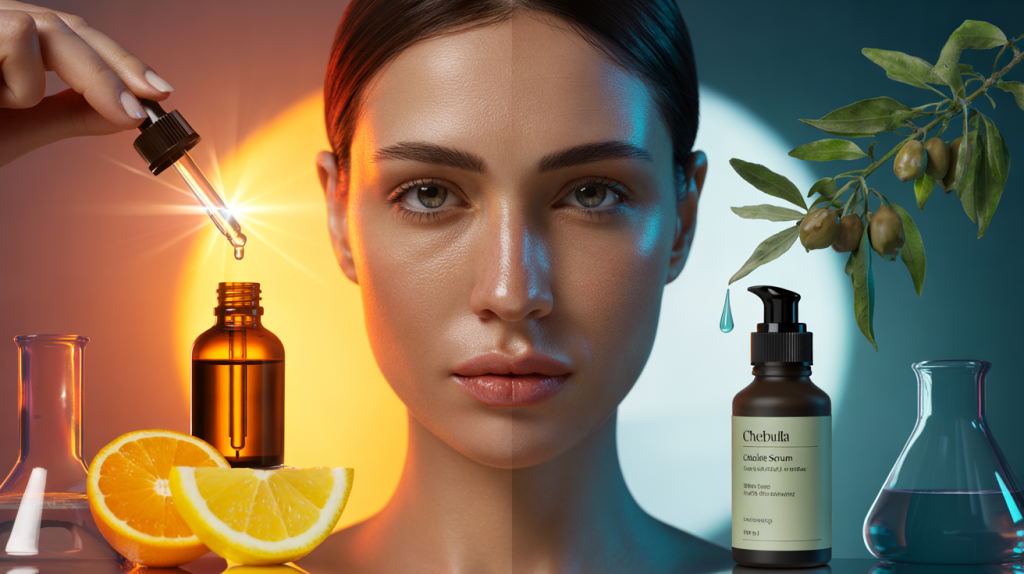
Chebula vs Vitamin C : what your skin is really asking for
Skincare fans keep hearing about chebula, the Ayurvedic fruit extract showing up in glossy serums, alongside the long trusted vitamin C. Both get praised for glow, firmness, and protection. The big question is not hype, but how they perform and where each fits in a daily routine.
Here is the context that matters. Vitamin C, especially L‑ascorbic acid, sits on decades of dermatology research for brightening and collagen support. Chebula, or Terminalia chebula, brings potent polyphenols and anti‑glycation promise from lab studies. The two are not twins. They work differently, feel different on skin, and the evidence does not weigh the same.
Evidence check : published research on Vitamin C and chebula extract
Start with the standard. A clinical review in the Indian Dermatology Online Journal reported that topical L‑ascorbic acid shows optimal skin penetration and efficacy between 10 to 20 percent at an acidic pH below 3.5, with diminishing returns and irritation above 20 percent (Telang, 2013; PMC3673383). Those numbers guide most derm‑grade formulas on shelves today.
Stability changes results. A landmark paper in the Journal of Investigative Dermatology found a formula with 15 percent L‑ascorbic acid plus 1 percent alpha‑tocopherol stabilized by 0.5 percent ferulic acid significantly increased UV‑induced photoprotection in human skin models, reporting a doubling of protection when ferulic acid was included (Lin et al., 2005; PubMed 15912223). That is why the C plus E plus ferulic trio became a template.
Chebula sits earlier in the evidence curve. A 2013 Pharmacognosy Reviews article summarized Terminalia chebula’s strong in vitro antioxidant and anti‑glycation activity across multiple assays, pointing to tannin‑rich compounds like chebulagic acid and chebulinic acid as key actors, while noting that human clinical data remained limited at the time (Bag et al., 2013; PMC3778539). Translation for everyday skin: the mechanism looks promising in the lab, yet large, independent human trials specific to topical chebula are still sparse.
How to use them without mistakes : texture, pairings and daily reality
Many routines fail not because the ingredient is wrong, but because the format or pairing is off. Water‑based L‑ascorbic acid serums feel thin, sting a little, and oxidize fast when exposed to light and air. Opaque, air‑restricted packaging helps, and so does morning use under sunscreen to leverage photoprotection.
Chebula extracts tend to sit in gentler, often slightly viscous serums or lotions. The texture suits reactive skin that peels or flushes with strong acids. Since chebula’s claim includes anti‑glycation, it is often slotted at night, when oxidative and glycation stress from the day gets repaired. The catch is expectations: results can be subtler and slower than with a high‑strength vitamin C.
Numbers matter for oral vitamin C as well. The NIH notes an adult Recommended Dietary Allowance of 75 mg for women and 90 mg for men, with an extra 35 mg for smokers due to increased oxidative stress (NIH Office of Dietary Supplements, updated 2024). Diet feeds the skin’s antioxidant network from the inside, while topical vitamin C targets the epidermis directly. These are different jobs.
When choosing between them, this simple cheat‑sheet helps in real life:
- Fast brightening and pigment support : 10 to 20 percent L‑ascorbic acid, low pH, in the morning under SPF, optionally paired with vitamin E and ferulic acid.
- Redness‑prone or sensitized skin days : chebula‑centered serum at night, layered with a ceramide moisturizer.
- Frequent sun exposure : stabilized vitamin C daily, then consider chebula at night to address oxidative and glycation stress from heat and pollution.
- Budget or simplicity : one active at a time for eight weeks, evaluate, then stack only if skin tolerates.
So which one wins for bright, calm skin
The data gives the edge to vitamin C for clinically demonstrated improvement in brightness and photoaging when used at 10 to 20 percent, low pH, and ideally with vitamin E plus ferulic acid for stability and enhanced protection (Telang, 2013; Lin et al., 2005). That is the clearest, repeatable path to visible change in 8 to 12 weeks.
Chebula answers a different need. Lab‑based antioxidant and anti‑glycation signals suggest supportive benefits, especially for those who cannot tolerate acidic vitamin C or who prefer a gentler night serum with broader polyphenols (Bag et al., 2013). What is missing are large, independent, head‑to‑head human trials against standard 15 percent L‑ascorbic acid. Until those arrive, chebula looks complementary, not a replacement.
A practical way forward lands in balance. Use a stabilized vitamin C in the morning under sunscreen for brightening and daily defense. Bring in a chebula‑focused formula at night during recovery phases or when irritation spikes. Both can live in the same routine without clashes, as the textures differ and the application times split. It feels simple, and it is definitly doable.
Sources : Indian Dermatology Online Journal, 2013, PMC3673383; Journal of Investigative Dermatology, 2005, PubMed 15912223; NIH Office of Dietary Supplements Vitamin C Fact Sheet, 2024 update; Pharmacognosy Reviews, 2013, PMC3778539.