
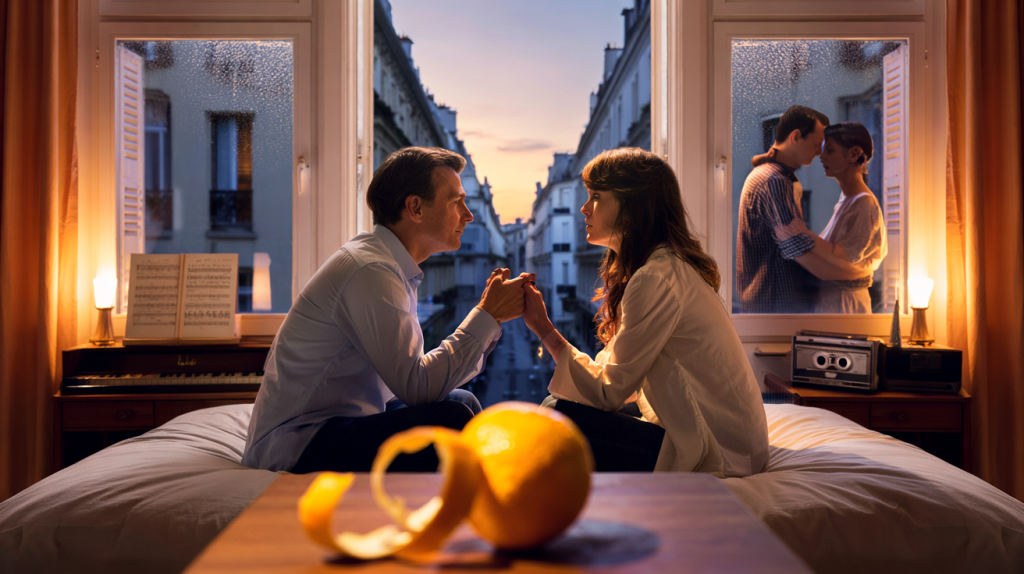
Christophe Honoré and that orange tasted marriage
Typed “Christophe Honoré Mariage au goût d’orange” and landed here. Good call. There is no official film, play or book by Christophe Honoré bearing that exact title in public filmographies up to 2024, yet the phrase sticks because it nails a feeling. It points to the way the French filmmaker turns love, marriage and aftershocks of desire into something bright, tender, slightly bitter. Like an orange slice pressed on the tongue.
The context comes fast. Christophe Honoré, born in 1970, has woven this bittersweet register across cinema and stage. From the Paris musical “Les Chansons d’amour” in 2007 to the time bending bedroom chess game “Chambre 212” in 2019, and the Comédie Française adventure “Guermantes” in 2021, he keeps circling the same delicate question. How do people stay, leave, return, and still call it love.
Why the phrase fits Honoré’s cinema of love and aftermath
Here is the main idea. The expression reads like a shortcut to his way of filming commitment and its detours. The color orange often warms his interiors and dusks, but the taste matters more. Sweet entry, slightly acidic finish. Couples talk, sing, retreat to opposite sides of the bed, then try again. Not tragic, not neat either.
Look at the timeline. “Les Chansons d’amour” arrived in 2007, a pop musical set in Paris that treats grief and new attachment with airy melodies and small ruptures. In 2018, “Plaire, aimer et courir vite” screened in Competition at the Cannes Film Festival and followed a love story in the early nineties, lucid about time and loss. A year later, in May 2019, Chiara Mastroianni won Best Actress in Un Certain Regard at Cannes for “Chambre 212”, a film that stages a long night of marital inventory across a street and across decades.
The stage kept pace. After a pandemic delay, his “Guermantes” premiered with the Comédie Française in 2021, an audacious rehearsal piece where actors and audience share the strangeness of paused life. That same appetite for living archives runs through “Le Lycéen” from 2022, also known as “Winter Boy”, which watches a teenager rebuild a self in the wake of a family shock. Different ages, same lingering orange note.
Facts that anchor the search: dates, awards, bodies of work
Numbers clear the fog. Christophe Honoré was born on 10 April 1970 and built a body of films across the 2000s and 2010s while publishing fiction and writing for the stage. His breakout to wider audiences dates to 2007 with “Les Chansons d’amour”. In 2018, “Plaire, aimer et courir vite” stood on the Cannes Competition slate, a visible marker in any career. In 2019, Chiara Mastroianni’s Un Certain Regard award for “Chambre 212” confirmed how precisely his scripts carve adult relationships. In 2021, “Guermantes” arrived at the Comédie Française after a 2020 interruption, a rare case where the making of a production becomes the show.
That is the spine behind the expression. No cryptic new title to hunt, just a consistent filmmaking language that deals in talk, music, memory, and second chances. Scenes often sit at golden hour, interiors lean warm, and dialogue circles untill both sides hear what was not said the first time. Orange by sensation rather than palette swatches.
How to dive in now: starting points for this bittersweet palette
Want the quickest route into “Mariage au goût d’orange” as a mood in Christophe Honoré’s work. Start here, then branch out.
- Les Chansons d’amour (2007) : a compact Paris musical where grief tilts into renewed attachment, carried by songs and quick emotional turns.
- Plaire, aimer et courir vite (2018) : a clear eyed romance set in the early nineties that played in Cannes Competition, tender and unsentimental.
- Chambre 212 (2019) : one night, one marriage, multiplied versions of the past, with Chiara Mastroianni’s Cannes awarded performance.
- Guermantes (2021) : a stage work with the Comédie Française that folds delay and rehearsal into a living portrait of a troupe finding its way.
The pattern becomes readable once these four pieces line up. Honoré writes characters who do not stop loving just because a chapter ends. They adjust, test, revisit. The orange taste arrives in that afterglow, when a decision feels right and yet leaves a last, bright sting on the lips. Looking for the phrase in catalogs might not return a single title, but the films themselves deliver its meaning, scene after scene, year after year.