
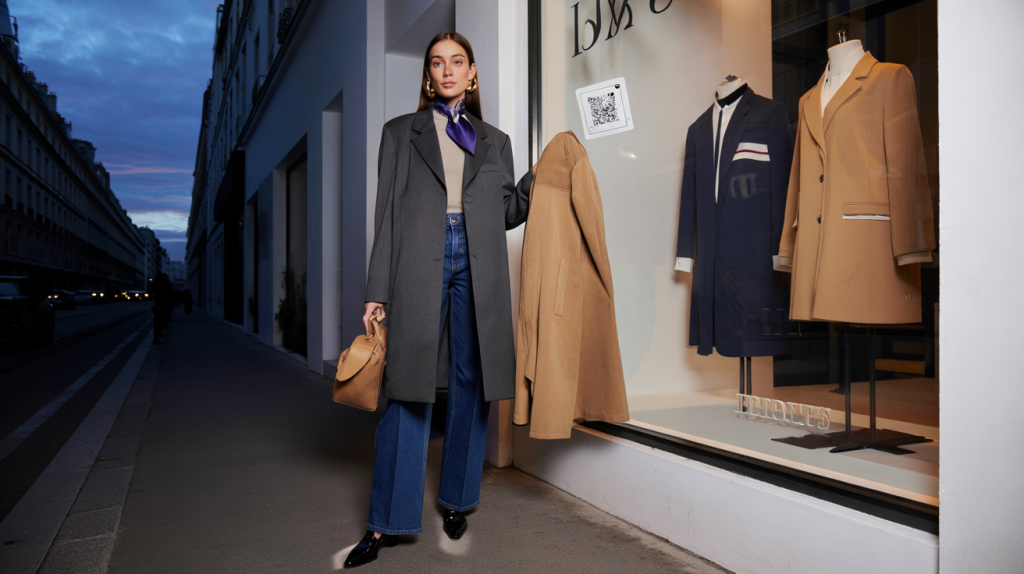
Meta: Claire Thomson-Jonville decodes 2025 style – quiet power dressing, Future Dusk palettes, and smarter shopping shaped by data, not noise. Ready to look modern.
2025 cuts through the fashion noise with a sharper brief: precision, function, and attitude. Paris-based editor and consultant Claire Thomson-Jonville sits right in this slipstream, where clean tailoring and performance fabrics meet an easy, lived-in elegance. WGSN and Coloro named “Future Dusk” the 2025 color – a moody blue-violet that instantly updates neutrals – and the tone for the year feels just as refined.
Signals stack up. The State of Fashion 2024 by McKinsey et BoF forecast industry growth of 2 to 4 percent, pushing brands to compete on quality and clarity, not churn. The European Parliament approved the Ecodesign for Sustainable Products Regulation in April 2024, ushering in Digital Product Passports for textiles. And the secondhand engine keeps surging – ThredUp’s 2024 Resale Report projects the global market to hit around 350 billion dollars by 2028, with the U.S. alone at 73 billion dollars – pushing wardrobes toward value, longevity, and smart edits.
Fashion Trends 2025 with Claire Thomson-Jonville: quiet power meets function
The main idea lands fast: streamlined silhouettes that work from morning meetings to late dinner. Think strong shoulders, long-line blazers, crisp trousers, and skirts that skim rather than cling. Fabrics move technical – crease-resistant wool, compact knits, coated cottons – because life is busy and clothes should hold up.
There is a problem many readers know too well: too many micro-drops, not enough direction. The fix aligns with Thomson-Jonville’s editorial lens – cut the excess, back the pieces that do the job. Sports-inflected details creep into tailoring, not gym gear, while denim gets polished with deep indigo and sharp press creases. Footwear flattens out – sleek loafers, ballet pumps, athletic-slash-dress hybrids – for mileage without losing polish.
Color does the heavy lift. With WGSN and Coloro spotlighting “Future Dusk” for 2025, navy-adjacent blues and twilight purples refresh the usual camel, black, and grey. One accent scarf, a knit, or a satin skirt in that register flips a whole look into this year without shouting.
Data shaping the year: Future Dusk, resale dollars, and new rules
Let’s be concrete. McKinsey et BoF’s State of Fashion 2024 pegged growth at 2 to 4 percent, a slow-but-steady market that rewards brands and shoppers who prioritize durability and exact fit. ThredUp’s 2024 Resale Report charts secondhand’s rise to an estimated 350 billion dollars globally by 2028, a clear cost-per-wear win. Regulatory pressure rises too: the European Parliament adopted the Ecodesign for Sustainable Products Regulation in April 2024, paving the way for Digital Product Passports on textiles that disclose materials and care at a scan. And the Ellen MacArthur Foundation has long reminded the industry that less than 1 percent of clothing is recycled into new clothing – which turns repair, resale, and quality basics from nice-to-have into essentials.
That data rewires shopping behavior in small, tangible ways – testing seams, reading fabric compositions, checking for scannable tags that show origin, buying pre-loved when possible. It also reframes trend-chasing: better to lock in a silhouette that flatters and remix around it, season after season. Classic Claire move.
Five moves apply the brief right now:
- Pick one hero jacket with structure – a long blazer or cropped tux cut in wool or compact twill.
- Work a Future Dusk note – scarf, knit polo, or satin skirt – against camel or charcoal.
- Trade heels for sleek flats – loafer, ballet, or an elevated runner with minimal branding.
- Upgrade denim – deep indigo, straight to slightly elongated leg, pressed and polished.
- Shift 20 percent of the budget into resale – designer tailoring and leather hold value.
Claire Thomson-Jonville’s method, distilled
As former editor-in-chief of Self Service magazine, Claire Thomson-Jonville championed a crisp, editorial clarity that still reads now. The method is not a list of must-buys – it is a way of building looks. Start with proportion: strong shoulders or a lean column, not both. Anchor with texture – compact wool, suede, polished denim – then add a sport cue like a technical zip, a racer stripe, or a track-inspired waistband that tucks neatly under a blazer.
Accessories stay quiet. Understated leather bags with a practical handle. Jewelry that sits close to the body – hoop, slim chain, cuff – not precious but intentional. Prints come in sparingly and close to the face if they do, so they energize without breaking the line.
The palette does the calm work: black, ink navy, stone, camel, plus that blue-violet “Future Dusk” accent. One pop, never three. It keeps outfits cohesive and easy to remix for millenial mornings when time just runs.
Build a 2025 capsule aligned with Claire Thomson-Jonville
Begin with the problem a lot of closets share – too many almost-right pieces. Solve for fit and fabric first: one blazer with sharp shoulders, a column skirt or tailored trouser, a compact knit, a clean white shirt, and straight indigo denim. Then pick the functional layer – trench or bomber in coated cotton – that can take weather and commute.
Next comes the smarter spend. Steer 20 percent of the budget into authenticated resale for tailoring and leather, where depreciation is lower, as the ThredUp 2024 numbers suggest. For new buys, check care labels and, when available, Digital Product Passports as they roll out under the EU’s 2024 regulation, to understand blends and aftercare. This helps avoid the 1 percent recycling trap flagged by the Ellen MacArthur Foundation – fewer throwaways, more wear.
The last piece is rhythm. Keep silhouettes long and clean, rotate Future Dusk or deep blue accents to refresh neutrals, and let shoes be walkable. That mix – quiet power, real-life function, and edit-not-excess – is exactly where 2025 lands, and it is where Claire Thomson-Jonville’s approach feels most useful right now.