
Claude Brouet at ELLE : why her name still matters
Claude Brouet transformed ELLE from a glossy showcase into a living diary of how women really dress. Her editorial line put runway dreams next to street reality, and that shift still reads fresh. When the industry moved from couture temples to ready-to-wear racks, she made sure ELLE led the conversation, not just followed it.
Context lands quickly here. ELLE was founded in 1945 by Hélène Lazareff, a postwar project built on service journalism and style. As fashion pivoted in the 1960s and 1970s, Claude Brouet positioned ELLE as a radar for new names, new cuts, new prices. Readers got the signal: this magazine spoke their language, from fittings to paychecks.
From couture to prêt-à-porter : what changed inside ELLE
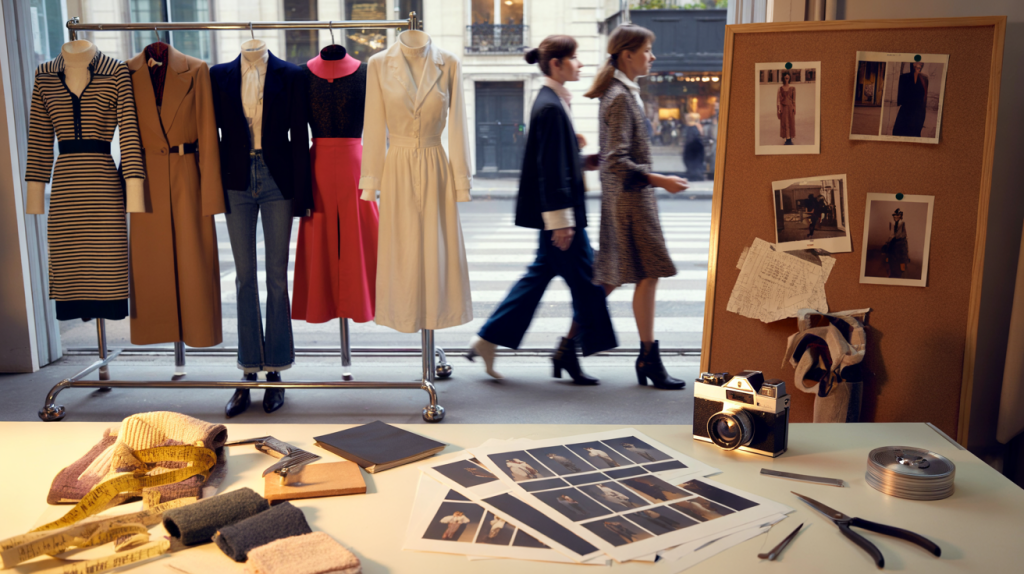
The main idea is simple. Prêt-à-porter became the daily stage, and Claude Brouet treated it as news. Fewer stiff salons, more workshops, boutiques, sidewalks, faster shoots, tighter captions. Photography loosened up, silhouettes moved, clothing felt wearable instead of distant. That editorial pivot matched a broader timeline, with Paris launching its ready-to-wear week in 1973, a landmark that pulled designers and buyers onto the same calendar.
There was a problem to solve. Fashion coverage tended to orbit only a handful of houses. ELLE readers wanted names they could shop, prices they could compare, cuts they could try at home. According to ELLE France archives, the magazine had long mixed service with style, but under Claude Brouet the balance tipped deliberately toward the everyday wardrobe, the Saturday decision, the Monday meeting jacket.
Numbers give context without noise. The brand’s birth in 1945 set a postwar baseline. Three decades later, prêt-à-porter dominated editorial space in Europe’s fashion capitals, and ELLE’s pages mirrored that acceleration. Reportage replaced reverence, and the magazine’s tone adopted a pace closer to newsrooms than salons.
How Claude Brouet spotted designers before the crowd
Readers often remember the names that caught fire on ELLE’s pages. Claude Brouet pushed emerging ready-to-wear talents in Paris, from the knit movement that crowned Sonia Rykiel to sharp-shouldered innovators who changed the power suit. That spotlighting came with a pragmatic angle, inventory of cuts and fabrics, not just mood boards.
The magazine’s visual energy followed suit. Art direction modernized in the 1960s with Peter Knapp’s kinetic layouts, and the momentum carried into the next decade. Shoots were faster, more playful, often outside, with clothes styled as if they were already owned. According to INA interviews from that era, editors talked about chasing the pace of the city, not just the calendar of couture.
Here is where mistakes easily happen. Retelling this period only through icons misses the working model behind the scenes. Claude Brouet reportedly insisted on proximity to ateliers and factories, on testing garments, on comparing cuts across brands. That editorial discipline helped ELLE translate fashion into choices, not just trends. The tone felt human, practical, almost influencial in weekly shopping routines.
Explore the ELLE legacy today : archives, shows, books
The story lands with a simple path forward. Claude Brouet’s ELLE years are best understood by looking, not guessing. Photographs, covers, and articles document how a magazine turned the prêt-à-porter revolution into everyday reading. Start with resources that preserve the record and show the shift in real time.
- Consult ELLE France archives for covers and features that track the move from couture to ready-to-wear, especially late 1960s to late 1970s.
- Watch INA interviews and reports that show how editors worked around Paris shows and workshops in those decades.
- Explore museum collections and catalogues from Paris Fashion Week, launched in 1973 for ready-to-wear, to map designer timelines alongside media coverage.
- Read biographies of Hélène Lazareff and histories of ELLE to understand how service journalism anchored the brand since 1945.
- Compare ELLE editorials with retail catalogues of the same seasons to see how trends were translated into items on racks.
One last angle completes the picture. Fashion journalism changed when it began reporting on how women live, not only how they dream. Claude Brouet occupied that space at ELLE, bridging ateliers and sidewalks. The result is visible in the archive: clear prices, wearable silhouettes, names that would become institutions. Editors still chase that balance today, moving between runway impact and the reality of a morning routine.