
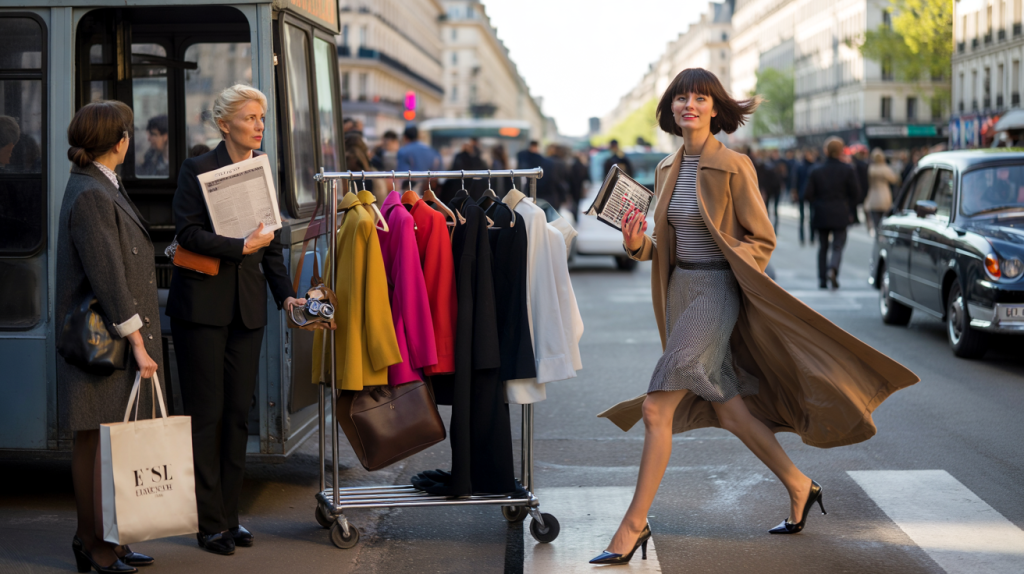
Say the name Claude Brouet and a whole era of ELLE comes back to life. A magazine already influential became a cultural barometer under her eye, shifting from couture fantasy to everyday style readers could actually wear. The result felt new, unapologetically modern, and yes, unforgetable.
Context helps. ELLE was founded in 1945, born with a postwar appetite for freedom and practicality. Claude Brouet took that spirit and pushed it into the streets, into the office, into the weekend. Ready-to-wear moved center stage, models smiled, and designers no one had heard of yet started to look like the future. That is the story people look for when typing “Claude Brouet ELLE” today.
Claude Brouet at ELLE : the editor who made ready-to-wear news
The main idea is simple to state and hard to pull off : turn high fashion into real life without losing the magic. Claude Brouet did it by trusting the reader. She brought in clothes with movement, prices that made sense, and styling that suggested a bus stop, not a ballroom. Editorials told stories. The city became the set.
There was a clear problem to solve. By the early 1960s, couture still ruled headlines, but a younger audience wanted speed, practicality, and identity. ELLE, under Claude Brouet’s fashion direction, gave them vocabulary and images to match that desire. Street casting started to appear. Hairstyles looked easier. Hemlines spoke politics as much as proportions.
The shift synced with larger changes. Yves Saint Laurent opened the Rive Gauche boutique in 1966, ready-to-wear found its flag, and Paris itself started to loosen up. ELLE didn’t just mirror that switch, it helped choreograph it, week after week. Sounds simple. It was not.
From the pages of ELLE to the runway : names and dates that changed fashion
Facts first. By the late 1960s, Sonia Rykiel’s knits were rewriting silhouettes. In 1973, the Battle of Versailles Fashion Show put American sportswear on the European map and sharpened the conversation around modernity. In 1976, Jean-Paul Gaultier presented his first collection, and a new generation had a face. ELLE, under Claude Brouet’s influence, consistently opened its pages to those emerging voices.
The magazine’s approach landed because it acted like reportage. Designers were treated not just as brands but as newsmakers. A coat was a headline. A color became a trend readers could test the same week. Editorial teams moved fast, shot fast, and published fast. That cadence aligned with how women actually lived.
This was also an audience strategy. ELLE’s tone became confident and conversational, a friend with great taste rather than a teacher on a pedestal. The layout breathed, the captions said just enough, and the mix balanced fantasy with what could be found in a store on Saturday. The reader felt seen.
How Claude Brouet’s ELLE playbook still works for readers today
Plenty of fashion history feels distant. This one does not. The methods Claude Brouet developed for ELLE still answer reader needs in 2025 : relevance, speed, clarity, and credibility. That means practical styling tips side by side with a designer’s next big idea, all in one glance. It also means refusing to separate aesthetics from real life.
For those who love a concrete checklist, here is what still applies when scanning ELLE’s archives or today’s issues :
- Look for ready-to-wear first, then couture for inspiration – that hierarchy keeps outfits grounded.
- Treat a cover line like a service promise : what can be tried this week, not next season.
- Follow the newcomers early – the first cohesive idea often appears before the first big budget.
- Watch casting and settings – streets and everyday spaces signal trends better than ornate salons.
Numbers also tell a story. The 1960s and 1970s accelerated designer launches, retail expansion, and magazine frequency across Europe, and ELLE leaned into that pace. Issues did not wait for runway cycles to end. Reporting continued between shows, which kept the conversation alive and accessible.
Why this legacy matters to ELLE’s next generation
Fashion media keeps changing. Algorithms and fast scrolls pressure nuance. The Claude Brouet template offers a way through : edit tightly, value new voices, and link beauty to use. That balance keeps a reader’s trust when trends pile up and attention thins.
There is one missing piece many still search for : a bridge between archival know-how and today’s digital habits. The answer looks practical. Present collections with service angles, reveal prices early, credit materials and cuts with the precision once reserved for couture notes, and keep celebrating first-time designers with the same energy shown to icons. It worked for ELLE then. Done with care, it works now.