
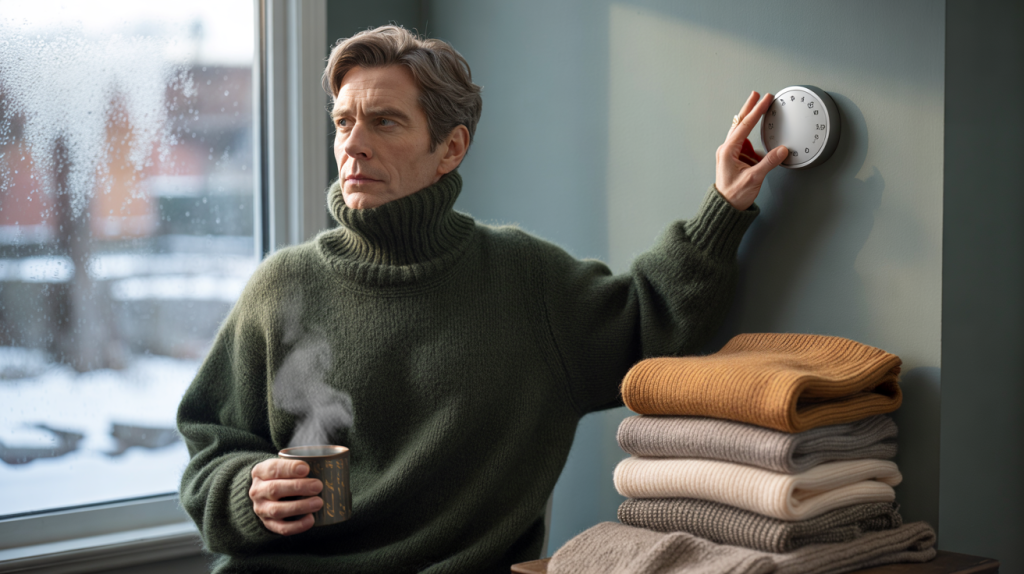
The warm winter sweater that actually works
Shivering in a big, fluffy knit that looks cozy but feels thin on a windy day happens to many. The fix is concrete: pick a wool-rich sweater in a dense knit, aim for weighty fabric, and use a neckline that seals heat around the chest and neck. That mix turns a simple layer into real warmth.
Here is the core truth backed by data. Wool traps air, insulates even when damp, and manages sweat better than synthetics. Merino, lambswool, alpaca and cashmere lead the pack. Merino can absorb up to 35 percent of its dry weight in moisture while still feeling dry, which helps prevent that clammy chill on commutes or walks (Woolmark). Cut heating by 1 °C and average home energy use for heating drops roughly 7 percent, so the right sweater can literally help turn the thermostat down with comfort intact (ADEME).
Materials that win in the cold : merino, cashmere, alpaca
The main idea lands here: warmth starts with fiber. High-quality wool breathes, insulates, and recovers shape. Acrylic feels soft at first touch, but it releases heat faster and traps sweat. That is why many thick acrylic sweaters disappoint outdoors.
Merino is the all-rounder for daily wear. Fine fibers bend easily, reducing itch, while the natural crimp creates tiny air pockets. For dress-casual office days, a midweight merino crew with a T‑shirt underneath covers most city winters.
Cashmere brings softness and high warmth-to-weight. Typical cashmere fiber sits around 14 to 19 microns, thinner than most sheep wool, which explains the luxe feel and insulation at low bulk (Cashmere and Camel Hair Manufacturers Institute). Alpaca leans warmer than standard wool for many wearers and resists pilling when the knit is tight. A single alpaca rollneck can replace two lighter layers on genuinely cold mornings.
Knit density, GSM and necklines : small details, big heat
Observation from countless fittings: density beats fluff. A tight-knit lambswool at 380 to 500 gsm often outperforms a lofty but loose sweater at 250 gsm. Hands can feel this in store – the denser piece drapes heavier and blocks wind a bit better.
Gauge matters too. Lower gauge numbers equal chunkier, more insulating yarns; a 3 to 5 gauge traps air efficiently for weekend wear. For commuting or office heating, a 7 to 10 gauge merino in 280 to 360 gsm layers cleanly under a coat without bulk.
Necklines quietly decide comfort. Crewnecks are versatile but leak heat at the collar in gusts. Turtlenecks and mock necks seal in warmth across the sternum and throat. Cardigans help modulate temperature on trains and in meeting rooms when heating varies by the hour.
Quick buy-better checklist :
- Fiber : aim for 70 to 100 percent wool blends – merino for softness, lambswool for rugged warmth, cashmere or alpaca for light-but-hot layers.
- Weight : target 350 to 500 gsm for deep winter, 250 to 350 gsm for heated offices.
- Knit : tighter stitches, lower gauge for weekend cold; finer gauge for layering.
- Fit : close without squeeze – loose hems and necks leak heat fast.
- Touch test : stretch lightly and release; quality wool springs back instead of going limp.
Care, price and energy savings : smart choices that last
Common mistakes cost warmth. Pure acrylic for price alone, oversized fits that gap at the waist, and hot washing that shrinks or felts wool. A cooler wash or gentle hand-clean keeps fibers elastic. Line-dry flat to hold shape. It sounds basic, but it extends life by seasons, not weeks.
There is also the footprint many now watch. Synthetic textiles shed microfibers into waterways when washed. An IUCN evaluation in 2017 estimated around 35 percent of primary microplastics in the oceans come from synthetic textiles (IUCN). Choosing durable, wool-rich pieces and washing less frequently helps cut that shedding, while also preserving the sweater’s loft and insulation.
Pricing shifts based on fiber grade and density. Cashmere commands a premium because of fiber scarcity and fine microns, while solid lambswool or merino in a dense knit often delivers the best heat-per-euro. Two-knits strategy works: one heavy lambswool or alpaca rollneck for freezing days, one midweight merino crew for routine wear. Rotate them, layer smart, and the thermostat moves down a notch with comfort holding steady – that 7 percent average saving per degree pays back fast. A warm sweater is not a vibe piece, it is equipment. And when chosen right, it is definetely effective.