
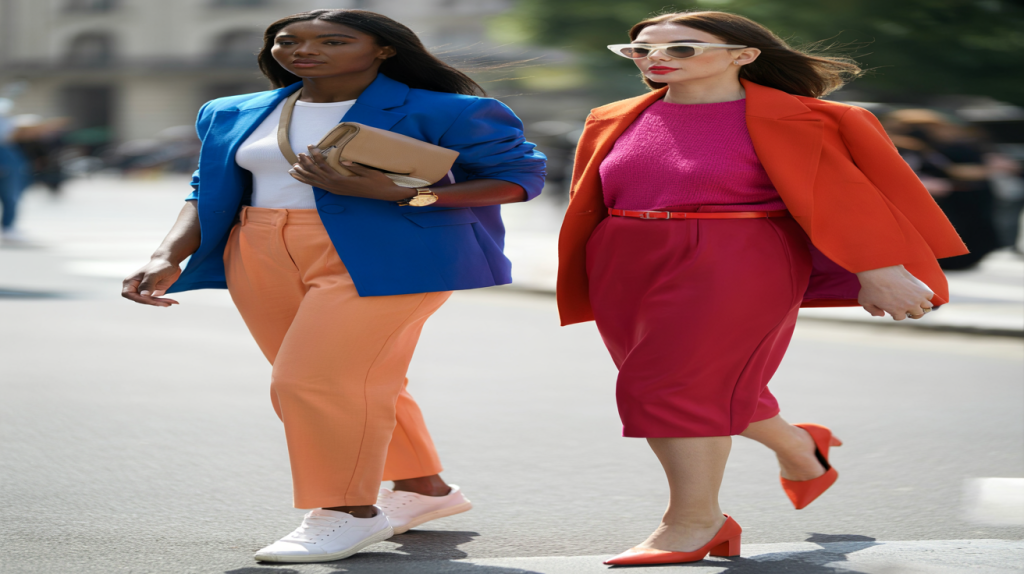
Color blocking looks fearless, yet it can be simple. Start with two strong shades, keep shapes clean, and let the colors speak. Think cobalt with tangerine, fuchsia with tomato red, emerald with lemon – then ground the look with white sneakers or a camel bag. The trick is contrast, not chaos.
Fashion weeks brought it back in force, and everyday wardrobes followed. Blocks of solid color sharpen a silhouette, boost mood, and photograph beautifully. To pull it off today : limit the palette, choose rich fabrics that don’t glare, and repeat a hue once – shoes, belt, or lip – so the eye reads harmony.
Why color blocking is trending again : runway signals et real-life appeal
Runway to street is not a myth this season. Spring-Summer 2024 shows in September 2023, covered by Vogue Runway, flashed clean, high-impact pairings in Milan and Paris, reminding everyone how modern a crisp block can feel. No prints, no fuss – just power color.
There is data behind the pull. Lyst’s Year in Fashion 2022 reported searches for pink jumping 152% within 48 hours after Valentino’s Pink PP show in March 2022, a sharp sign that saturated color moves shoppers fast source. Color cues also travel culturally : Pantone named “Peach Fuzz” its Color of the Year on 7 December 2023, proving that color conversations still shape taste source.
Psychology plays a part. Research published in 2006 in Management Decision found that between 62% and 90% of snap product judgments can be based on color, underscoring why bold blocking grabs attention in seconds source.
How to build a color-block outfit : simple formulas that always work
Begin with structure. A lean blazer, a column dress, straight trousers or a minimal midi skirt – clean lines hold strong color better than ruffles or busy cuts. Add a second color in a large area, not in a tiny trim, so the balance feels intentional.
Fabrics matter. Matte or lightly lustrous textures – crepe, cotton twill, compact knit – carry saturated tones without glare. Shiny satin on both pieces can look costume-y; pair shine with matte for depth instead.
When pairing shades, use one of these easy templates, then stop. Let air and skin be your neutral buffer.
- Complementary duo : cobalt + orange, purple + chartreuse, red + teal.
- Neighboring duo : fuchsia + red, coral + orange, lime + yellow.
- Tonal blocking : two intensities of the same color – forest + mint, sky + navy.
- Color + quiet neutral : lemon + camel, magenta + grey, electric blue + cream.
- Vivid anchor + denim : hot pink blazer with vintage-blue jeans.
Common mistakes to avoid : proportions, accessories, and light
Too many hues at once breaks the message. Cap it at two or three pieces in color, then keep the rest calm. If the jacket and skirt are bright, let the top read as a neutral or a near-nude knit.
Accessories can either frame or fight. Metal hardware, loud logos, multicolor scarves – they clutter. Go for simple leather, a sleek watch, or clear acetate sunglasses. If in doubt, echo one outfit color in the shoe or bag and call it a day.
Lighting changes everything. Fluorescent light can wash neons; natural light softens them. Test pieces by a window before committing. Photos help – the camera catches clashes the mirror misses. A quick snapshot saves a morning meltdown, because we all saw that happen once, accidentaly.
Color strategy by setting : work, weekend, and events
Office needs clarity. Try navy trousers with a saturated raspberry knit, then add a tan belt to bridge the two. Or a forest blazer over a pale blue dress – refined, not loud. Tailoring reins in energy while color keeps the look current.
Weekend invites bolder moves. Cobalt wide-legs with a sunflower tee. A tomato shift with white sneakers. If the palette feels intense, lower saturation instead of discarding the pairing – swap neon for mid tones and keep the combo.
Evening thrives on contrast and texture. A column dress in electric blue pairs with a matte scarlet wrap or pump. Keep jewelry minimal so the blocks stay graphic. For winter, layer tights as a third tone – burgundy tights under a pink skirt create depth without adding print.
One last layer pulls it together. Repeat a color strategically – nails, belt, or lip – and the eye reads a clear line. That small echo functions like punctuation in text – it finishes the sentence without shouting.