
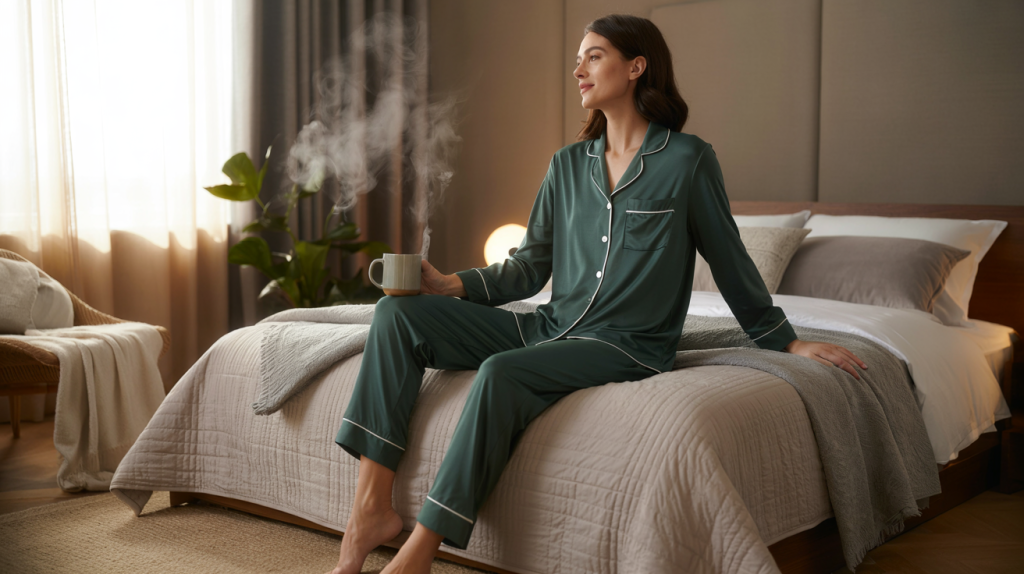
Shopping for pajamas that look sharp and feel cloud-soft at 2 a.m.? Here is the real guide to fabrics, fits and details that actually change your sleep.
Clicks for a comfortable and stylish pajama come from a simple need : sleep better and still look good on the couch, at the door, or on an early video call. The winning set blends soft touch, breathable fabric and a cut that moves with the body – without surrendering style.
The essentials land fast. Fabric rules temperature, seams decide comfort, and details make the look. The National Sleep Foundation recommends a bedroom at 60 to 67°F, so the pajama has to manage heat and moisture, night after night. That is why cotton, modal, TENCEL Lyocell, silk or fine merino show up in the best picks, each with different sleep effects.
Comfortable and stylish pajamas : what actually matters first
The main idea is simple : the right fabric and fit do the heavy lifting. Too hot, too tight, too slick – and sleep quality drops. A style that feels great at 9 p.m. can turn heavy by 3 a.m. if it traps heat or sticks to skin.
Common pain points keep coming up in real life. Waistbands that dig in. Seams that scratch. Synthetics that feel smooth at first then overheat. Fixing those starts with breathable fibers, flat seams or piping that sits away from friction zones, and a relaxed cut with ease at the hips and shoulders.
An easy visual cue helps : if a top strains across the back when you reach forward, or pants pull at the knees when you squat, the set will fight your sleep movements. A little drape beats a rigid, tailored line here.
Fabrics decoded : cotton, modal, silk, merino and what science says
Fabric is the engine. Cotton poplin and jersey breathe well and wash easily. Woolmark notes that fine merino can absorb around 30% of its weight in moisture vapor without feeling wet, while polyester holds very little – that difference helps regulate microclimate near skin on warm and cool nights.
TENCEL Lyocell feels cool to the touch and drapes cleanly. Lenzing reports a 99.8% recovery of the solvent in its closed‑loop process, which is a helpful signal for shoppers who value lower-impact options alongside comfort. Silk glides, looks luxe, and shines in temperature swings, but needs gentler care.
Certifications clarify the safety side. OEKO‑TEX Standard 100 has tested textiles for harmful substances since 1992. For organic claims, GOTS version 7.0 was released in 2023 and sets criteria from fiber to finished garment. Labels with these marks add confidence when skin sensitivity is a concern.
Fit, design and details : from temperature to movement
Design touches change both feel and look. Notched collars read polished in woven sets, while ribbed cuffs keep warmth in for colder bedrooms. Piping or contrast buttons add style without affecting comfort – as long as the stitching stays flat.
Pant rise and waistband matter more than most think. A soft, wide elastic that lies flat avoids pressure points. Drawstrings should be smooth and non-bulky, so they do not press when sleeping on the stomach. In tops, raglan or dropped shoulders give mobility with less seam rub.
Temperature control is practical, not guesswork. Pair lightweight 120 to 160 gsm knits for spring and summer, then shift to brushed flannel or interlock knits for colder months. Layering a breathable robe lets you fine-tune warmth without switching fabrics at midnight.
Quick example that many will recognise : swap a heavy polyester set for a modal or TENCEL Lyocell knit, keep the fit relaxed through the thigh, add cuffed ankles to prevent riding up. Overheating dips, movement gets easier, style stays clean.
Checklist for the nights that need an effortless win :
- Touch test : fabric should feel soft but not clingy after 10 seconds on skin.
- Move test : reach, twist, squat – no pulling at knees, back or waist.
- Seam map : inside seams flat, no bulky joins at shoulders or inner thigh.
- Heat plan : lightweight knit for 60 to 67°F rooms, flannel when below that.
- Skin cues : look for OEKO‑TEX or GOTS if sensitivity or allergies show up.
Sizing, care and sustainability : smart choices that last
Size is not a number, it is ease. Many brands publish garment measurements online – chest width, outseam, rise. Compare to a pajama that already fits. If between sizes, the sleep rule leans to the roomier option to keep circulation free and seams quiet.
Care changes longevity and feel. Wash cool, low spin, and line dry for wovens and knits to reduce pilling. Silk prefers hand wash or a lingerie cycle in a bag. Tumble drying can shrink cotton weaves and break elastic recovery faster than expected, so results may vary from the first month.
For lower-impact picks, fiber and process both count. Organic cotton reduces synthetic pesticide use, while TENCEL Lyocell’s closed‑loop chemistry cuts solvent loss sharply per Lenzing’s data. Pair that with durable construction – bartacked pockets, secured buttons – to keep a set in rotation longer than a single season. That way, comfort, style and footprint all line up, and you recieve exactly what the search promised : pajamas that look good and sleep even better.