
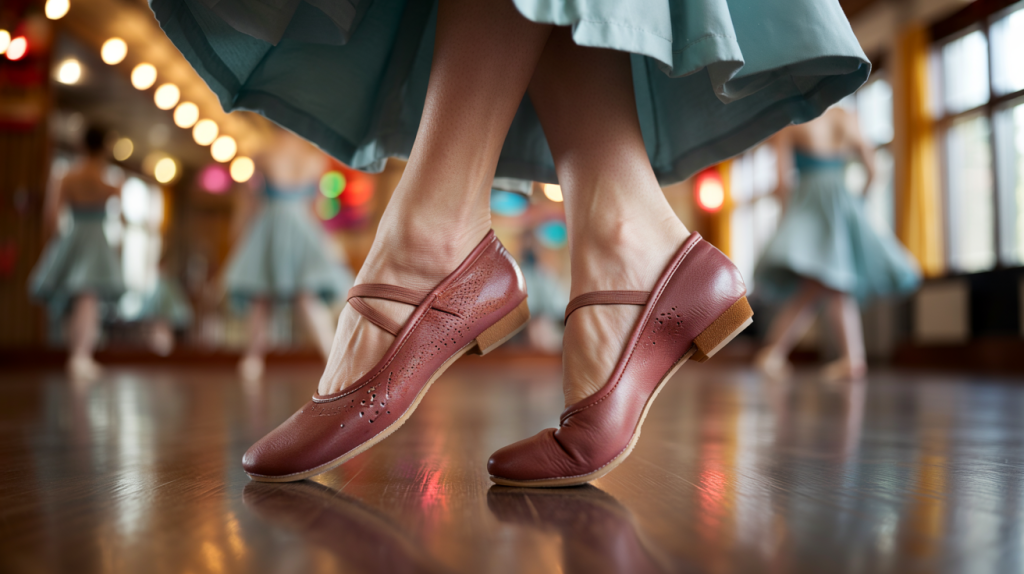
Tired of stepping off the floor with burning arches or pinched toes? Comfortable ballet flats for dancing do exist, and the difference shows in how long you can glide before fatigue kicks in. The secret sits in a snug fit that hugs without squeezing, light cushioning under the heel and forefoot, a sole that bends with your foot, and uppers that breathe while keeping you secure.
From social salsa to studio practice, the winning recipe rarely changes: choose a flat with a low stack, soft yet supportive insole, grippy but pivot-friendly outsole, and a shape that matches your foot width. Add a strap or elastic if your flats slip. Pick materials that handle heat and moisture. Small details, big comfort.
Comfortable ballet flats for dancing: the essentials that matter now
The main idea is simple: comfort follows structure. A foot that can splay, flex, and push off stays happier through long songs and fast tempos. That means a rounded or almond toe box, a lightly cushioned insole, and a sole that bends under the ball of the foot.
Observation on the floor: flats that are too floppy feel nice at first, then tire the calves. Too stiff, and the forefoot gets hot spots. Split soles boost point and articulation. Full soles give a touch more support and smoother turns on rough surfaces. Pick what matches your style and floor.
The core problem is slippage and shock. Without a secure hold, your toes claw. Without a touch of padding, hard floors bite back. Both issues can be solved with thoughtful fit and a few evidence-backed tweaks below.
Fit, support, and materials: avoid these pain triggers
Going down a size for a “dainty” look is a classic mistake. Feet swell as you dance, so a too-tight flat turns painful by song three. Width matters as much as length. Many dancers also forget heel grip: a small elastic strap or Mary Jane style prevents sliding and saves energy.
Another slip-up: slick outsoles on shiny wood. You want controlled glide, not ice. Suede or brushed leather gives predictable traction. On concrete or street events, thin rubber with a smooth forefoot patch helps you pivot without jamming the knee.
Breathability carries you through heat. Unlined leather, woven knit, or micro-perf uppers let moisture escape. Synthetic foams mold with warmth; look for ones that rebound, not pancakes. If arches feel tired, a low-profile insert with gentle medial support can ride inside many flats.
What research and health pros say about dance footwear
Foot discomfort is common, so design choices matter. In 2014, the American Podiatric Medical Association reported that 77 percent of U.S. adults had experienced foot pain, and half said it limited activities (APMA, 2014). When dancing is the activity, that limitation shows up in shorter sessions and fewer joyful nights out.
Sizing is another blind spot. A 2017 review in the Journal of Foot and Ankle Research found that between 63 and 72 percent of people were wearing shoes that did not match their foot length or width (Journal of Foot and Ankle Research, 2017). Translation for dancers: try both length and width options, not just your usual number, and check space at the toes after a short warm-up.
Low heels tend to be friendlier to forefeet. The American Podiatric Medical Association advises choosing flats or low heels around 1 inch for everyday comfort, a guidance that also aligns with long dance sessions (APMA guidance). For activity volume, the U.S. Department of Health and Human Services recommends at least 150 minutes of moderate-intensity movement weekly, updated in 2018. Dance can count toward that target when footwear keeps you moving (U.S. HHS, 2018 Physical Activity Guidelines).
The practical angle: these numbers point to fit and mild support as non-negotiables. A flat that can acommodate natural swelling, keep the heel stable, and slightly cushion landings makes it far easier to reach your minutes without sore arches calling it quits.
The one-minute shop checklist for comfortable dance flats
Before heading to the register, run through this quick filter. It saves returns, and saves your feet.
- Fit after warm-up : stand, splay toes, confirm a thumb’s width at the tip and no rub at the fifth toe.
- Secure hold : heel stays put, optional strap or elastic across the instep for spins.
- Flexible forefoot : bend at the ball of the foot, not the mid-arch.
- Cushioning you can feel : light padding under heel and forefoot, not marshmallow-soft.
- Outsole for your floor : suede or brushed leather for wood, smooth rubber patch for concrete.
- Breathable upper : unlined leather, knit, or micro-perf to manage heat and sweat.
- Arch comfort : room for a slim insert if needed, low heel around 1 inch if forefoot gets tender.
- APMA Seal or pro fit check : optional, but helpful signals of foot-friendly design.
One last nudge: test a simple routine in the store. A few pliés, a pivot, a quick side step. If balance feels easy and the heel stays planted, you are looking at a pair built for real dancing, not just the walk to the venue.
Sources : American Podiatric Medical Association, 2014 survey; Journal of Foot and Ankle Research, 2017 review on shoe fit; U.S. Department of Health and Human Services, 2018 Physical Activity Guidelines; APMA footwear guidance.