
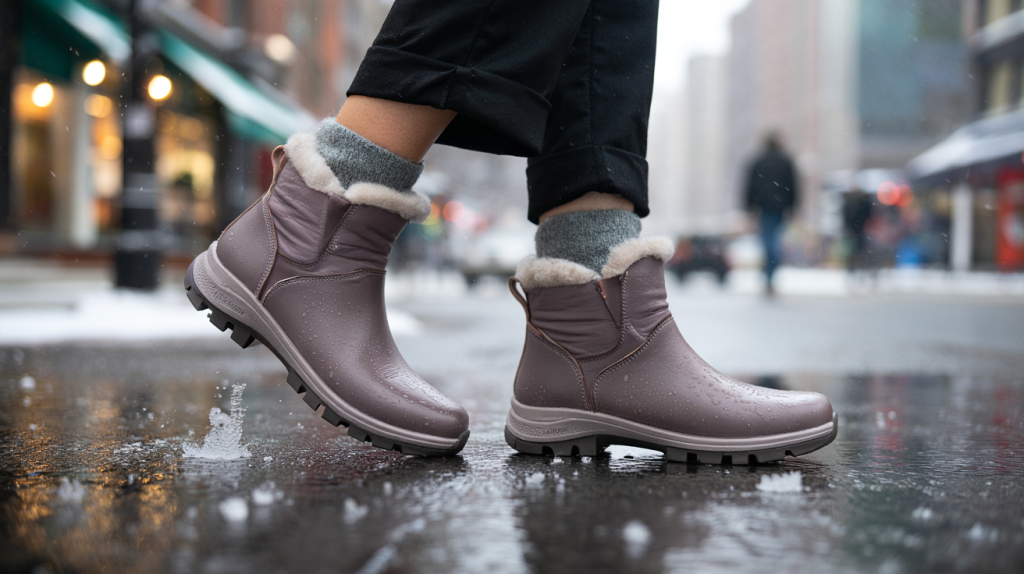
Comfortable women’s winter shoes: the fast track to warm, pain-free steps
Frozen toes, damp socks, slippery pavements. Comfortable women’s winter shoes fix all three when they combine insulation, a waterproof-breathable membrane, solid arch support, a roomy toe box and a grippy outsole built for wet or icy ground. This is the winning set that keeps warmth in and pressure off, without the heavy boot feel.
Context matters. The U.S. National Weather Service notes frostbite can strike in 10 to 30 minutes at severe wind chills, and wet feet speed the chill. Add the American Podiatric Medical Association’s 2014 finding that 77% of Americans have experienced foot pain, and the message is clear : comfort in winter starts with the right construction, not just a fleece lining.
Why comfort slips in winter shoes, and how to fix it
Common story : boots look cozy, then feel stiff, sweaty and tight by week two. The culprit tends to be thin insoles, narrow forefeet and non-breathable liners that trap moisture. Pressure builds, socks get damp, and traction fades when cold rubber hardens.
Breathability is not a buzzword. W. L. Gore reports its Gore-Tex membrane has roughly 9 billion pores per square inch, with each pore about 0.2 microns, small enough to block liquid water but large enough to let vapor escape. That tech lets warm air move out, so heat does not turn into sweat. Merino wool helps too. The Woolmark Company states Merino can absorb around 30% of its weight in moisture while staying dry to the touch, which keeps feet calmer on long days.
Support matters as much as warmth. APMA guidance has long warned about high heels for daily wear, favoring low heels of 2 inches or less and stable platforms that share load across the foot. Translate that to winter : look for moderate stack height, a contoured insole, and a midfoot that does not bend like a flip flop.
Materials, insulation and grip: what actually works on cold streets
Last winter exposed a pattern. Many shoppers chose plush lining, then discovered the outsole slipped on wet tile and packed snow. Traction comes from rubber compound and lug geometry, not just deep treads. Brands that test to standards like ASTM F2913 for slip resistance publish data for wet and oily surfaces, a useful clue when pavements glaze over.
Insulation is a balance. Lightweight synthetics such as Thinsulate aim to trap air without bulk, while shearling and wool mix warmth with moisture control. On truly cold days, breathable waterproof membranes help prevent that steamy chill inside the boot. The NWS wind chill chart has been blunt for years : low wind chills push skin toward frostbite quickly, so dry, insulated feet are not just a comfort play.
Fit is the quiet hero. Winter socks add volume. Toes need space to splay and circulate blood. A rounded or anatomical toe box reduces compression that often triggers numbness. If arches ache by lunchtime, swap the flat insole for a supportive, removable footbed aligned with your arch height. That tiny upgrade often extends comfort by hours.
Quick checklist before you buy :
- Upper : leather or treated fabric with a waterproof-breathable membrane such as Gore-Tex for dry, ventilated warmth.
- Lining : Merino wool blend or moisture-wicking synthetic to reduce clammy socks.
- Insole : removable, contoured footbed that matches your arch, with room for orthotics if needed.
- Outsole : cold-weather rubber with defined lugs, tested for wet grip when possible.
- Toe box : rounded or anatomical, leaving thumb-width space in front in your winter socks.
- Heel and platform : stable base, everyday heel under 2 inches for balanced load, per APMA guidance.
Smart sizing, care and timing that keep comfort all season
Small steps compound. Try shoes late in the day when feet are slightly swollen, and always with the socks planned for winter. Walk on both hard tile and a carpeted surface to sense flex and forefoot space. If the outsole feels like plastic on smooth flooring, grip may vanish on wet sidewalks too.
Care preserves comfort. Let pairs dry fully between wears, remove insoles overnight, and rotate socks that blend Merino and synthetic fibers for moisture transport. Salt lines shorten shoe life, so wipe with a damp cloth, then condition leather to keep seams supple. Those few minutes prevent cracking and leaks that undo the membrane’s work.
One more thing that stores rarely adress : timing. Prices often dip after the first cold snap, yet sizes disappear fast. If insulation, waterproofing and fit align, hesitating costs more than it saves. The stats back the stakes. The NWS wind chill advisory thresholds exist for a reason, and APMA’s 2014 data shows widespread foot discomfort. Pair that with proven materials like Gore-Tex membranes and Merino’s 30% moisture uptake, and the path is simple : pick a breathable waterproof upper, supportive midfoot, roomy toes and winter-grade traction. Warmth follows, steps feel lighter, and winter walks turn easy again.