
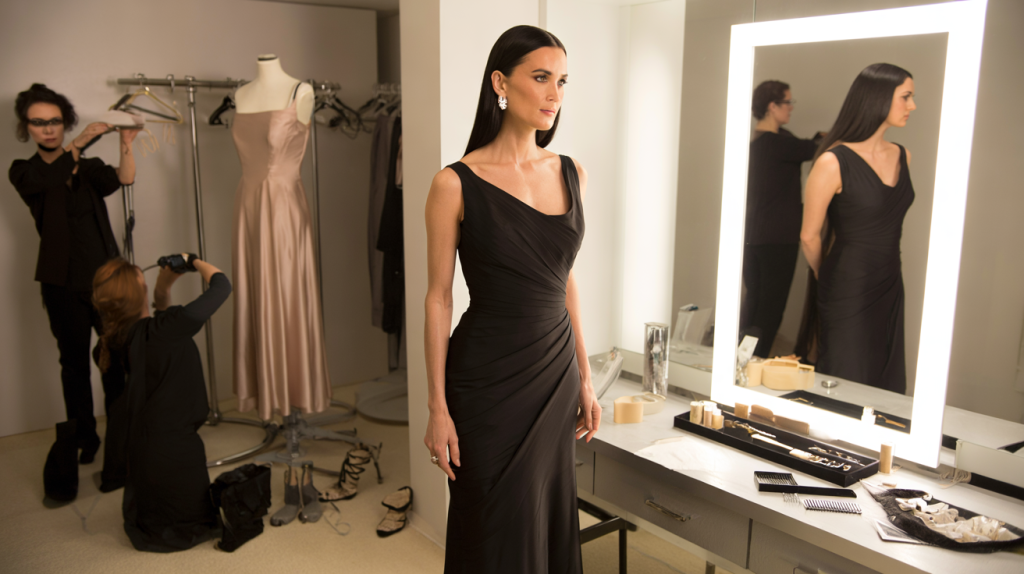
Demi Moore look: what really happens behind the scenes
Elegance that looks effortless rarely is. Demi Moore’s red carpet presence lands with precision because the groundwork starts long before flashbulbs. Think tight fittings, a clean silhouette that lengthens the line, glossy hair, and skin that reads lit from within. The formula feels simple. It is not.
The context matters. From the 1989 Oscars outfit that stirred debate to the 1991 Vanity Fair cover by Annie Leibovitz, then the 1997 buzz cut for “G.I. Jane”, Demi Moore has turned image into strategy. Fast forward to Cannes in May 2024 and the world premiere of “The Substance” that earned a reported 11‑minute standing ovation, her look read consistent with that history: disciplined, modern, unmistakably her.
The core engine: team, timing, and choices that never shout
The build starts on calendar. Stylists lock gowns days ahead when possible, sometimes weeks, then plan a backup in case of weather or last‑minute changes. Alterations hit early. Hems skim the floor without pooling. Shoulder seams sit exact. Nothing moves unless it is meant to.
Hair keeps a clear signature. Long, high‑gloss lengths, a center part, ends sealed straight or curved softly. That shine comes from a blowout topped with a light oil or serum, heat protected, then refined with a flat iron. Sleek hair frames the jaw and collarbones and sharpens the neckline of a column dress.
Makeup focuses on balance. Skin prep first for grip, then luminous base with pinpoint concealing. Eyes stay defined with tightliner and soft smoke, lashes lifted rather than heavy. Lips go neutral or rose to keep attention on bone structure. The camera reads texture, so pros powder the T‑zone and leave cheek glow intact.
Jewelry stays edited. One focal point at a time, often a bracelet or drop earrings that echo the collar line. Clutch size stays small. Sandal straps are slim to avoid cutting the leg visually. No part of the look competes with another.
Why the silhouette works: fabric, tailoring, and the line
Column dressing is not a trend here, it is geometry. A vertical line extends height and slims movement. Bias‑cut silk, structured crepe, or lightly boned bodices create lift without bulk. Fabric choice decides how light hits the body. Crepe mutes, satin reflects, velvet absorbs and sculpts.
Tailoring is the secret lever. A half‑centimeter at the waist, a cleaner armhole, a hidden corset that supports the torso without crushing the rib cage. Underpinnings are mapped to the dress: low‑back bodysuits, silicone straps, seamless shorts. Heel height is measured against the hem so the dress floats, not drags.
Colors stay intentional. Black when the silhouette or jewelry carries the story. White or blush when hair and skin light up the frame. Red when the cut reads minimal. The palette builds continuity across years, which is why a 1990s photo and a 2024 step‑and‑repeat can sit side by side and feel timeles.
Make it yours: practical takeaways from the Demi Moore playbook
The goal is not to copy a famous face. It is to borrow the structure that keeps a look calm under pressure, on camera and in person. That structure is repeatable at any budget when broken into steps.
Start with fit. Two rounds of alterations matter more than a new label. Book hair and makeup trials on different days from the fitting so you can see proportions with a clear head. Shoot quick phone videos in daylight and at night, then adjust shine, hem, and jewelry scale.
- Pick a single silhouette you trust and repeat it across events to remove guesswork.
- Choose one statement per look: neckline, earring, or texture. Not all three.
- Prep skin 48 hours before with gentle exfoliation and hydration, not on the day.
- Use a heat protectant and lightweight oil for glass hair without weight.
- Carry fashion tape, a compact powder, and a mini comb for quick resets.
Context adds clarity. The 1989 Oscars outfit taught a lesson about proportion and criticism. The 1991 maternity cover shifted what a body on a magazine could mean. The 1997 head shave proved commitment to a role over vanity. By 2024, the red carpet strategy reads learned rather than improvised, built from decades of camera reality and quick changes in backstage corridors.
What closes the loop is rehearsal. Walk in the shoes on the actual floor. Sit in the dress for five minutes to check creases. Practice the turn that shows the neckline while keeping shoulders relaxed. In photos, the smallest tension shows. The schedule may move, the weather may shift, but a prepared silhouette and a tested beauty map hold steady.