
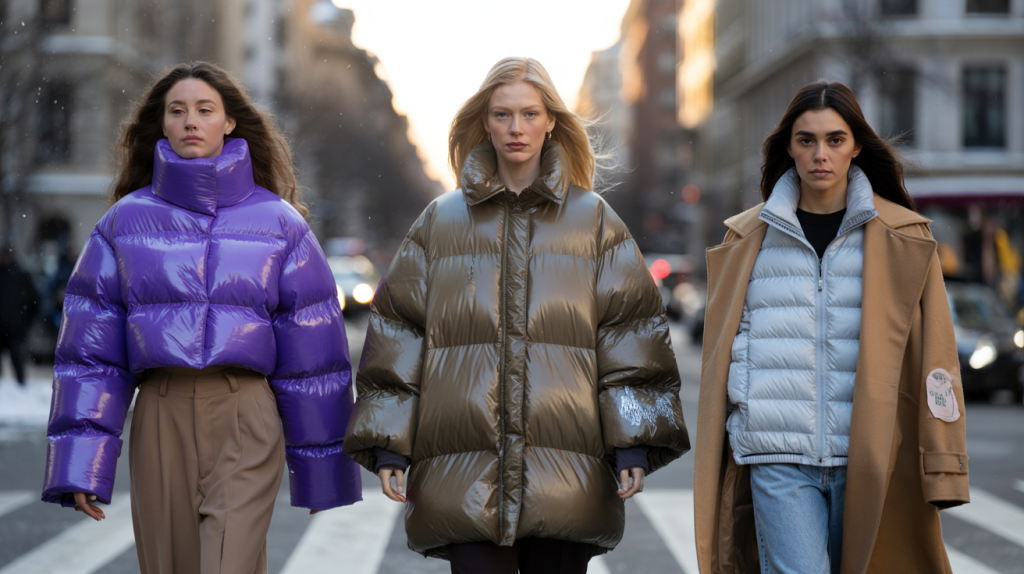
Big puffers stay, smarter puffers win. In 2025 the doudoune shifts toward lighter builds, lacquered shine, cropped or cocoon volumes, bold quilting and tech that does not shout. The brief is clear. Warmth without bulk, city polish, and pieces that adapt from weekday commute to cold snaps that come out of nowhere.
Climate and regulation set the tone. 2023 ranked as the hottest year on record, with the global average about 1.48°C above pre industrial levels according to the Copernicus Climate Change Service in January 2024. Brands respond with seasonless layers and packable insulation. At the same time California’s AB 1817 bans PFAS in most textiles from 2025, and the European Union’s Corporate Sustainability Reporting Directive applies from financial year 2024 for many large companies. Expect membranes and finishes to change, hangtags to get more transparent, and repairs to be encouraged rather than hidden.
Doudounes 2025 trends: shapes and volumes that move
Cropped puffers sit higher and frame the waist, good with wide pants and long skirts. The opposite trend also rises. Cocoon and A line volumes wrap the body, with softer shoulders and generous collars that act like a scarf. Both looks bring comfort and a sharper silhouette, not the marshmallow effect everyone tries to avoid.
Ultralight is now everyday. Thin baffled jackets layer under wool coats and trench shapes, then pack into a bag when the sun appears. This answers rollercoaster winters and cuts closet clutter. Two in one systems grow too, where a quilted liner snaps into a shell for wind and rain.
Colors, gloss and quilting: the new puffer jacket look
Shine reads premium in 2025. Lacquered and satin shells catch light without looking plastic. Brands from Moncler to high street labels lean into glossy finishes that photograph well and lift simple outfits. Matte shells still sell, but black is no longer the only safe bet.
Color skews mineral and punchy. Icy blue, olive, chocolate and stone meet saturated brights like tomato red or electric purple for short silhouettes. Quilting becomes graphic. Big boxy baffles on cropped styles, tighter channels on longer coats, diamond or onion patterns for a retro outdoor touch. The North Face 1996 Retro Nuptse keeps the square baffle icon status and continues to influence the market.
Eco pivot in 2025: PFAS free, traceable down, resale and repair
Regulation accelerates cleaner tech. California’s PFAS restrictions in textiles apply from 2025 and push brands toward alternative durable water repellent finishes based on waxes or silicones. The EU’s reporting rules raise pressure to map supply chains and publish impacts. Shoppers see the effect on tags and product pages across Europe and beyond.
Material choices keep evolving. Fashion accounts for between 8 and 10 percent of global greenhouse gas emissions according to the United Nations Environment Programme. Microfibers from synthetic textiles represent 35 percent of primary microplastics released to the oceans per the International Union for Conservation of Nature 2017 report. That context fuels a split strategy. On one side, recycled synthetic fills and shells reduce virgin polyester use. On the other, many brands double down on certified down with strict animal welfare and better by products management. The Patagonia Down Sweater uses a NetPlus shell made from recycled fishing nets since 2022 and sources down to a recognized traceability standard.
Repair and resale become normal choices, not niche. France launched a national repair bonus for clothing and footwear in October 2023, with 154 million euros allocated through 2028, which lowers the bill to fix zips or re stitch panels. In the United States the ThredUp 2024 Resale Report projects the secondhand market to reach 73 billion dollars by 2028. A good puffer now has spare parts available, modular components and service partners listed on the label.
How to pick a 2025 ready puffer jacket
Start with the use case. City commuters need a water resistant shell, covered zips and a collar that seals. Weekenders want a packable mid layer that works under a shell. Cold climate residents still benefit from longer hems and storm cuffs. Features should match that lifestyle, not a runway photo.
Common mistakes keep repeating. Buying too warm for a temperate city ends in clammy commutes and less wear. Ignoring fabric hand feel can turn into noisy, boardy jackets that stay in the closet. Focusing only on fill power neglects construction. Baffle size, draft tubes and zipper wind guards make as much difference as the number on the tag.
One more layer of clarity helps, then action feels easy. Labels that name the chemistry of the water repellent, disclose the origin of down or the percentage of recycled content cut through greenwashing. Services that offer zipper replacement or panel repairs extend life, which now saves money in several countries. A millenial or a boomer, nobody enjoys paying twice for the same warmth.
Quick checklist for a smarter buy in 2025 :
- Shell and finish : PFAS free durable water repellent listed, fabric weight that suits your climate
- Insulation : certified down with clear origin, or recycled synthetic fill that dries fast
- Build : baffle pattern tuned to warmth, storm flap, chin guard and adjustable cuffs
- Care and repair : washable at home, spare parts available, brand repair program or local partner
- End of life : resale value, take back or recycling information printed on the label
The last piece of the puzzle is timing. New season drops cluster from September to November, clearance shifts right after the first cold spell and again at late winter. Watch for updated models that switch to PFAS free chemistry or add a detachable hood, as those quiet changes often matter more than a new color name.