
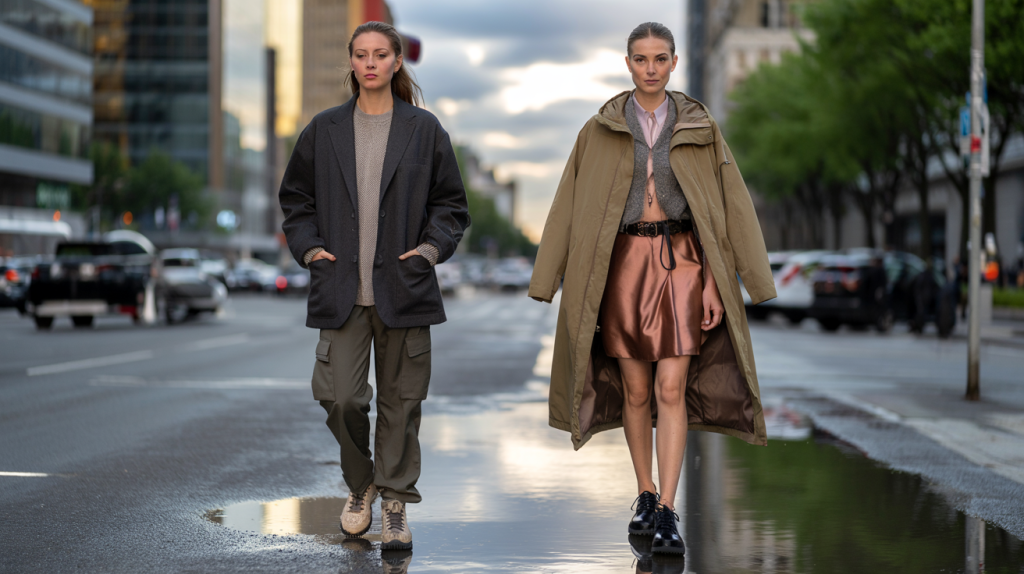
Call it the outfit of contradictions : a polished blazer with trail sneakers, silk next to ripstop, recycled wool layered under a technical shell. Dressing Paradoxal 2026 is the fashion answer to messy lives and volatile weather, built on smart layers, mixed codes, and pieces that multitask dawn to night.
The context is real. Copernicus Climate Change Service confirmed in January 2024 that 2023 was the warmest year on record, about 1.48 °C above pre‑industrial levels. Work has gone hybrid too. Kastle Systems’ Back to Work Barometer kept U.S. office occupancy around the 50 % mark through 2023, reshaping dress codes in both directions at once. Shoppers juggle budgets and values, while the United Nations Environment Programme has flagged fashion’s footprint for years, citing up to 10 % of global emissions and about 20 % of industrial wastewater. No wonder the winning wardrobe now sits in the middle, not at the extremes.
What Dressing Paradoxal 2026 means : a quick decode
At its core, this trend blends opposites with intent. Tailored jackets meet cargo trousers. Heritage tweed rides alongside breathable meshes. A single outfit flexes across temperature swings, commutes, and social starts or stops. The look reads relaxed but informed.
There is a practical driver. Weather swings within a single day push lighter, packable layers and fabrics that handle heat, drizzle, and air‑con without a full outfit change. Then comes social code switching : a team call, a client lunch, a kid pickup, a late train. Clothes need to pivot without fuss.
Brands already leaned in. Elevated basics sit next to technical capsules. Resale and repair services run inside mainstream retailers. The high‑low mix is no longer a hack, it is a system.
The forces behind the paradox : climate, work, and wallets
Climate volatility changed planning. That light puffer over a linen shirt in spring is not a quirk, it is a hedge. Copernicus data underscored an unprecedented run of record months in 2023, and that pattern reshapes seasonal buying.
Hybrid work keeps dress codes flexible. Kastle Systems’ city index rarely climbed past the mid‑50s in 2023, and office‑only wardrobes stopped making sense. People now favor wardrobe modules that swap shoes or one layer to shift tone instantly.
Money talks too. ThredUp’s 2024 Resale Report projected U.S. secondhand apparel to reach 73 billion dollars by 2028, with younger shoppers powering adoption. UNEP’s long‑standing footprint figures push a second signal : mixing new with resale or rental is turning mainstream because it saves cash and carbon.
How to build a paradoxal wardrobe in 2026 : practical moves
Start with a simple observation : outfits that survive a day of unknowns need structure. That means three layers that breathe and split apart, one statement element, and shoes that walk.
Common mistakes pop up fast. Buying only statement pieces leaves no backbone. Over‑technical kits look off at dinner. And fragile fabrics without care plans do not last. Keep one foot in function, one in polish.
Here is a compact playbook that works on repeat.
- Anchor layer : breathable tee or knit in cotton‑merino or Tencel, neutral color.
- Sharp layer : unstructured blazer or chore jacket with a hint of stretch.
- Weather layer : compact shell with taped seams, hood that hides cleanly.
- Bottoms : tailored cargo or wide‑leg trouser in tech wool or blended twill.
- Footwear : city sneaker with grip or lugged derby, both resolable or repairable.
- Statement : one contrast texture – satin skirt, leather tie belt, or bold knit.
- Bag logic : medium crossbody that fits the shell when the sun comes out.
Smart shopping and care : resale, repair, and fabrics that earn their keep
Numbers nudge choices. UNEP’s footprint reminders reward natural fibers with verified sourcing and recycled synthetics used where performance truly matters. Look for certifications like GOTS for organic cotton and RWS for wool when available, then read the care tag for real life washing.
Resale is not a side quest anymore. ThredUp’s 2024 data pointed to steady growth in secondhand demand, and that brings leverage. If a blazer holds resale value, it likely holds shape. If a sneaker can be resoled, it doubles its life. Many brands now offer in‑house repair, from sneaker cleaning to zipper fixes. Use them.
One more angle : build by use‑case, not by season. Two commute‑proof outfits, one travel kit that packs light, one occasion layer that tones down or up. Rotate. Mend small snags early. Steam instead of over‑washing. Your closet breathes better, costs drop, and the paradox turns into a rhythm you can definitly keep.